Plizio Visual Lab
Gao-Saney

Weather…
Water temperature…
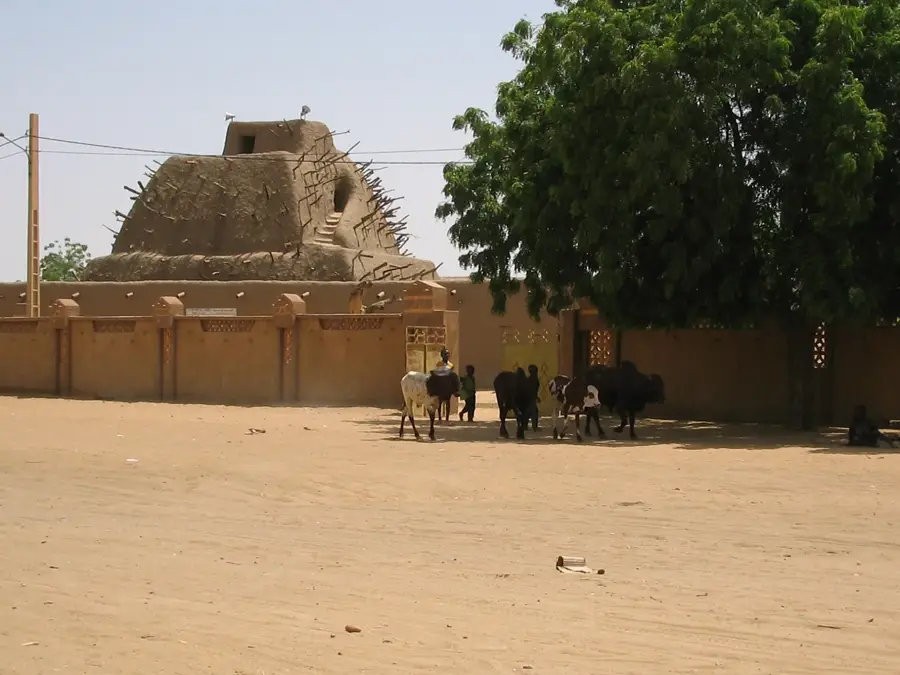
Gao-Saney is a significant archaeological site located approximately 6 kilometers east of Gao, providing vital insights into Mali's early Islamic history. The site is best known for its Muslim cemetery dating back to the 11th and 12th centuries, where marble tombstones with Arabic inscriptions were discovered. These inscriptions prove the existence of a local Muslim elite and close commercial ties with the Mediterranean world, particularly Al-Andalus (modern-day Spain), where the marble is believed to have originated. Gao-Saney likely served as the commercial suburb of Gao, playing a central role in the trans-Saharan gold trade. Findings suggest that the region was a sophisticated urban center centuries before the height of the Songhai Empire. Archaeological excavations have also uncovered remains of residential buildings and bead-making workshops. The site is essential for understanding the Islamization of West Africa and the early economic integration of the Sahel region.
- Location: Mali
- Nearby: Gao (4 km)
Best time to visit & climate
The most pleasant time to visit is Jan, Feb, Dec.
| Jan | Feb | Mar | Apr | May | Jun | Jul | Aug | Sep | Oct | Nov | Dec | |
|---|---|---|---|---|---|---|---|---|---|---|---|---|
| Avg °C | 21 | 25 | 29 | 33 | 36 | 36 | 34 | 31 | 32 | 31 | 27 | 22 |
| Rain mm | 0 | 0 | 0 | 1 | 4 | 21 | 68 | 120 | 39 | 5 | 0 | 0 |
📋 Practical info
Geography
Facts
- The famous tombstones of Gao-Saney date back specifically to 1100 AD.
- The white marble used for the stelae originated from Almeria, Spain.
- Archaeologists first conducted formal excavations at the site in the 1930s.
- Evidence of extensive bead manufacturing was discovered in the settlement area.
- The site consists of a tell (habitation mound) and a separate cemetery.
- Arabic inscriptions identify the buried individuals as members of a local dynasty.
Explore nearby
Notable places around


Route planner — Car & Motorhome
Where do you start? We build the route here, with stops and country notes along the way.
© OpenStreetMap contributors · OpenRouteService
Sights in the town Gao-Saney (1)
Sights nearby
Frequently asked questions
What is Gao-Saney?
Is it safe to visit?
Is there a visitor center?
What to keep in mind?
How long is the visit?
Gao-Saney: where is it located?
Gao-Saney: when is the best time to visit?
Gao-Saney: why is it worth visiting?

Nearby cities


History & landmarks
More places