Plizio Visual Lab
Bourem
ℹ️Practical info — Bourem
▾
🌤 Weather — 5 days
📍 Nearby
Sights nearby
💡 Tips
- River travel by traditional pinasse to Gao or Timbuktu can be arranged, but it requires patience and direct negotiation with boat operators.
- Dress modestly to respect the conservative local Islamic culture, ensuring shoulders and knees are covered.
- The dry harmattan winds can be very dusty; bring a light scarf or face covering to protect yourself when walking outdoors.
- Always verify the current security situation through official channels before traveling to this region.
🍽 Food
Freshly caught from the Niger River and usually grilled or fried at small local riverside eateries.
Rice served with a rich, thick peanut sauce, a filling local favorite.
The traditional Malian tea served in three rounds, an essential part of local hospitality.
🛍 Shopping · 🧘 Quiet spots
The best place to find fresh river fish, slabs of desert salt, and local grains.
Look for specialized artisans selling handmade leather goods and silver jewelry.
A very peaceful spot, especially at sunset, to watch the pirogues gliding on the water.
Sit quietly in the shade near the market edge and enjoy the slow, methodical tea-making process.
Water temperature…
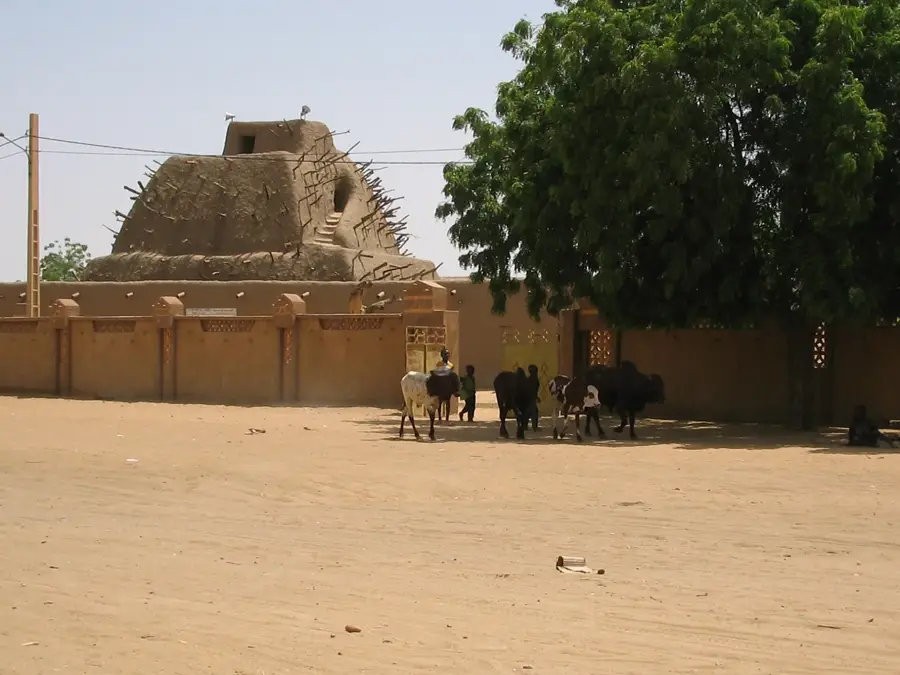
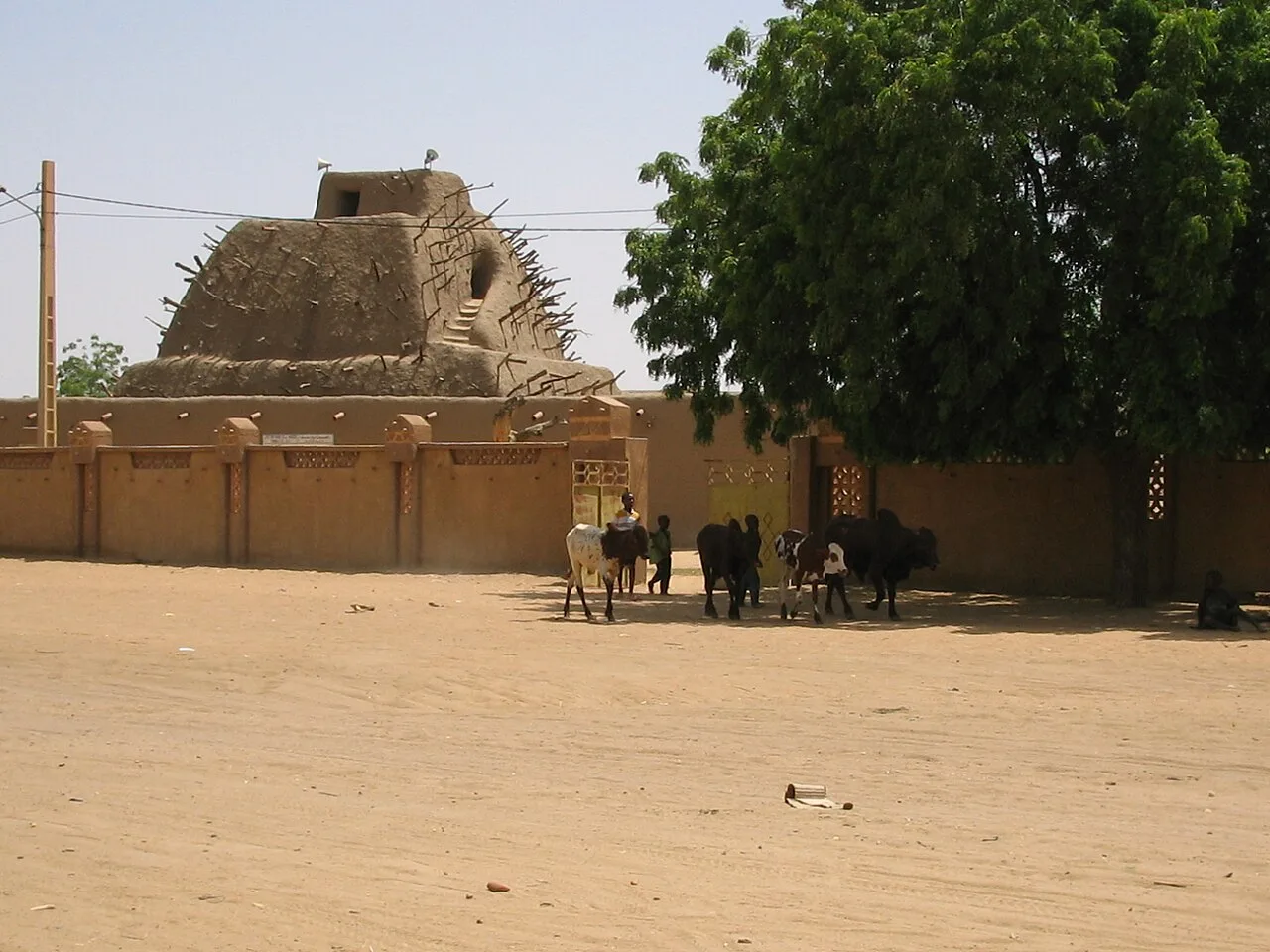
Bourem is a strategic river town in northern Mali, located in the Gao Region at the exact point where the Niger River completes its great bend and turns southward. Historically, Bourem was a critical junction for trans-Saharan trade and served as an important administrative post during the Songhai Empire. The town acts as the gateway to the Tilemsi Valley, a prehistoric riverbed that provides a major route into the heart of the Sahara toward Algeria. The local economy is sustained by flood-recession rice farming, river fishing, and livestock herding by the surrounding nomadic groups. Bourem is also notable for its phosphate deposits, which represent a significant mineral resource for Mali's agricultural sector. Its population is a diverse mix of Songhai, Tuareg, and Arab peoples, contributing to a rich cultural landscape centered on trade. The town's architecture features traditional Sudano-Sahelian mud structures, reflecting its deep historical roots. As the administrative capital of the Bourem Cercle, it remains a vital hub for regional transport, security, and commerce in the arid north.
- Location: Mali
- Nearby: Gao (83 km)
- Population: ~42.371 (2024)
Best time to visit & climate
The most pleasant time to visit is Jan, Feb, Dec.
| Jan | Feb | Mar | Apr | May | Jun | Jul | Aug | Sep | Oct | Nov | Dec | |
|---|---|---|---|---|---|---|---|---|---|---|---|---|
| Avg °C | 20 | 24 | 28 | 32 | 35 | 36 | 34 | 31 | 32 | 30 | 26 | 22 |
| Rain mm | 0 | 0 | 0 | 1 | 3 | 19 | 53 | 100 | 31 | 4 | 0 | 0 |
Geography
Facts
- Located at the northernmost point of the Great Bend of the Niger
- Strategic gateway to the Tilemsi Valley and trans-Saharan routes
- Home to major phosphate deposits used in national agriculture
- Former strategic garrison and administrative post of the Songhai Empire
- Key transportation junction between Gao, Timbuktu, and Kidal
- Inhabited by a diverse mix of Songhai, Tuareg, and Arab cultures
Explore nearby
Notable places around




Route planner — Car & Motorhome
Where do you start? We build the route here, with stops and country notes along the way.
© OpenStreetMap contributors · OpenRouteService
Sights in the town Bourem (1)
Frequently asked questions
What is typical for Bourem?
Which season is the best?
How long is a visit enough?
Is there tourism infrastructure there?
What should you know when visiting?
Bourem: where is it located?
Bourem: when is the best time to visit?
Bourem: why is it worth visiting?

Nearby cities
History & landmarks
More places