Plizio Visual Lab

Port of Yokohama
Plizio editorial teamData Sources
Port
—°18
Port of Yokohama (Japan)

Weather…

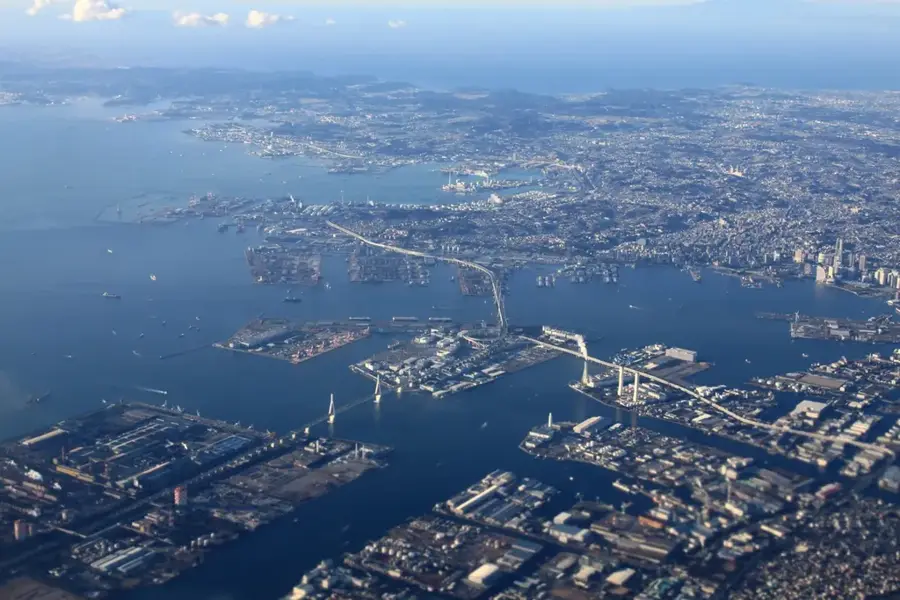
The Port of Yokohama, which officially opened for foreign trade on June 2, 1859, marked the end of Japan's isolationist policy of the Edo period. Located in Kanagawa Prefecture, it rapidly developed into Japan's most significant gateway to the world and drove the country's modernization in the late 19th century. Today, it stands as one of the largest seaports in the country and a central component of the Keihin Industrial Zone, serving the Greater Tokyo Area. The port encompasses numerous modern terminals, including the Daikoku Pier and the Minami-Honmoku Terminal, which is designed to handle ultra-large container ships. Beyond its economic function as a hub for automobile exports and raw material imports, the port area has also become a cultural and tourist center through the Minato Mirai 21 redevelopment project. The historic Osanbashi Pier now serves as a state-of-the-art international passenger ship terminal. With its strategic location in Tokyo Bay, the port remains an indispensable pillar for Japanese global trade and regional economic development.

Best time to visit & climate

The most pleasant time to visit is May, Jun, Sep.

JanFebMarAprMayJunJulAugSepOctNovDec
Avg °C23712172125262216105
Rain mm66671151291421811801552152229769

📋 Practical info

🏭
What is this place?
The Port of Yokohama stands as one of Japan's most monumental maritime gateways, handling a vast array of international trade and serving as a critical logistics hub within the bustling Tokyo Bay area. It is a cornerstone of the regional economy, facilitating global commerce and passenger travel on a massive scale.
🚪
Visiting
While the active cargo handling zones are understandably restricted for security and safety reasons, visitors can typically explore numerous public waterfront promenades and dedicated terminal areas. These accessible sections allow for an up-close appreciation of the port's immense scale and its continuous, dynamic daily operations.
👀
Where to view it
Excellent panoramic views of the maritime activities, giant cranes, and docked vessels are usually available from nearby elevated parks, observation decks, and the extensive Osanbashi Pier. Strolling along the Minatomirai waterfront provides exceptional, unobstructed sightlines of the ships navigating the bay against the urban skyline.
🧺
Local products
The surrounding commercial districts and specialized markets often feature an abundance of imported goods, local Japanese crafts, and fresh seafood sourced from the broader region. Travellers can typically find unique maritime souvenirs and a wide variety of regional delicacies that reflect the port's international connections.
📆
Active season
Operations run continuously year-round, making it a bustling sight regardless of the season, though the milder spring and autumn months offer the most comfortable weather for outdoor waterfront observation. The port is particularly lively during the daytime when cargo loading and passenger ship arrivals are typically at their peak.
Nearby
A visit to this maritime hub perfectly complements exploring the adjacent Minatomirai 21 district with its modern architecture, museums, and bustling shopping centers. Travellers frequently combine a port walk with visits to the historic Yamashita Park, the nearby Chinatown, or taking a scenic cruise around the busy bay.

Geography

Coordinates
35.45000, 139.65000

Facts

  • Opened on June 2, 1859, as one of Japan's first treaty ports.
  • Handles over 2.5 million TEUs (container units) annually.
  • The Minami-Honmoku Terminal features a water depth of 18 meters.
  • Major export hub for the Japanese automotive industry with specialized docks.
  • The Osanbashi Terminal was reconstructed in 2002 as a modern architectural landmark.
  • The port area covers a total of approximately 7,300 hectares.

Explore nearby

Notable places around
Route planner — Car & Motorhome

Where do you start? We build the route here, with stops and country notes along the way.

Vehicle
Only stops with (optional):

© OpenStreetMap contributors · OpenRouteService

Sights in the town Port of Yokohama (18)

Yokohama Harbor📍 landmark

A major deep-water port that has served as Japan's primary gateway to the world since the 19th century.

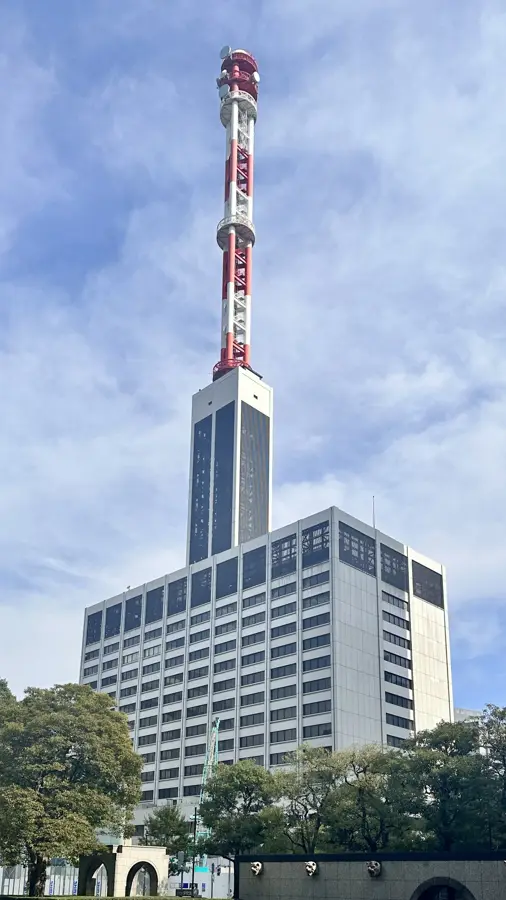
Yokohama Port Symbol Tower🌿 nature

A white observation tower at the harbor's edge that serves as a navigational aid and a scenic viewpoint for visitors.

KING, QUEEN & JACK TOWERS YOKOHAMA VIEW POINT🌿 nature

A viewpoint overlooking the iconic King, Queen, and Jack towers of the historic port administration buildings.

OSANBASHI VIEWPOINT🌿 nature

A viewpoint on the undulating wooden deck of the international passenger terminal with views of the Minato Mirai skyline.

Japan Coast Guard Museum YOKOHAMA🏛 museum

A maritime museum featuring a North Korean spy ship salvaged by the Coast Guard after a naval engagement.

Tsurumi River Basin Center🏛 museum

An information center on the Tsurumi River dedicated to flood prevention and the basin's ecology.

MORIUM🏛 museum

An interactive museum by confectionery maker Morinaga, showcasing the history and production of famous snacks.

Shosenzka Shell Mound🏺 historical

An archaeological site preserving shell mounds and artifacts from the prehistoric Jomon period.

Kirin Brewery Yokohama📍 landmark

A large brewery offering factory tours and insights into the history of Kirin beer production.

Yokohama Bay Bridge📍 landmark

An impressive cable-stayed bridge opened in 1989 that spans the harbor and serves as a city landmark.

Rinko Park🌳 park

The largest green space in the Minato Mirai district, featuring vast lawns right on the waterfront promenade.

Joshinji Temple⛪ religious

A serene Buddhist temple located in the Tsurumi ward, known for its peaceful atmosphere.

Sojiji Temple⛪ religious

One of the two head temples of the Soto Zen school, featuring a sprawling complex and massive wooden halls.

Kishine park🌳 park

A family-friendly park featuring a large central pond and extensive athletic facilities.

Choukouzan Myourenji⛪ religious

A Buddhist temple of the Nichiren school located right next to the railway station of the same name.

Shirahataike Park🌳 park

A neighborhood park featuring a large fishing pond, popular with locals for relaxing in nature.

Kouhoku no Yu🎡 recreation

A large public bath facility featuring various themed tubs and saunas for Japanese-style relaxation.

INSPA🎡 recreation

A modern wellness and spa resort located on the waterfront, offering relaxation with views of the skyline.

Sights nearby

Frequently asked questions

Where is the best view of the port?
From Osanbashi Pier or the Landmark Tower, you have a spectacular view of the harbor.
Why is the port historically significant?
It was one of the first Japanese ports to open to the West in 1859 after the isolation.
What can you do in the port area?
Visit the Minato Mirai 21 district with its malls, museums, and the giant ferris wheel.
Do cruise ships dock here?
Yes, the Osanbashi International Passenger Terminal welcomes cruise ships from all over the world.
What is mainly handled at the port?
The port is a major hub for containers, cars, and raw materials for the Keihin region.
Port of Yokohama: where is it located?
Port of Yokohama is located in Japan.
Port of Yokohama: what is there to see?
Highlights include Yokohama Harbor, Yokohama Port Symbol Tower, KING, QUEEN & JACK TOWERS YOKOHAMA VIEW POINT.
Port of Yokohama: when is the best time to visit?
The most pleasant time to visit is May, Jun, Sep.
Port of Yokohama: why is it worth visiting?

The Port of Yokohama, which officially opened for foreign trade on June 2, 1859, marked the end of Japan's isolationist policy of the Edo period.
View on map → The Top 50 Attractions → OpenStreetMap →
Asia
Explore with Plizio Discover more places in Asia
More places in Japan →

Nearby cities

History & landmarks
More places