Plizio Visual Lab

Roman Theatre of Verona

Plizio editorial teamData Sources
theater
—°710
Roman Theatre of Verona (Italy)

Weather…

Highlights of 2026

7

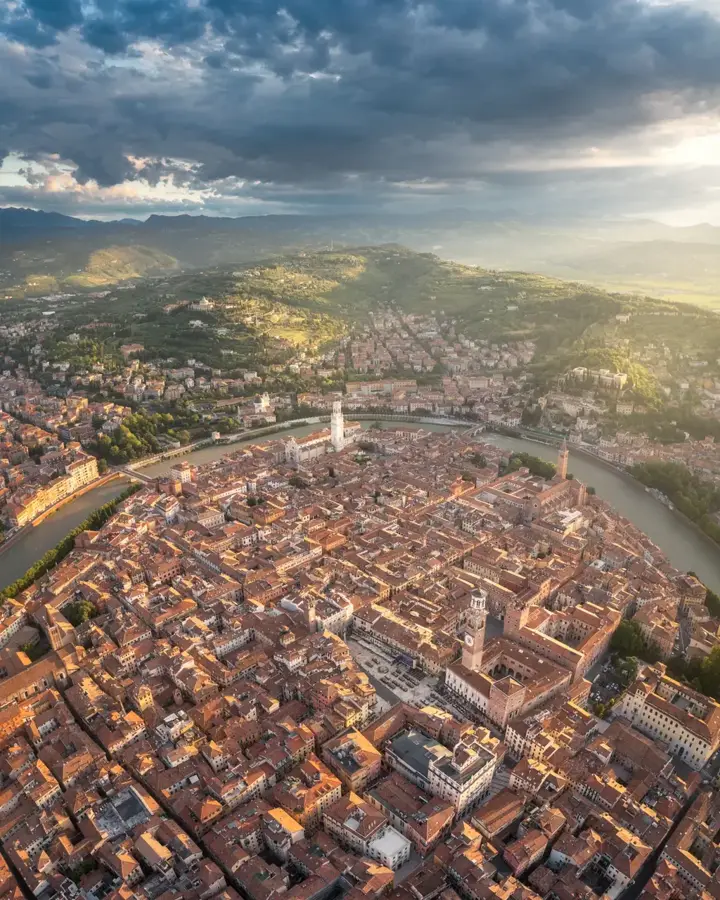
The Roman Theatre of Verona was constructed during the late 1st century BC on the left bank of the Adige River at the foot of Colle San Pietro. It remains one of the city's most significant ancient monuments, despite having been obscured by residential buildings for several centuries. Archaeological excavations began in the 19th century to uncover the semicircular cavea and the remnants of the stage area. The theater utilized the natural slope of the hill for its seating, which originally accommodated approximately 5,000 spectators. Today, the adjacent former monastery of San Girolamo houses the Archaeological Museum of Verona, showcasing important artifacts from the Roman era. Every summer, the venue is brought back to life as a performance space, hosting the prestigious Verona Jazz Festival and Shakespearean plays. The architectural design once featured a monumental facade facing the river, of which only fragments remain today. From the upper tiers, visitors can enjoy an impressive view of Verona's historic center and the flowing river below.

Best time to visit & climate

The most pleasant time to visit is Jun, Aug, Sep.

JanFebMarAprMayJunJulAugSepOctNovDec
Avg °C2481217222524191483
Rain mm405860729274727778839859

📋 Practical info

🚪
Visiting
Visitors can wander through the ancient stone seating terraces, explore the adjacent archaeological museum, and admire the sweeping views over the river. The ruins are wonderfully preserved and occasionally transform into an atmospheric venue for live summer theater and music.
🕒
Typical hours
The archaeological complex and museum are usually open daily from morning until late afternoon, though they may be closed on certain Monday mornings. Operating hours can change abruptly if a concert or theatrical performance is scheduled for that evening.
📷
Photography
Photography for private use is very welcome, and the elevated perspective provides fantastic opportunities to photograph the Adige River and Verona's historic skyline. Sunset gives the most flattering natural light, bringing out the warm tones of the ancient masonry.
⏱️
Time needed
Expect to spend around one to two hours fully exploring both the open-air theater structure and the fascinating artifacts housed in the adjoining museum. If you decide to climb up to the nearby castle, allocate a little extra time for the ascent.
Combine with
After your visit, take the nearby funicular or hike the stairs up to Castel San Pietro for one of the most wide-open panoramic viewpoints in all of Verona. The scenic Ponte Pietra stone bridge is also just a few steps away from the entrance.
🧭
Getting there
Situated just across the river from the central historic core, the site is a pleasant and easy walk via the ancient Ponte Pietra. The area involves numerous stairs and uneven ancient pathways, making it potentially challenging for visitors with limited mobility.
💡
Insider tip
Be sure to check the local events calendar before your trip, as securing tickets for an animated evening performance here is an unforgettable way to experience the ruins. Wear very comfortable walking shoes with good grip to safely navigate the steep and weathered Roman steps.

Geography

Coordinates
45.44750, 11.00220

Facts

  • Constructed in the late 1st century BC
  • Original seating capacity of around 5,000 people
  • Rediscovered and systematically excavated in the 19th century
  • Situated on the left bank of the Adige River
  • Host venue for the annual Verona Jazz Festival
  • Site of the city's official Archaeological Museum

Explore nearby

Notable places around

Route planner — Car & Motorhome

Where do you start? We build the route here, with stops and country notes along the way.

Vehicle
Only stops with (optional):

© OpenStreetMap contributors · OpenRouteService

Sights in the town Roman Theatre of Verona (10)

Chiesa dei Santi Siro e Libera

Church building in Verona, Italy, dating from the 10th century.

Museo archeologico al teatro romano🏛 museum

Archaeological museum in Verona, Italy, with Roman artifacts.

💶

ex Convento dei Gesuati⛪ monastery

Former monastery of the Gesuati, now used for cultural purposes.

Teatro Romano

Performing arts venue in Verona, an ancient Roman theatre.

Castel San Pietro

Castle in Verona, Italy, on a hill with city views.

Ponte pietra

Stone bridge, of Roman origin, over the Adige river.

Rovine del Castello Visconteo

Ruins of a Visconti castle above the theatre.

Santo Stefano

Church building in Verona, Italy, a Romanesque church.

Fucina Culturale Machiavelli

Theatre and cultural center in Verona.

Chiesa di San Giovanni in Valle

Church building in Verona, Italy, from the 12th century.

Sights nearby

Frequently asked questions

Where is the Roman Theater of Verona located?
It is located on the banks of the Adige River, right at the foot of Colle San Pietro.
How much is the entrance fee?
Adults pay approx. €4.50; with the Verona Card, entry is usually free.
Are there still performances held there today?
Yes, in summer it hosts 'Estate Teatrale Veronese' with theater and jazz.
Is there a museum at the theater?
Yes, the Archaeological Museum is located in the directly adjacent former monastery.
How old is the theater?
It was built in the late 1st century BC.
Roman Theatre of Verona: where is it located?
Roman Theatre of Verona is located in Italy.
Roman Theatre of Verona: what is there to see?
Highlights include Chiesa dei Santi Siro e Libera, Museo archeologico al teatro romano, ex Convento dei Gesuati.
Roman Theatre of Verona: when is the best time to visit?
The most pleasant time to visit is Jun, Aug, Sep.
Roman Theatre of Verona: why is it worth visiting?
The Roman Theatre of Verona was constructed during the late 1st century BC on the left bank of the Adige River at the foot of Colle San Pietro.
View on map → The Top 50 Attractions → Most beautiful beaches → OpenStreetMap →
Europe
Explore with Plizio Discover more places in Europe
More places in Italy →

Nearby cities

More places