Plizio Visual Lab
Sundarbans National Park
Weather…
Water temperature…
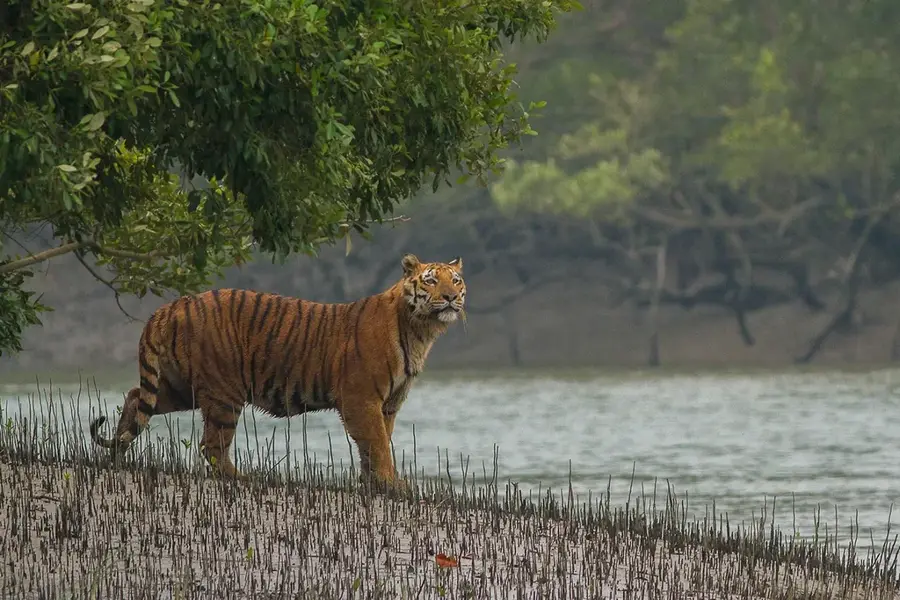
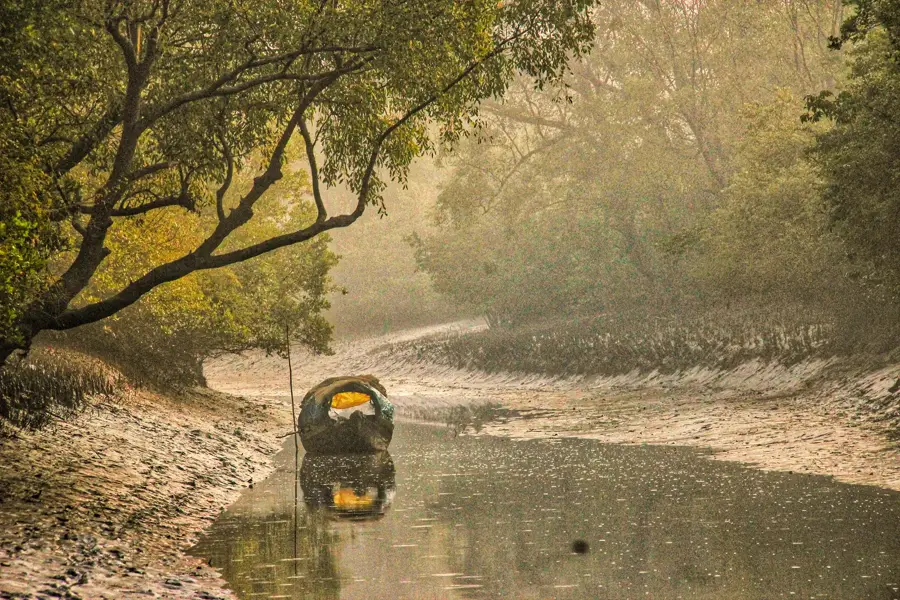
Sundarbans National Park is located within the vast delta of the Ganges, Brahmaputra, and Meghna rivers in West Bengal, India, bordering Bangladesh. It constitutes the world's largest contiguous mangrove forest and was designated a UNESCO World Heritage Site in 1987. The park is uniquely famous for its population of Royal Bengal tigers, which have adapted to an amphibious lifestyle and are known for their ability to swim across tidal channels. Spanning approximately 1330 square kilometers, the park's topography consists of a complex labyrinth of waterways, mudflats, and small islands. The daily tidal cycle is the dominant ecological force, reshaping the landscape twice each day and dictating the survival of specialized salt-tolerant flora and fauna. Beyond tigers, the park provides a sanctuary for endangered species such as the saltwater crocodile, the northern river terrapin, and the Irrawaddy dolphin. The Sundarbans also act as a critical natural buffer, protecting the hinterland from the devastating impact of seasonal cyclones. Ongoing research and conservation efforts in this extreme environment are of paramount global importance.
- Location: India
- Nearby: Gangtok (30 km)
Best time to visit & climate
The most pleasant time to visit is Jan, Feb, Dec.
| Jan | Feb | Mar | Apr | May | Jun | Jul | Aug | Sep | Oct | Nov | Dec | |
|---|---|---|---|---|---|---|---|---|---|---|---|---|
| Avg °C | 19 | 23 | 28 | 30 | 30 | 29 | 29 | 28 | 28 | 27 | 23 | 20 |
| Rain mm | 13 | 23 | 34 | 55 | 155 | 270 | 403 | 364 | 288 | 182 | 35 | 10 |
📋 Practical info
Geography
Facts
- The Sundarbans is the world's largest mangrove ecosystem.
- The park attained UNESCO World Heritage status in 1987.
- It hosts the only tiger population globally adapted to swimming.
- The Indian portion covers roughly 1330 square kilometers.
- The area is a key habitat for the rare Irrawaddy dolphin.
- Two high tides daily constantly reshape the park's geography.
Explore nearby
Notable places around
Route planner — Car & Motorhome
Where do you start? We build the route here, with stops and country notes along the way.
© OpenStreetMap contributors · OpenRouteService
Sights in the town Sundarbans National Park (1)
Sights nearby
Frequently asked questions
When is the best time to visit?
Can you see tigers here?
How do you explore the park?
Is a permit required for entry?
Is there accommodation inside the park?
Sundarbans National Park: where is it located?
Sundarbans National Park: when is the best time to visit?
Sundarbans National Park: why is it worth visiting?

Nearby cities











History & landmarks



Nature
More places