Plizio Visual Lab
Gwalior
ℹ️Practical info — Gwalior
▾
🌤 Weather — 5 days
📍 Nearby
Sights nearby
💡 Tips
- Visit Gwalior Fort early in the morning to beat the intense midday heat and avoid the biggest crowds.
- Negotiate auto-rickshaw fares firmly before getting in, as meters are rarely used.
- Dress modestly with shoulders and knees covered when visiting the temples within the fort complex.
- Use the hop-on-hop-off battery rickshaws to navigate the steep ascent to the fort.
- Be prepared for aggressive monkeys near the fort; do not carry open food.
🍽 Food
A classic Madhya Pradesh breakfast combination, easily found at street stalls in the early morning.
A famous regional sweet made of sesame and jaggery, well-suited for winter months.
Try these spicy, deep-fried snacks from established sweet shops near Naya Bazar.
🛍 Shopping · 🧘 Quiet spots
Best place to shop for traditional Chanderi and Maheshwari sarees.
Good for buying intricate local jewelry and handicrafts.
State-run shop for authentic handloom and handicraft products at fixed prices.
The gardens surrounding this 16th-century musical maestro's tomb are serene and architecturally beautiful.
A peaceful park near the Jal Vilas Palace, great for a relaxing stroll.
Once a palace, now an archaeological museum with a relatively quiet inner space.
Water temperature…
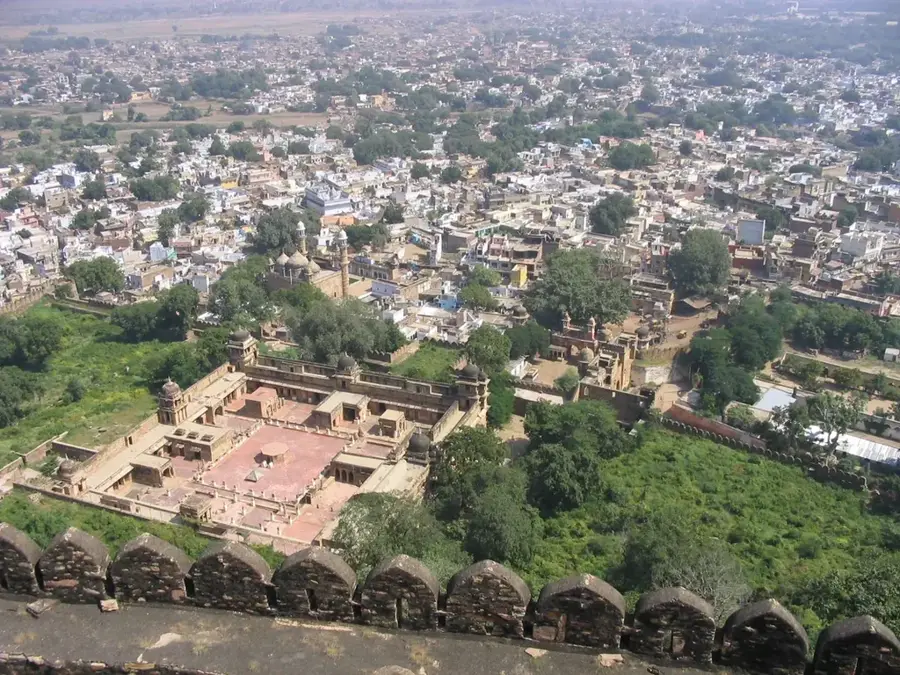
Gwalior, a historic city in northern Madhya Pradesh, is renowned for its monumental Gwalior Fort, perched atop a steep sandstone plateau. Often referred to as the "pearl among fortresses in India," the fort houses intricate structures like the 15th-century Man Singh Palace and ancient shrines like the Sas-Bahu Temple. Gwalior was a strategic center of power for centuries, serving as the seat for various dynasties including the Tomars and later the Scindias, who constructed the magnificent Jai Vilas Palace in European architectural style. Musically, the city is celebrated as the birthplace of the legendary Mughal court musician Tansen, earning Gwalior a place in the UNESCO Creative Cities Network for music. Today, the city merges its rich cultural heritage with modern industries, particularly in textiles, chemicals, and ceramics. As a major transportation hub in central India, Gwalior also hosts prominent educational institutions like IIITM. The blend of medieval military architecture, Indian classical music, and colonial legacy makes Gwalior a unique tourist destination.
- Location: India
- Top sights: HH Maharaja Sir Jiwajirao Scindia Museum · Heritage · light house thatipur zone
- Nearby: Agra (28 km)
- Population: ~1.054.420 (2025)
Best time to visit & climate
The most pleasant time to visit is Feb, Nov, Dec.
| Jan | Feb | Mar | Apr | May | Jun | Jul | Aug | Sep | Oct | Nov | Dec | |
|---|---|---|---|---|---|---|---|---|---|---|---|---|
| Avg °C | 16 | 19 | 25 | 32 | 36 | 36 | 31 | 29 | 28 | 26 | 21 | 17 |
| Rain mm | 12 | 13 | 10 | 7 | 17 | 93 | 205 | 207 | 113 | 21 | 8 | 6 |
Geography
Facts
- Gwalior has been a UNESCO City of Music since 2023.
- Gwalior Fort extends over a length of nearly 3 kilometers.
- Jai Vilas Palace houses two of the largest chandeliers in the world.
- The tomb of Tansen is the site of an annual classical music festival.
- Gujari Mahal now serves as an important archaeological museum.
- Gwalior was a prominent princely state during the British Raj.
Explore nearby
Notable places around
Route planner — Car & Motorhome
Where do you start? We build the route here, with stops and country notes along the way.
© OpenStreetMap contributors · OpenRouteService
Sights in the town Gwalior (13)
Frequently asked questions
What is the main attraction in Gwalior?
Why is Gwalior known for music?
What is special about Jai Vilas Palace?
What is the weather like in winter?
Is Gwalior easily accessible by train?
Gwalior: where is it located?
Gwalior: what is there to see?
Gwalior: when is the best time to visit?
Gwalior: why is it worth visiting?

Nearby cities
History & landmarks

Nature
More places