Plizio Visual Lab
Ancient Pella
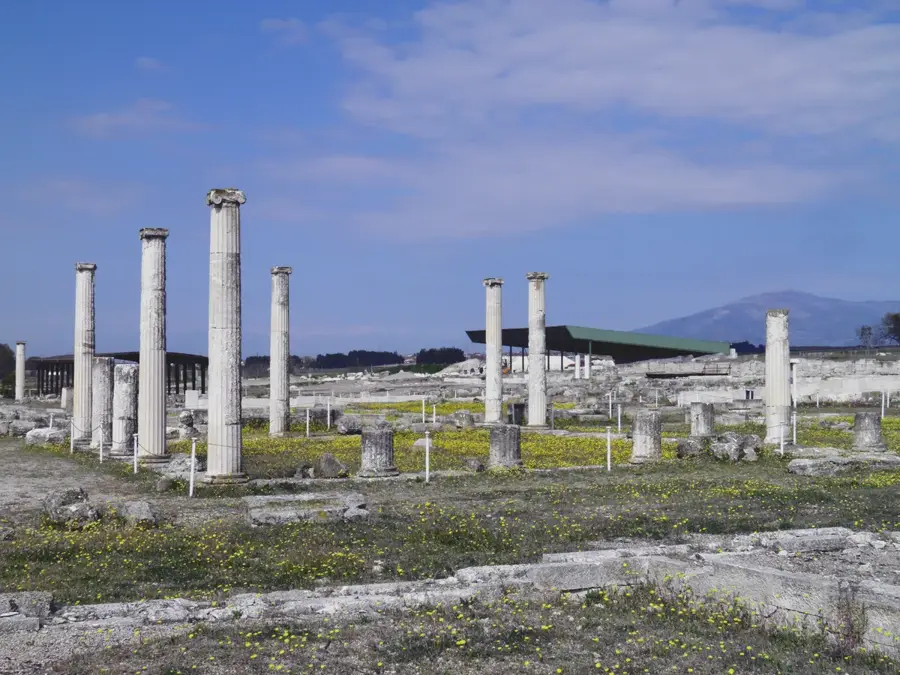
Pella became the glorious capital of the Kingdom of Macedonia in the late 5th century BC and was the birthplace of both Philip II and Alexander the Great. Under King Archelaus I, it replaced Aigai as the administrative center, evolving into one of the most sophisticated cities of the Hellenic world. The city is renowned for its innovative grid-like Hippodamian urban plan and its sprawling private villas adorned with world-class pebble mosaics. These mosaics, featuring scenes such as the Lion Hunt and Dionysus riding a panther, are among the finest examples of Greek art from the transition to the Hellenistic period. Archaeological excavations have uncovered a massive agora, one of the largest in the ancient world, and a monumental palace complex overlooking the city. The modern Archaeological Museum of Pella houses these exquisite finds, including intricate jewelry, sculptures, and wall paintings. Today, the extensive ruins of Pella demonstrate the cultural and political might that served as the launchpad for Alexander's global conquests.
- Location: Greece
- Top sights: Archaeological Museum of Ancient Pella · Pella necropolis
- Nearby: Giannitsa (10 km)
Best time to visit & climate
The most pleasant time to visit is May, Jun, Sep.
| Jan | Feb | Mar | Apr | May | Jun | Jul | Aug | Sep | Oct | Nov | Dec | |
|---|---|---|---|---|---|---|---|---|---|---|---|---|
| Avg °C | 2 | 4 | 8 | 13 | 18 | 24 | 27 | 27 | 21 | 15 | 9 | 4 |
| Rain mm | 52 | 45 | 53 | 51 | 59 | 53 | 38 | 37 | 52 | 59 | 53 | 66 |
📋 Practical info
Geography
Facts
- In antiquity, Pella was a seaside city connected to the Aegean via a navigable lagoon.
- The 'Lion Hunt' mosaic is a signed work from the late 4th century BC.
- Pella's agora occupied ten city blocks, covering roughly 70,000 square meters.
- The philosopher Aristotle lived in Pella while tutoring the young Alexander the Great.
- The playwright Euripides spent his final years here at the invitation of King Archelaus.
- The city was partially destroyed by an earthquake in the 1st century BC.
Explore nearby
Notable places around
Route planner — Car & Motorhome
Where do you start? We build the route here, with stops and country notes along the way.
© OpenStreetMap contributors · OpenRouteService
Sights in the town Ancient Pella (2)
Pella necropolis
Ancient cemetery of Pella with tombs from the Hellenistic and Roman periods.
Sights nearby
Frequently asked questions
Why is Pella historically significant?
What are the main sights in Pella?
Is there a museum on site?
How long does a visit to the archaeological site take?
When is the best time to visit?
Ancient Pella: where is it located?
Ancient Pella: what is there to see?
Ancient Pella: when is the best time to visit?
Ancient Pella: why is it worth visiting?

Nearby cities