Plizio Visual Lab

Église de Saint-Laurent-du-Maroni
Plizio editorial teamData Sources
Historical site
—°3
Église de Saint-Laurent-du-Maroni (French Guiana)

Weather…

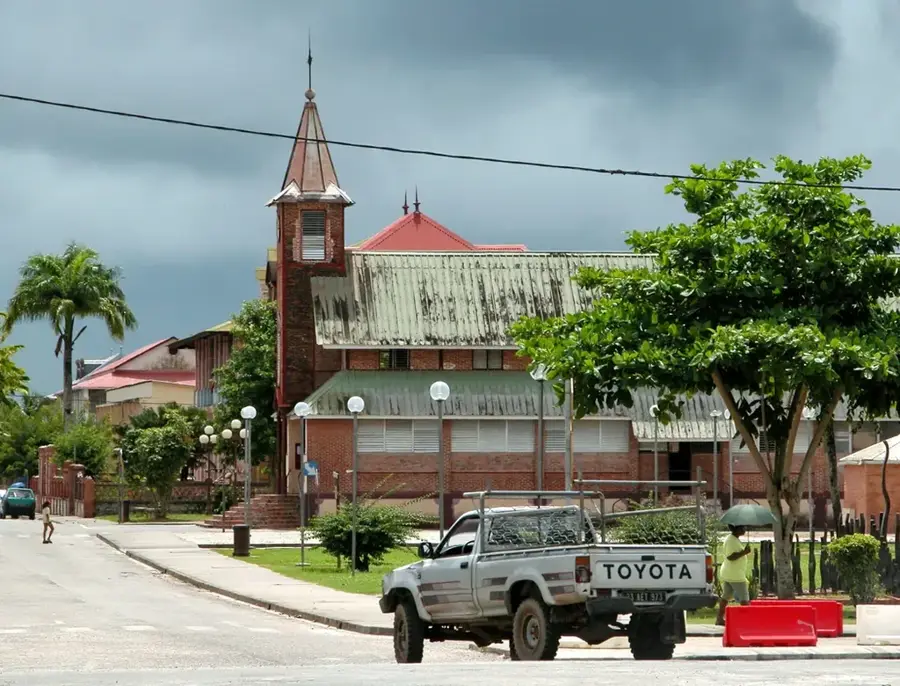
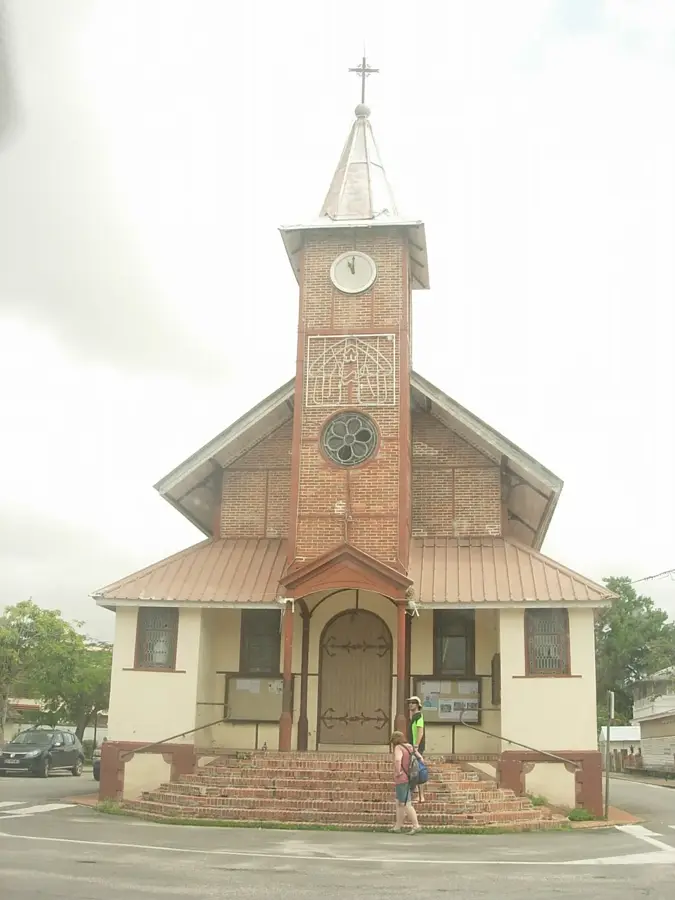
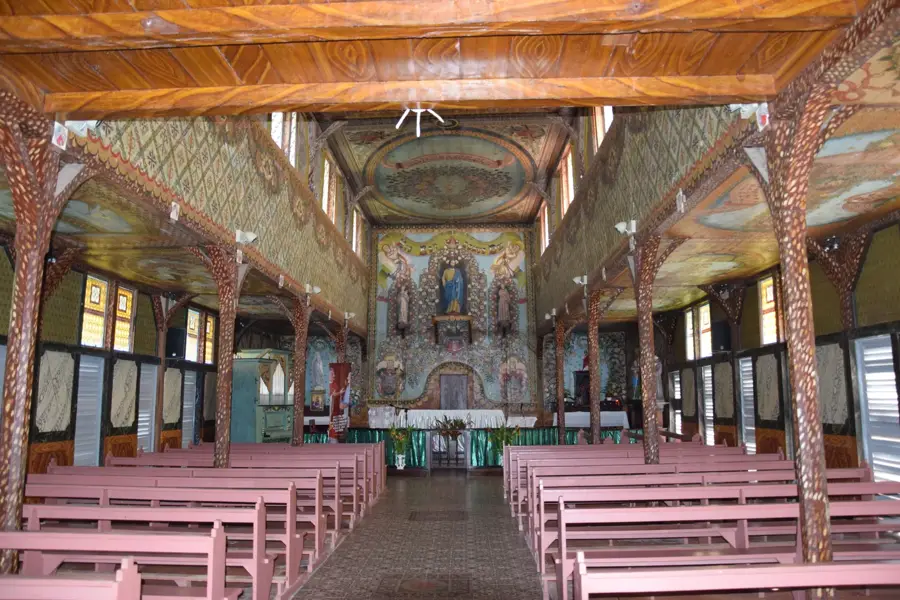
The Church of Saint-Laurent-du-Maroni is a prominent architectural landmark located in the heart of French Guiana's second-largest city. Built at the turn of the 20th century, between 1890 and 1900, the church was constructed using the forced labor of the prisoners from the local penal colony. Dedicated to Saint Lawrence, the structure is notable for its dignified red-brick architecture, with the bricks being manufactured in the colony's own kilns. The interior is adorned with colorful stained-glass windows and religious murals, many of which were painted by talented convicts serving their sentences. The church served as a moral and spiritual center for a town that was almost entirely defined by the presence of the 'bagne'. Its distinctive reddish hue provides a striking contrast to the lush green tropical surroundings. Over the years, the building has undergone several restorations to protect it from the intense tropical humidity. Today, it stands as a symbol of the city's complex history and a testament to the artistic legacy left behind by the men of the penal colony.

Best time to visit & climate

The most pleasant time to visit is Aug–Oct.

JanFebMarAprMayJunJulAugSepOctNovDec
Avg °C252526262626262627282726
Rain mm2101821662753832921981135764104216

📋 Practical info

🚪
Visiting
The interior of this historic church, renowned for being constructed by penal colony convicts, is generally open to the public for prayer and casual visits. The striking architecture and historical significance make it a poignant stop in the border city.
🕒
Typical hours
The church doors are usually open during standard daytime hours, typically closing in the early evening or around local mass times. It is advisable to avoid walking around like a tourist during active religious services out of respect for the local congregation.
📷
Photography
Photography is normally allowed inside the church, provided it is done respectfully and quietly without disrupting any ongoing prayers. Turning off your flash and keeping equipment minimal is a standard courtesy in active places of worship like this one.
⏱️
Time needed
Visitors generally spend about twenty to thirty minutes exploring the interior, admiring the detailed craftsmanship, and reading any available historical plaques. It is a contemplative space, so you might choose to sit quietly for a while longer.
Combine with
This visit perfectly complements a broader historical tour of Saint-Laurent-du-Maroni, especially the nearby Camp de la Transportation. Exploring the old colonial architecture along the Maroni River is another excellent way to spend your day.
🧭
Getting there
Centrally located within Saint-Laurent-du-Maroni, the church is easily accessible on foot from most parts of the downtown area. If you are arriving by car, street parking is typically available in the immediate vicinity of the church square.
💡
Insider tip
When visiting, ensure that your shoulders and knees are covered as a sign of respect, which is customary in local religious buildings. Taking a moment to notice the unique woodwork details crafted by the convicts provides deeper historical insight.

Geography

Coordinates
5.50200, -54.02900

Facts

  • The church was constructed entirely by convicts from the penal colony.
  • All bricks used in the construction were made in the colony's brickyard.
  • It was officially designated as a 'Monument Historique' in 1995.
  • Many of the interior murals were created by gifted inmate artists.
  • The church is located in the historic administrative district of the city.
  • It represents a rare example of 19th-century masonry in French Guiana.

Explore nearby

Notable places around
Route planner — Car & Motorhome

Where do you start? We build the route here, with stops and country notes along the way.

Vehicle
Only stops with (optional):

© OpenStreetMap contributors · OpenRouteService

Sights in the town Église de Saint-Laurent-du-Maroni (3)

Centre Culturel Mama Bobi🎭 culture

A cultural center dedicated to preserving and promoting the art and traditions of the Maroon people.

Théâtre école Kokolampoe🎭 culture

A performing arts school and theatre housed in a historic building of the former penal colony.

Marché de Saint-Laurent🎭 culture

A bustling marketplace known for colorful Maroon and Amerindian handicrafts and local tropical produce.

Sights nearby

Frequently asked questions

When was the church built?
The church was built between 1913 and 1920 by convicts of the penal colony.
Is the church still in use?
Yes, it is the main church of Saint-Laurent-du-Maroni and serves the local Catholic community.
Is photography allowed inside?
Photography is allowed as long as no services are being held and visitors behave respectfully.
Are there any special artworks?
The murals are particularly noteworthy, as they were also created by a talented convict.
How much is the entry fee?
Entry is free, but donations for the building's maintenance are welcome.
Église de Saint-Laurent-du-Maroni: where is it located?
Église de Saint-Laurent-du-Maroni is located in French Guiana.
Église de Saint-Laurent-du-Maroni: what is there to see?
Highlights include Centre Culturel Mama Bobi, Théâtre école Kokolampoe, Marché de Saint-Laurent.
Église de Saint-Laurent-du-Maroni: when is the best time to visit?
The most pleasant time to visit is Aug, Oct.
Église de Saint-Laurent-du-Maroni: why is it worth visiting?
The Church of Saint-Laurent-du-Maroni is a prominent architectural landmark located in the heart of French Guiana's second-largest city.
View on map → The Top 50 Attractions → OpenStreetMap →
South America
Explore with Plizio Discover more places in South America

Nearby cities

History & landmarks
Nature

More places