Plizio Visual Lab
Harar
ℹ️Practical info — Harar
▾
🌤 Weather — 5 days
📍 Nearby
Sights nearby
💡 Tips
- The old walled city (Jugol) has 368 alleyways; hiring a local guide is highly recommended to avoid getting lost.
- Watch the famous hyena feeding ritual just outside the city walls after dark.
- Women should dress modestly when exploring the historic Islamic shrines and mosques.
- Many museums and attractions close during the afternoon heat; plan visits for the morning.
- Bring cash, as ATMs inside the old city can be unreliable.
🍽 Food
Harar is famous for its coffee; try it in any traditional cafe in the old town.
A popular breakfast food, thin pastry served with honey or eggs, found in morning markets.
A local delicacy often served in traditional Harari restaurants outside the main gates.
🛍 Shopping · 🧘 Quiet spots
A bustling market outside the walls offering spices, textiles, and electronics.
Intricately woven traditional baskets, available from artisans inside Jugol.
A peaceful museum dedicated to the French poet, offering great views from the top floor.
Wander the colorful, narrow alleys in the early morning before the crowds arrive.
Water temperature…
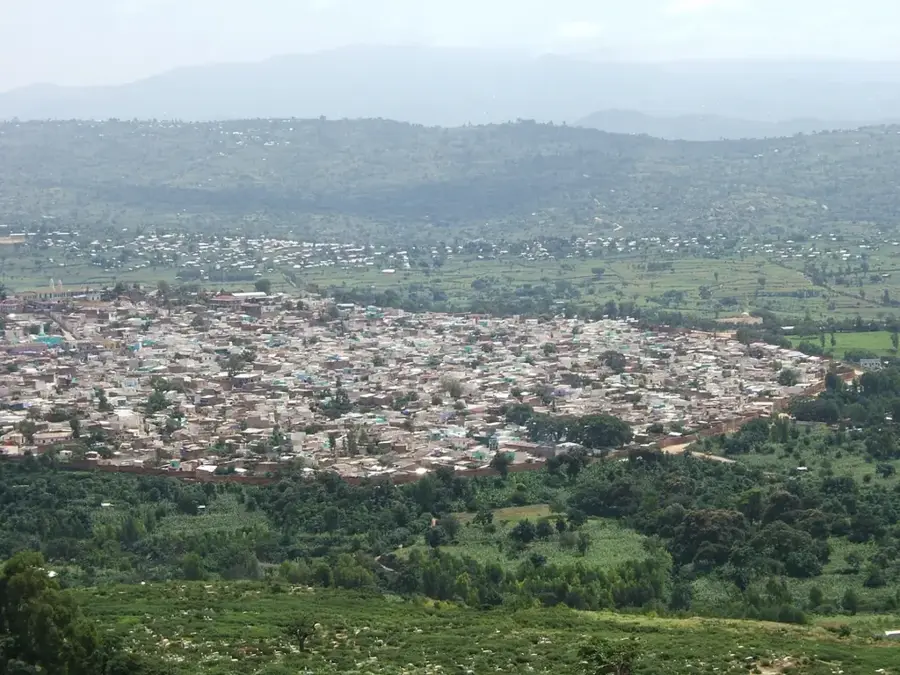
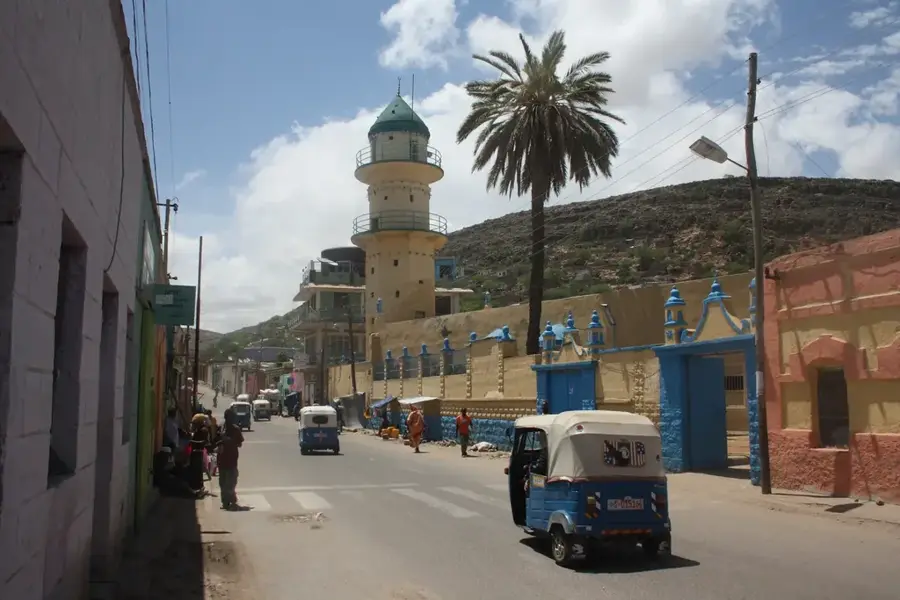
Harar, often called the 'City of Saints,' is a historic walled city in eastern Ethiopia and a UNESCO World Heritage site. Established between the 7th and 11th centuries, it rose to prominence as a major center for Islamic culture and trade in the Horn of Africa. The heart of the city is the Jugol, a fortified area surrounded by a five-kilometer-long stone wall built in the 16th century by Emir Nur ibn Mujahid. Within these walls, a labyrinth of over 360 narrow alleys contains a remarkable 82 mosques and 102 shrines, making it one of the holiest cities in Islam outside of the Arabian Peninsula. Harari architecture is unique; the traditional 'Adare' houses feature a specific floor plan with multiple raised platforms (nadabas) used for seating guests according to their social hierarchy. Historically, Harar was an independent emirate for centuries, serving as a vital link between the Red Sea ports and the Ethiopian interior. It was famously visited by Richard Burton in 1854, the first European to enter the forbidden city disguised as a Muslim. Later, it became home to the French poet Arthur Rimbaud, who lived there as a trader in the late 19th century. One of Harar's most famous traditions is the nightly hyena feeding ritual, where local 'hyena men' call out to wild spotted hyenas and feed them by hand or mouth at the city gates, a practice said to keep the predators from attacking livestock. Today, Harar remains an animated hub for the trade of high-quality coffee and khat, a stimulant leaf widely consumed in the region. The colorful markets, where women dress in brilliant multi-colored shawls, offer a sensory overload of spices, textiles, and handmade baskets. Despite modern expansions outside the walls, the Jugol remains an authentic living museum of medieval Islamic urban planning and Harari cultural resilience.
- Location: Ethiopia
- Population: ~157.000 (2023)
Best time to visit & climate
The most pleasant time to visit is Jan, Feb, Oct.
| Jan | Feb | Mar | Apr | May | Jun | Jul | Aug | Sep | Oct | Nov | Dec | |
|---|---|---|---|---|---|---|---|---|---|---|---|---|
| Avg °C | 19 | 21 | 23 | 23 | 23 | 23 | 21 | 21 | 21 | 21 | 19 | 19 |
| Rain mm | 6 | 13 | 46 | 114 | 85 | 51 | 116 | 146 | 113 | 37 | 22 | 11 |
Geography
Facts
- Harar is recognized by UNESCO as a World Heritage site since 2006.
- The city wall features five gates, symbolizing the five pillars of Islam.
- It contains 82 mosques, 3 of which date back to the 10th century.
- The elevation of Harar is approximately 1,885 meters (6,184 feet).
- Richard Burton was the first European to enter the city in 1854.
- The city is a primary center for the production of Ethiopian Harar coffee.
- The 'Hyena Men' tradition is passed down through generations of a few families.
- The Harari language (Gey Sinan) belongs to the Semitic family.
Explore nearby
Notable places around


Route planner — Car & Motorhome
Where do you start? We build the route here, with stops and country notes along the way.
© OpenStreetMap contributors · OpenRouteService
Sights in the town Harar (1)
Frequently asked questions
Where is Harar and how do I get there?
What is Harar famous for?
How long should I stay in Harar?
What attractions should I visit in Harar?
What is the best time to visit Harar?
Harar: where is it located?
Harar: when is the best time to visit?
Harar: why is it worth visiting?

Nearby cities
History & landmarks
Nature
More places