Plizio Visual Lab
Pliska Ruins
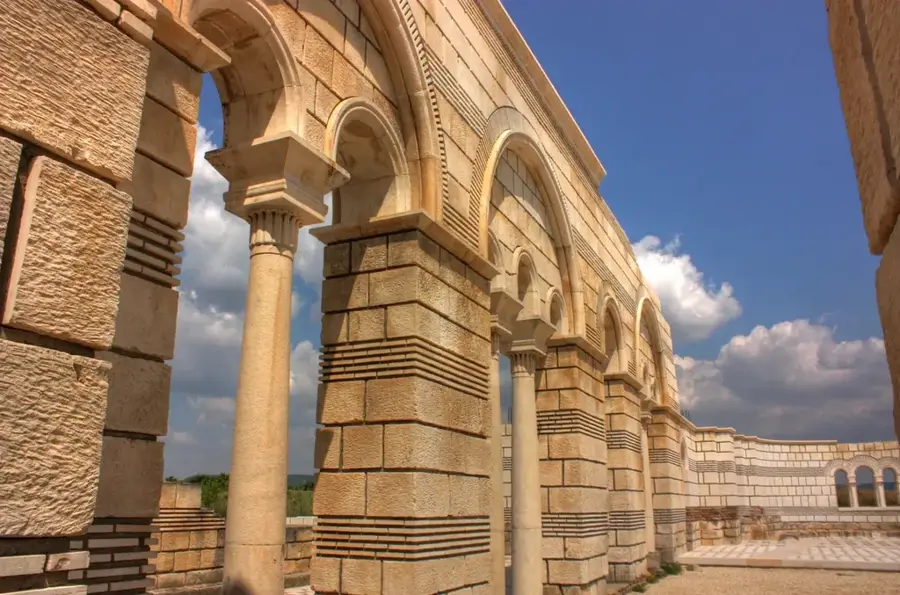
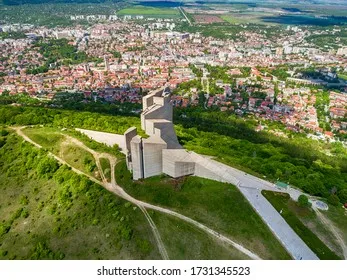
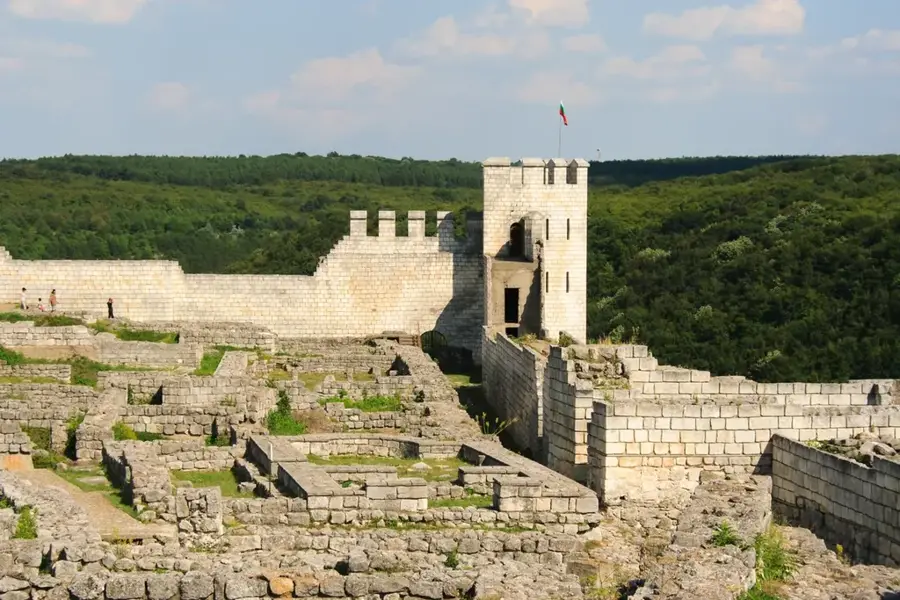
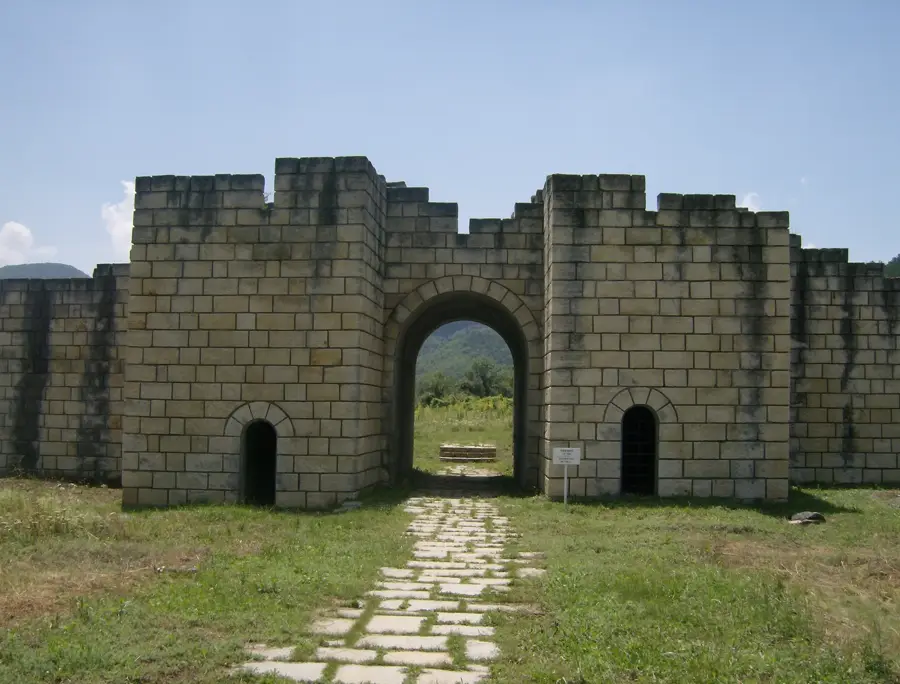
Pliska was the first capital of the First Bulgarian Empire, serving as its political and cultural heart from 681 to 893 CE. Founded by Khan Asparuh, the city was remarkable for its immense size, covering an area of 23 square kilometers. The urban layout consisted of an Outer City, protected by earthen ramparts and a moat, and an Inner City, fortified with massive stone walls. Within the Inner City lay the ceremonial palaces of Khan Krum and Khan Omurtag, featuring advanced systems like underfloor heating. Following the conversion to Christianity in 864, Prince Boris I commissioned the Great Basilica, which at 102 meters in length was one of the largest Christian churches in Europe at the time. Pliska was also the site where the Cyrillic script was first officially adopted and disseminated by the disciples of Cyril and Methodius. Although the capital was moved to Preslav in 893, Pliska remains a cornerstone of Bulgarian national identity and a key archaeological site for early medieval studies.
- Location: Bulgaria
- Top sights: Arkheologicheski muzei ,,Profesor Rasho Rashev" Archaeologicla Museum Prof. Rasho Rashev · Pliska Archaeological Reserve · Great Basilica
- Nearby: Kaspichan (9 km)
Best time to visit & climate
The most pleasant time to visit is Jun–Aug.
| Jan | Feb | Mar | Apr | May | Jun | Jul | Aug | Sep | Oct | Nov | Dec | |
|---|---|---|---|---|---|---|---|---|---|---|---|---|
| Avg °C | -1 | 1 | 5 | 10 | 16 | 21 | 24 | 24 | 18 | 12 | 6 | 1 |
| Rain mm | 49 | 40 | 44 | 39 | 60 | 67 | 52 | 45 | 55 | 57 | 44 | 52 |
📋 Practical info
Geography
Facts
- Pliska served as the capital from 681 to 893 CE.
- The Outer City covered a vast area of 23 square kilometers.
- The Great Basilica measured 102 meters in length.
- Inner City walls were constructed with stones 2.6 meters thick.
- The city was burnt by Byzantine Emperor Nicephorus I in 811.
- The Cyrillic script was officially adopted here in 886 CE.
Explore nearby
Notable places around
Route planner — Car & Motorhome
Where do you start? We build the route here, with stops and country notes along the way.
© OpenStreetMap contributors · OpenRouteService
Sights in the town Pliska Ruins (3)
Sights nearby
Frequently asked questions
What was Pliska?
What is the Great Basilica?
How far apart are the ruins?
Is there shade on the site?
What is the Yard of the Cyrillic Alphabet?
Pliska Ruins: where is it located?
Pliska Ruins: what is there to see?
Pliska Ruins: when is the best time to visit?
Pliska Ruins: why is it worth visiting?

Nearby cities