Plizio Visual Lab

Japanese Covered Bridge

Plizio editorial teamData Sources
monument
—°15
Japanese Covered Bridge (Vietnam)

Weather…

The Japanese Covered Bridge, also known as Chua Cau, is the iconic landmark of Hoi An and a symbol of the town's cultural diversity. It was originally built in the 1590s by the Japanese merchant community to connect their district with the Chinese sector. The bridge is characterized by its robust wooden construction and a curved tiled roof that provides shelter from sun and rain. Inside is a small temple dedicated to the god Bac De Tran Vu, the protector against earthquakes and storms. Statues of dogs and monkeys stand at the bridge's entrances, symbolizing the years construction began and ended according to the Chinese zodiac. Despite several renovations over the centuries, the bridge has largely retained its original character. It is an integral part of the Hoi An UNESCO World Heritage site and a must-see for every visitor to the region. The bridge is a popular subject for photographers, especially at sunset.

Best time to visit & climate

The most pleasant time to visit is Jan–Mar.

JanFebMarAprMayJunJulAugSepOctNovDec
Avg °C232324262829292929272624
Rain mm642236448086126185396557386200

📋 Practical info

🚪
Visiting
The covered bridge is publicly accessible and can be crossed at any time. It is a walkable monument connecting Hội An's old town.
🕒
Typical hours
As the bridge is part of the public space, there are no opening hours. It looks best in the early morning or evening.
📷
Photography
The bridge is one of the most photographed subjects in all of Vietnam. Come early to get the excellent shot without crowds.
⏱️
Time needed
Allow 15 to 30 minutes for crossing and taking photos. The surroundings then invite a stroll through the alleyways.
Combine with
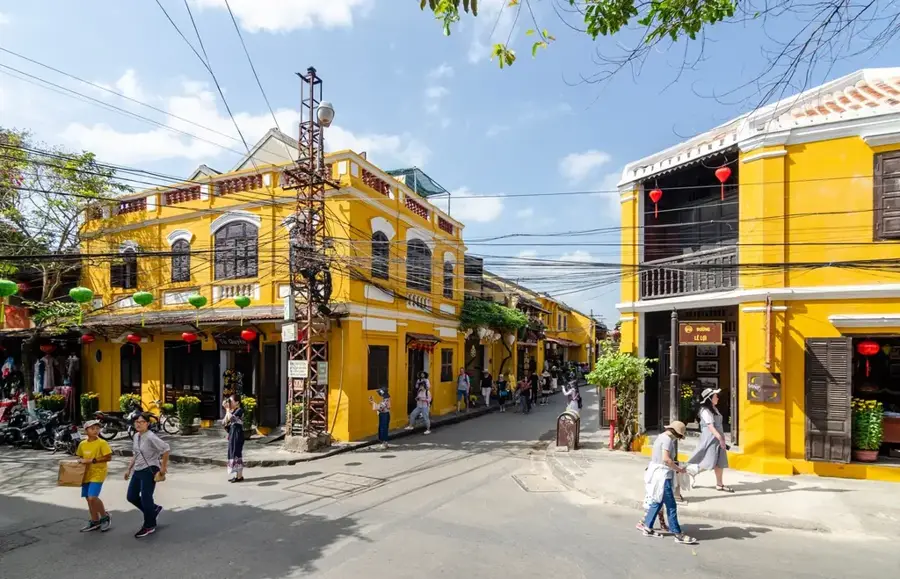
Combine the bridge visit with a tour of Hội An old town, the Japanese quarter, and lantern workshops. All are within walking distance.
🧭
Getting there
The bridge is in the heart of Hội An's old town, which is car-free. Best reached on foot or by bicycle from your hotel.
💡
Insider tip
Visit during the full moon when lantern festival lights magically illuminate the scene. Avoid midday due to heavy tourist flow.

Geography

Coordinates
15.87700, 108.32600

Facts

  • The bridge was originally constructed in 1593 by the Japanese.
  • The total length of the bridge is approximately 18 meters.
  • Dog and monkey statues mark the construction years (1593-1595).
  • The bridge is featured on the Vietnamese 20,000 Dong banknote.
  • The integrated temple once served as a place of prayer for sailors.
  • The structure underwent major renovations in the 18th and 20th centuries.

Explore nearby

Notable places around
Route planner — Car & Motorhome

Where do you start? We build the route here, with stops and country notes along the way.

Vehicle
Only stops with (optional):

© OpenStreetMap contributors · OpenRouteService

Sights in the town Japanese Covered Bridge (15)

Kazimierz Kwiatkowski🏺 historical

This memorial honors the Polish architect who played a crucial role in preserving the historical heritage of Hoi An and My Son.

Terracotta Park🏛 museum

This expansive outdoor museum showcases a remarkable collection of detailed terracotta miniatures representing global and regional landmarks.

🕒 Mo-Su 08:30-17:30💶

Cầu Gò Nổi mới🏰 castle

This architectural structure forms an important crossing point over the regional waterways, linking distinct local communities.

Phung Hung Old House🏛 museum

This beautifully preserved two-story wooden merchant house from the 18th century combines Japanese, Chinese, and Vietnamese architectural styles.

💶

Bảo tàng Điện Bàn🏛 museum

This regional museum in Dien Ban is dedicated to preserving historical artifacts and the cultural heritage of the surrounding province.

Nghĩa trang Liệt Sĩ🏺 historical

This solemn martyrs' cemetery serves as a memorial honoring the local soldiers who lost their lives during various national conflicts.

Chùa Vĩnh Gia đường ái nghĩa.⛪ religious

This serene religious compound has a quiet space for spiritual reflection and traditional local worship practices.

Miếu Lục Vị (lăng cô), khối Thanh Chiếm, Thanh Hà, Hội An⛪ religious

Located in the Thanh Ha ward, this traditional shrine is deeply rooted in local folklore and serves as a site for communal veneration.

Miếu Lùm Bà dàng, thanh hà, hội an⛪ religious

Positioned in the Thanh Ha area, this spiritual site provides a sanctuary for residents observing centuries-old traditional religious rites.

Produce🎭 culture

This lively local produce market provides a daily hub for residents to purchase fresh fruits, vegetables, and regional agricultural goods.

Chợ Nam Phước market🎭 culture

Serving the Nam Phuoc district, this large marketplace is a bustling center of trade offering everything from fresh seafood to colorful textiles.

🕒 Mo-Su 04:00-21:00

Chợ Cẩm Phô🎭 culture

Situated in the Cam Pho ward, this lively neighborhood market provides an authentic glimpse into the daily shopping routines of local residents.

Thanh Ha Pottery Village📍 landmark

Founded in the 16th century, this historic craft village along the Thu Bon River is famous for its intricate, hand-thrown terracotta pottery.

Làng đúc đồng Phước Kiều📍 landmark

Renowned for its bronze casting heritage, this artisanal village continues the ancient craft of creating finely detailed ceremonial gongs and bells.

Triem Tay Village📍 landmark

Surrounded by the tranquil Thu Bon River, this ecotourism village is known for its lush bamboo hedges and sustainable agricultural practices.

Sights nearby

Frequently asked questions

How much time is needed?
Visiting the bridge usually takes 15 to 30 minutes.
Is there an entrance fee?
Yes, a Hoi An Old Town entrance ticket is required.
Best time for photography?
Early morning or just before sunset has the best light.
Is the bridge accessible?
The bridge is old with steps, so accessibility is limited.
Should I avoid it in rain?
No, as it is covered, it actually features protection from rain.
Japanese Covered Bridge: where is it located?
Japanese Covered Bridge is located in Vietnam.
Japanese Covered Bridge: what is there to see?
Highlights include Kazimierz Kwiatkowski, Terracotta Park, Cầu Gò Nổi mới.
Japanese Covered Bridge: when is the best time to visit?
The most pleasant time to visit is Jan, Mar.
Japanese Covered Bridge: why is it worth visiting?

The Japanese Covered Bridge, also known as Chua Cau, is the iconic landmark of Hoi An and a symbol of the town's cultural diversity.
View on map → The Top 50 Attractions → OpenStreetMap →
Asia
Explore with Plizio Discover more places in Asia
More places in Vietnam →

Nearby cities

History & landmarks

Nature

More places