Plizio Visual Lab
Sabkhat Dukhan
Weather…
Water temperature…
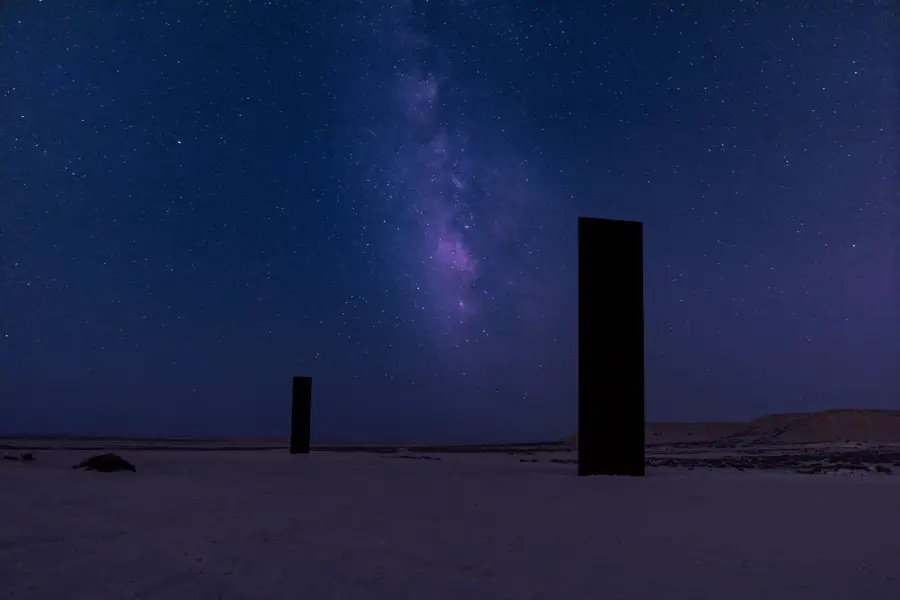
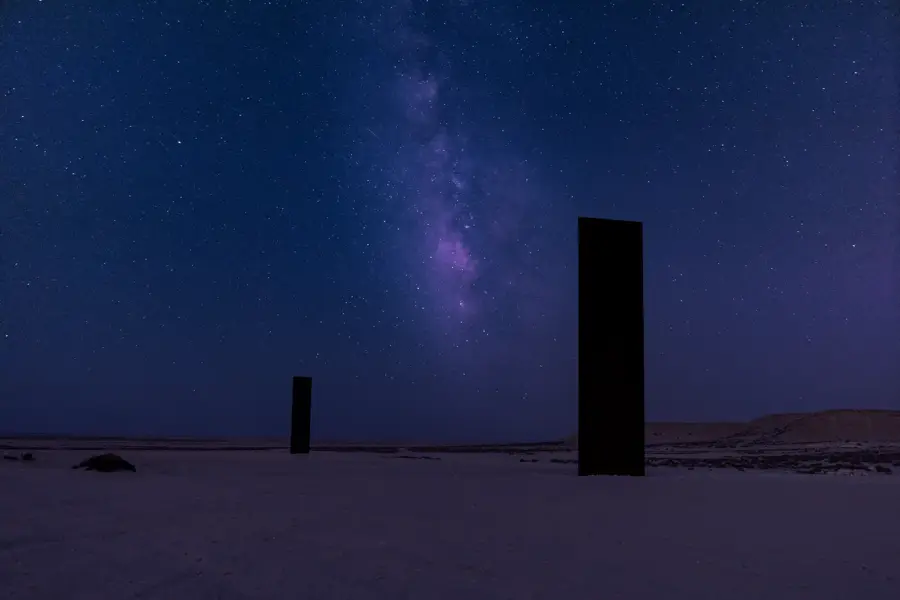
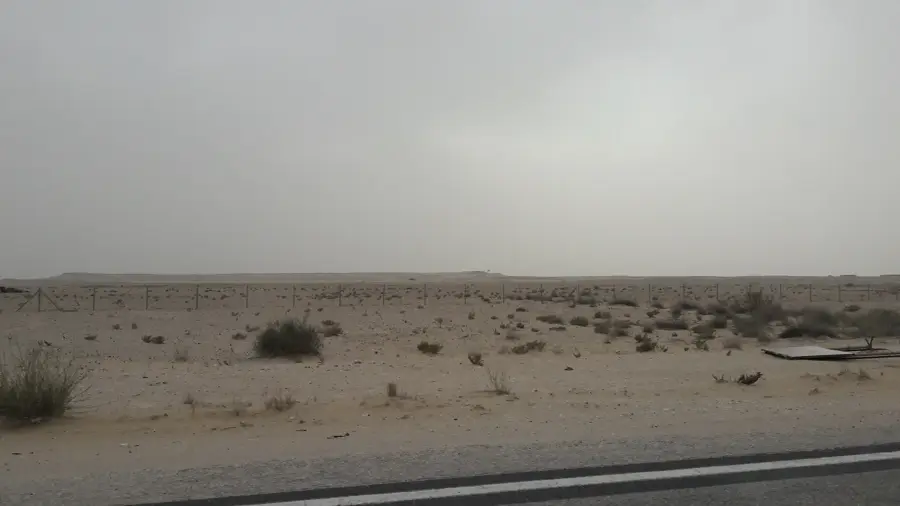
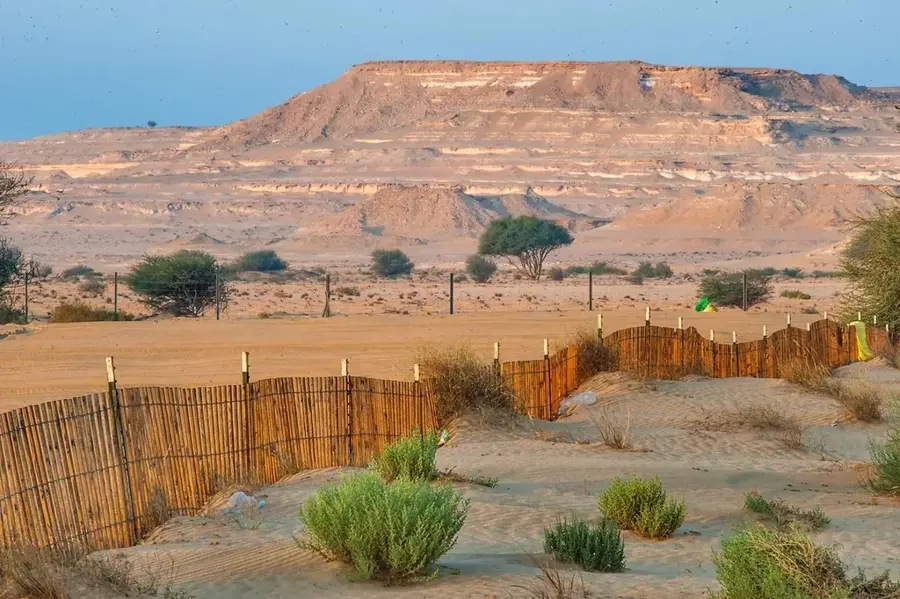
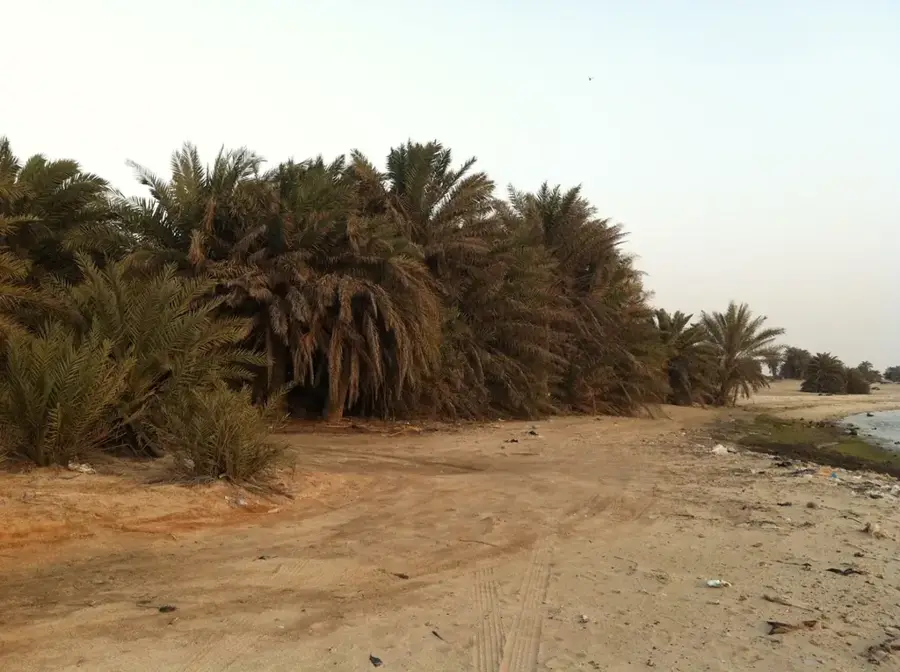
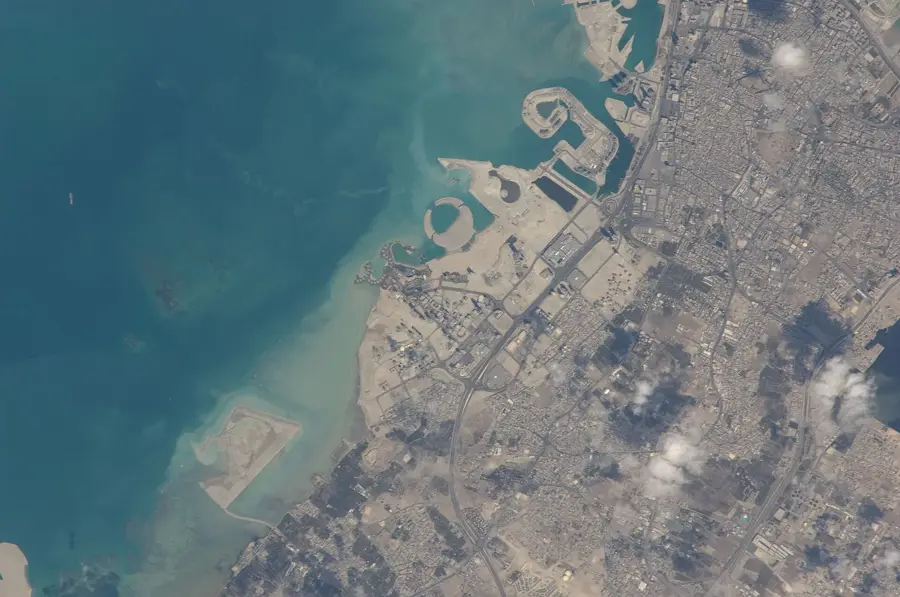
Sabkhat Dukhan is an extensive salt flat (sabkha) on the west coast of Qatar, near the city of Dukhan. These shallow, coastal depressions are characteristic of the arid coastal regions of the Arabian Peninsula. They form in areas where mineral-rich groundwater rises to the surface and evaporates, leaving behind a hard crust of salt, gypsum, and other minerals. The surface of Sabkhat Dukhan is hard and polygonally cracked when dry, but can become soft and muddy after rains or during high tides, making it dangerous to traverse. This environment is extremely hostile to life; only a few highly specialized microorganisms and halophytes (salt-tolerant plants) can survive here. Geologically, sabkhas are important as they are modern analogues of ancient rock formations that can form important oil and natural gas reservoirs. Sabkhat Dukhan is an impressive example of the dynamic geological and hydrological processes that shape Qatar's coastal landscape.
- Location: Qatar
- Nearby: Umm Bab (5 km)
Best time to visit & climate
The most pleasant time to visit is Feb, Mar, Dec.
| Jan | Feb | Mar | Apr | May | Jun | Jul | Aug | Sep | Oct | Nov | Dec | |
|---|---|---|---|---|---|---|---|---|---|---|---|---|
| Avg °C | 18 | 19 | 22 | 27 | 32 | 35 | 36 | 36 | 34 | 30 | 25 | 20 |
| Rain mm | 6 | 5 | 4 | 5 | 0 | 0 | 0 | 0 | 0 | 2 | 10 | 9 |
📋 Practical info
Geography
Facts
- The salt crust can be several centimeters thick.
- The polygonal cracking is caused by desiccation and shrinkage.
- Beneath the crust is often a soft, water-saturated mud.
- The formation of anhydrite and gypsum is common in these environments.
- The sabkha sequence is an important model in petroleum geology.
- The area is crossed by pipelines and roads that have been specially constructed.
- The rate of evaporation far exceeds precipitation.
Explore nearby
Notable places around
Route planner — Car & Motorhome
Where do you start? We build the route here, with stops and country notes along the way.
© OpenStreetMap contributors · OpenRouteService
Sights nearby
Frequently asked questions
What exactly is Sabkhat Dukhan?
Is Sabkhat Dukhan accessible to visitors?
When is the best time to visit?
Are there attractions nearby?
What should I be aware of when traveling?
Sabkhat Dukhan: where is it located?
Sabkhat Dukhan: when is the best time to visit?
Sabkhat Dukhan: why is it worth visiting?

Nearby cities
History & landmarks
Nature
More places