Plizio Visual Lab
Wieliczka Historical Salt Works
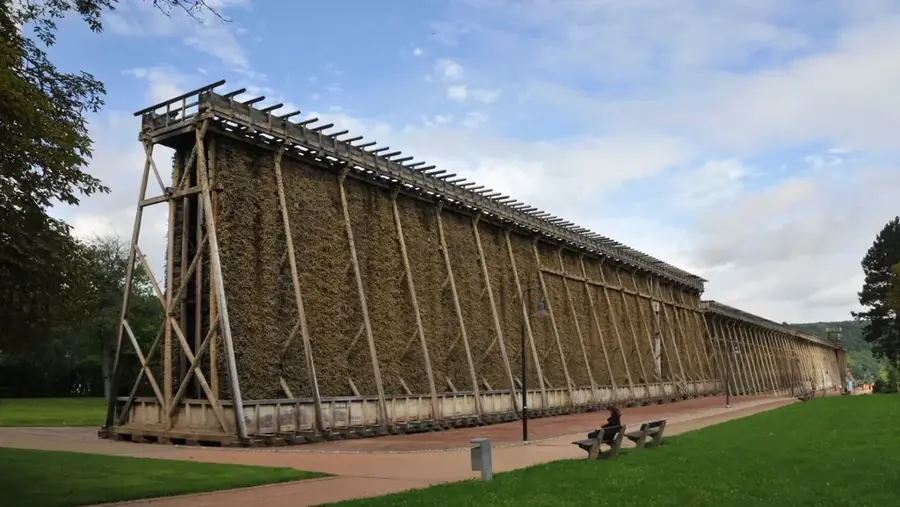
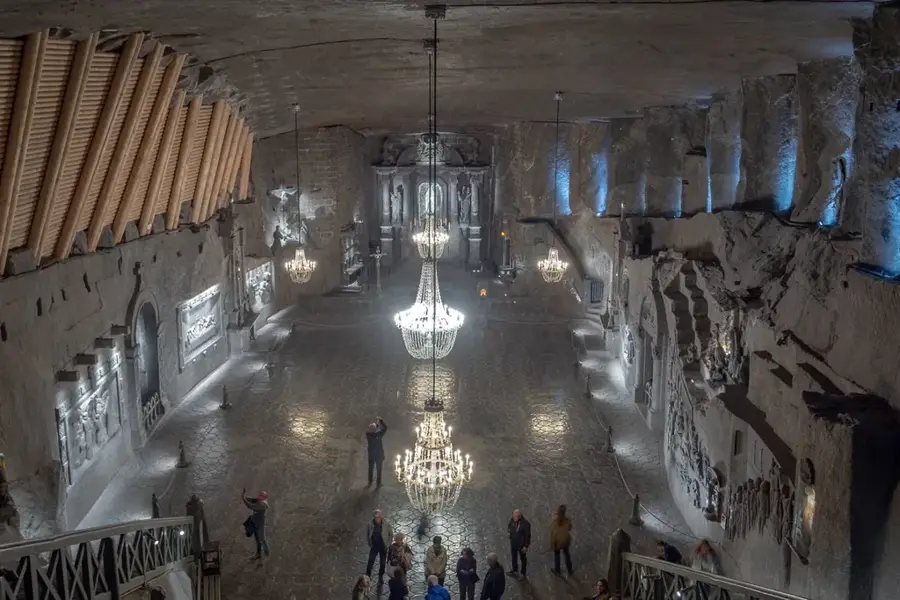
The Wieliczka Salt Mine is one of the world's oldest and most renowned industrial monuments, designated as a UNESCO World Heritage site in 1978. Rock salt extraction at this location began in the 13th century and continued for over 700 years, serving as a primary source of wealth for the Polish monarchy. The mine consists of a vast subterranean labyrinth featuring nine levels that reach a depth of 327 meters, with over 280 kilometers of tunnels and chambers. It is globally famous for its magnificent underground chapels, most notably the Chapel of St. Kinga, which is entirely carved from salt, including its intricate altars and crystal chandeliers. The site showcases the evolution of mining techniques over centuries and displays unique works of art created by miners who transformed dark caverns into halls of wide-open beauty. In addition to its historical and cultural significance, the mine operates a subterranean health resort, utilizing its unique microclimate for respiratory treatments. Today, Wieliczka attracts millions of visitors annually, standing as a symbol of Poland's industrial heritage and human ingenuity.
- Location: Poland
- Top sights: Jan Paweł II · Wieliczka Salt Mine · Szyb Daniłowicza
- Nearby: Kraków (12 km)
Best time to visit & climate
The most pleasant time to visit is Jun–Aug.
| Jan | Feb | Mar | Apr | May | Jun | Jul | Aug | Sep | Oct | Nov | Dec | |
|---|---|---|---|---|---|---|---|---|---|---|---|---|
| Avg °C | -3 | -2 | 3 | 9 | 14 | 18 | 20 | 20 | 15 | 9 | 4 | -1 |
| Rain mm | 46 | 43 | 48 | 53 | 99 | 96 | 106 | 76 | 74 | 58 | 46 | 41 |
📋 Practical info
Geography
Facts
- The mine was among the first 12 sites globally to be inscribed on the UNESCO list in 1978.
- It features over 2,000 chambers and a total tunnel length of nearly 300 kilometers.
- The Chapel of St. Kinga is the largest underground chapel in the world carved from salt.
- Industrial salt production at the mine officially ceased in 1996.
- The mine reaches a maximum depth of 327 meters below the surface.
- It houses an underground sanatorium located 135 meters below ground level.
Explore nearby
Notable places around

Route planner — Car & Motorhome
Where do you start? We build the route here, with stops and country notes along the way.
© OpenStreetMap contributors · OpenRouteService
Sights in the town Wieliczka Historical Salt Works (10)
Szyb poszukiwawczy🏛 museum
Oldest (mid-13th c.) mining shaft in Wieliczka, discovered during archaeological excavations in 1967.
Zamek Środkowy🏰 castle
Middle castle in Wieliczka, part of the historic salt works complex.
Zamek Żupny🏛 museum
Salt castle in Wieliczka, Poland, museum of salt mining history.
Zamek Północny🏰 castle
Northern castle in Wieliczka, part of the historic salt works complex.
Kościół pw. Świętego Klemensa w Wieliczce
Church building in Wieliczka, Poland, dedicated to Saint Clement.
Wagonik
Mining cart in Wieliczka, Poland, from the salt mine.
Sights nearby
Frequently asked questions
What is the difference between the salt mine and the salt works?
Can you visit the Salt Works Castle?
Are the salt works also a UNESCO World Heritage site?
What are the opening hours?
Are there combined tickets for the mine and the castle?
Wieliczka Historical Salt Works: where is it located?
Wieliczka Historical Salt Works: what is there to see?
Wieliczka Historical Salt Works: when is the best time to visit?
Wieliczka Historical Salt Works: why is it worth visiting?

Nearby cities