Plizio Visual Lab
Etosha National Park
Weather…
Water temperature…
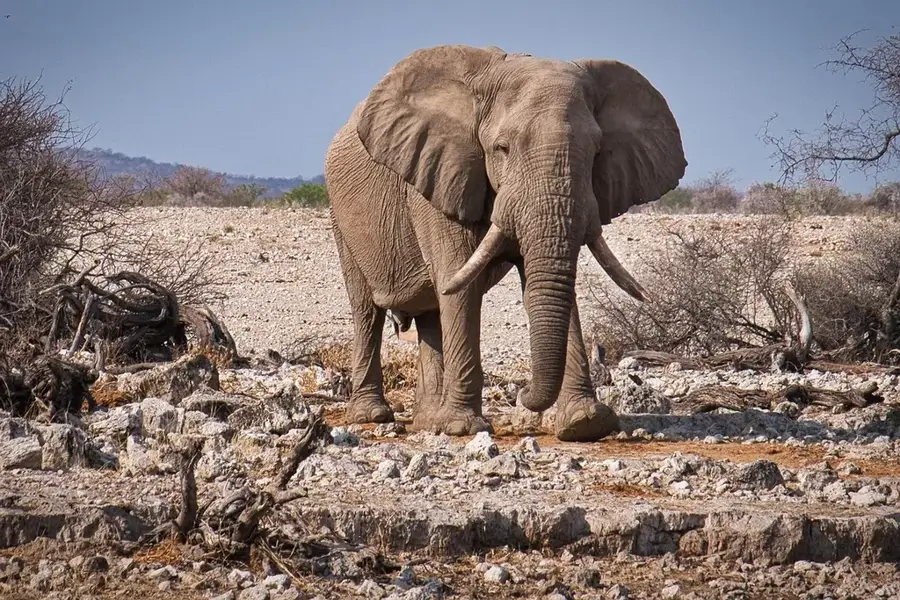
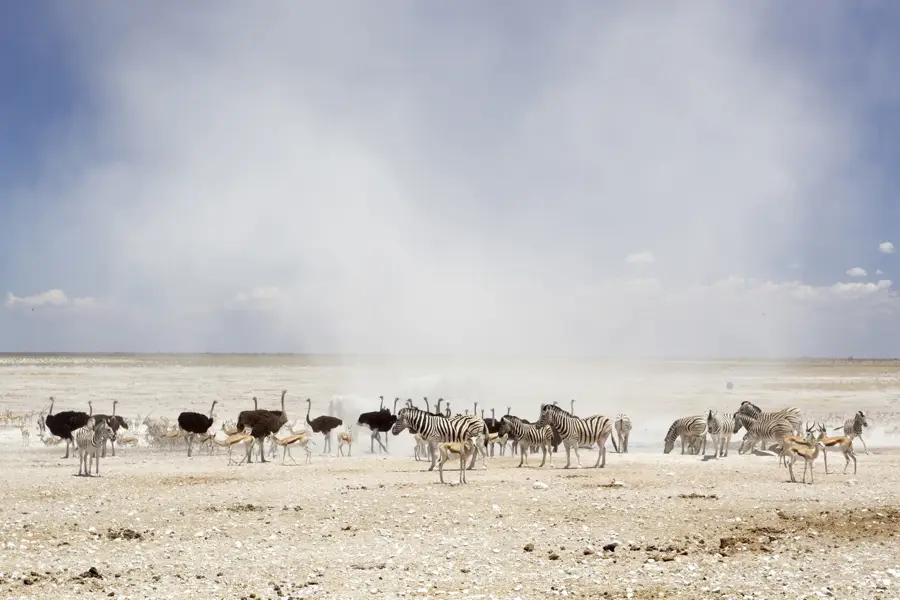
Etosha National Park is one of the world's most unique wildlife destinations, characterized by the vast Etosha Pan, which is visible even from space. This salt pan, covering nearly a quarter of the park, provides a shimmering white backdrop to some of the best game viewing in Africa. During the dry season, wildlife congregates in massive numbers around the permanent waterholes, allowing visitors to see lions, elephants, and rhinos with ease. The park's landscape varies from dense mopane woodland to open grasslands, supporting a rich diversity of life. Etosha is famous for being self-drive friendly, allowing travelers to explore at their own pace on a well-maintained network of gravel roads. Lodges within the park often feature floodlit waterholes for night viewing, providing a thrilling nocturnal safari experience. Dining here typically involves traditional South African and Namibian influences, with a focus on high-quality local meats. Entrance gates are located on the southern and eastern borders, making it accessible from Windhoek. The best time to visit for wildlife photography is the dry winter (May to October). The wet summer season brings lush greenery and a surge in birdlife, offering a completely different but equally beautiful perspective of this ancient wilderness.
- Location: Namibia
- Top sights: Owambo Basin · Etosha Pan
Best time to visit & climate
The most pleasant time to visit is May, Jun, Aug.
| Jan | Feb | Mar | Apr | May | Jun | Jul | Aug | Sep | Oct | Nov | Dec | |
|---|---|---|---|---|---|---|---|---|---|---|---|---|
| Avg °C | 27 | 26 | 26 | 24 | 21 | 18 | 17 | 21 | 25 | 28 | 28 | 28 |
| Rain mm | 95 | 99 | 70 | 21 | 1 | 0 | 0 | 0 | 2 | 14 | 38 | 60 |
📋 Practical info
Geography
Facts
- Area of over 22,000 km²
- Salt pan covers 25% of the park
- Established in 1907
- Home to the 'Big Four' (excluding buffalo)
- Significant sanctuary for black rhinos
- Over 114 mammal species
- Etosha means 'great white place'
- Numerous floodlit waterholes for viewing
Explore nearby
Notable places around



Route planner — Car & Motorhome
Where do you start? We build the route here, with stops and country notes along the way.
© OpenStreetMap contributors · OpenRouteService
Sights in the town Etosha National Park (2)
Sights nearby
Frequently asked questions
Etosha National Park: where is it located?
Etosha National Park: what is there to see?
Etosha National Park: when is the best time to visit?
Etosha National Park: why is it worth visiting?

Nearby cities
History & landmarks
Nature
More places