Plizio Visual Lab
Hola
ℹ️Practical info — Hola
▾
🌤 Weather — 5 days
📍 Nearby
Sights nearby
💡 Tips
- The climate is hot and semi-arid year-round; always carry bottled water and schedule outdoor activities for the early morning.
- Ensure you travel with a reliable local guide, especially if venturing outside the town towards the Tana River.
- Cash is heavily preferred, though M-Pesa (mobile money) is widely accepted; set up an M-Pesa account if staying for a while.
- Mosquito repellent and malaria prophylaxis are strongly advised, given the proximity to the river.
🍽 Food
Roasted goat meat is a local favorite. Find it at small roadside eateries, usually served with ugali or chapati.
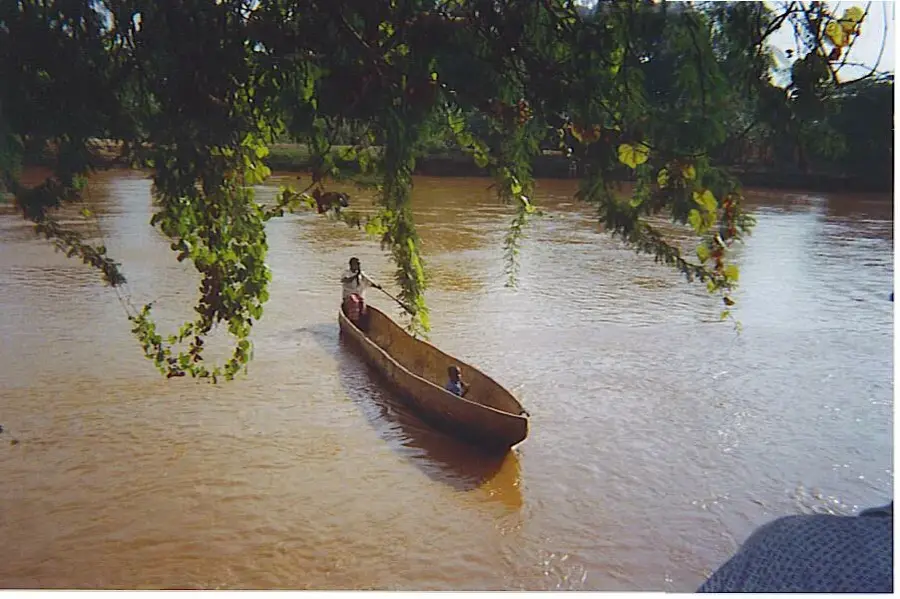
Fish caught directly from the Tana River can be found in local diners; try it deep-fried with a side of sukuma wiki (collard greens).
A fragrant, spiced rice dish indicative of the coastal and Islamic influence in the region, commonly available in local cafes.
🛍 Shopping · 🧘 Quiet spots
The bustling main market where you can find fresh mangoes and bananas grown in the Tana River irrigation scheme.
Ask around the market for traditional woven mats, baskets, or beadwork made by the local pastoralist and riverine communities.
Walk to the safer, elevated parts of the riverbank just before sunset for a peaceful view of the water and surrounding wildlife (with a guide).
While requiring a proper safari setup, the areas approaching the reserve offer stark, quiet semi-arid landscapes well-suited for birdwatching.
Water temperature…
Hola, also known as Galole, is the capital of Tana River County in eastern Kenya, situated on the banks of the Tana River, the longest river in the country. The town holds significant historical weight as it was the site of a detention camp for Mau Mau detainees during British colonial rule, where the tragic 1959 Hola massacre occurred, accelerating the international push for Kenyan independence. Geographically, Hola is characterized by a hot, semi-arid climate, with the river providing a lifeline for the Hola Irrigation Scheme, which supports the cultivation of cotton and maize. The population is a diverse mix of ethnic groups, including the Pokomo, Orma, and Wardei, making it a cultural melting pot in the region. In recent years, Hola has transformed from a remote outpost into a vital administrative center, benefiting from improved road networks connecting it to the rest of the country. The local economy is driven by government services, agricultural production, and trade along the river basin.
- Location: Kenya
- Population: ~20.912 (2023)
Best time to visit & climate
The most pleasant time to visit is Jul–Sep.
| Jan | Feb | Mar | Apr | May | Jun | Jul | Aug | Sep | Oct | Nov | Dec | |
|---|---|---|---|---|---|---|---|---|---|---|---|---|
| Avg °C | 30 | 31 | 31 | 29 | 27 | 26 | 26 | 26 | 27 | 28 | 28 | 29 |
| Rain mm | 14 | 6 | 37 | 114 | 133 | 52 | 31 | 22 | 19 | 75 | 118 | 64 |
Geography
Facts
- Administrative capital of Tana River County
- Situated along the banks of the 1,000km Tana River
- Former site of a British colonial detention camp
- Location of the historic 1959 Hola massacre incident
- Hub for the large-scale Hola Irrigation Scheme
- Inhabited mainly by the Pokomo and Orma communities
Explore nearby
Notable places around

Route planner — Car & Motorhome
Where do you start? We build the route here, with stops and country notes along the way.
© OpenStreetMap contributors · OpenRouteService
Sights in the town Hola (1)
Frequently asked questions
Where is Hola located?
What is Hola historically known for?
What is the main economic activity?
How is the weather in Hola?
Are there natural attractions?
Hola: where is it located?
Hola: when is the best time to visit?
Hola: why is it worth visiting?

Nearby cities
History & landmarks
More places