Plizio Visual Lab

Ventoux Massif
Plizio editorial teamData Sources
Mountain
—°3
Ventoux Massif (France)

Weather…

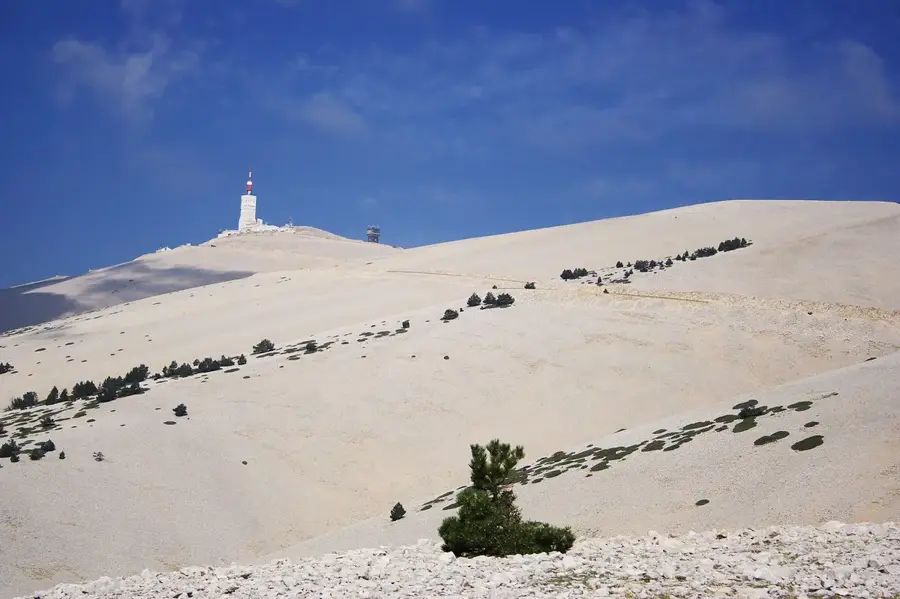
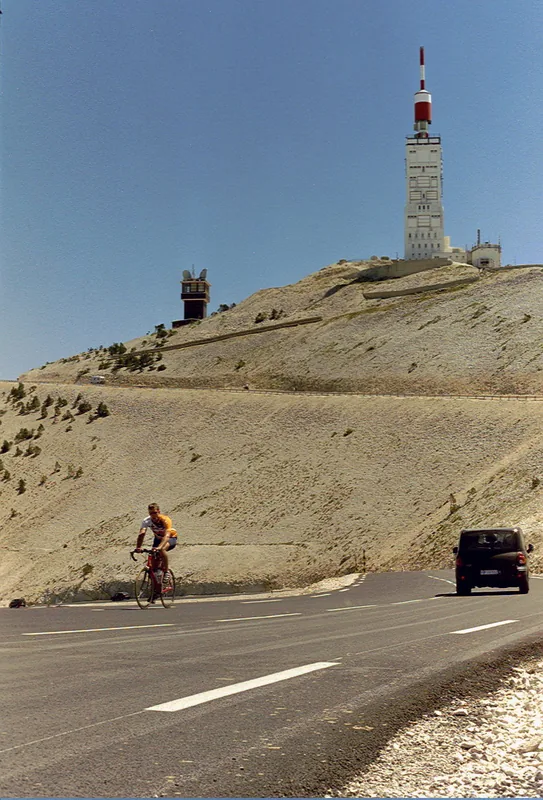
The Mont Ventoux massif, widely known as the 'Giant of Provence,' is a limestone mountain in southeastern France that reaches a height of 1,912 meters. Standing isolated from the main Alpine chain, it towers over the Comtat Venaissin plain, creating its own distinct weather patterns. Its name reflects the fierce winds that buffet the summit, with the Mistral occasionally reaching record speeds of over 300 km/h. The upper slopes are strikingly barren, covered in white limestone scree that gives the peak a snow-capped appearance even in summer. This stark landscape belies an extraordinary ecological richness; the mountain transitions from Mediterranean vineyards at its base to sub-arctic flora at the summit, leading to its designation as a UNESCO Biosphere Reserve in 1990. Mont Ventoux holds a legendary status in both literature and sports, marking the site of Francesco Petrarch's pioneering ascent in 1336 and serving as one of the most grueling and iconic climbs in the history of the Tour de France cycling race.

Best time to visit & climate

The most pleasant time to visit is Jun–Aug.

JanFebMarAprMayJunJulAugSepOctNovDec
Avg °C2361014202322171373
Rain mm474045546041243156799857

📋 Practical info

🧭
Getting there
Dominating the regional landscape, this iconic massif is typically approached from characterful towns in the Vaucluse department, with steep roads climbing up directly from the Rhône valley providing incredibly scenic, winding access.
📅
Best season
Late spring to early autumn is generally the strongly preferred time for ascents, though visitors should practically always be prepared for characteristically high winds and significantly cooler temperatures right near the summit.
⛰️
Terrain & paths
The lower slopes offer pleasantly shaded forest trails, while the upper sections become dramatically barren, rocky, and steep, providing a seriously challenging ascent that is world-famous among ambitious cyclists and avid hikers.
🎒
What to bring
Essential items typically include a strong windproof jacket due to notorious, fierce summit winds, sturdy hiking boots perfectly suited for the loose rocky terrain, and ample water, as there are very few natural sources on the mountain.
🅿️
Parking
There are usually decent parking areas available at the base villages and a few coveted spots near the actual summit, though the top can become extremely crowded and chaotic, especially during major summer cycling events.
⚠️
Safety
Extreme and sudden weather changes are remarkably common here, with intense heat at the base and fierce, freezing winds at the exposed summit; visitors must always dress adaptively and rigorously check specific mountain forecasts.
⏱️
Time needed
Hiking to the legendary summit and back generally requires a full, exhausting day of strenuous effort, while driving or cycling up the steep roads can typically be accomplished in a few intense hours depending on fitness levels.

Geography

Coordinates
44.17000, 5.27000

Facts

  • Mont Ventoux stands at 1,912 meters above sea level.
  • The wind speed exceeded 300 km/h during storms in 1967 and 1990.
  • The mountain hosts all major European bioclimatic zones.
  • Francesco Petrarch climbed it on April 26, 1336, with his brother.
  • It is part of the Ventoux-Lure UNESCO Biosphere Reserve since 1990.
  • The summit temperature rarely exceeds 18°C even in the height of summer.

Explore nearby

Notable places around
Route planner — Car & Motorhome

Where do you start? We build the route here, with stops and country notes along the way.

Vehicle
Only stops with (optional):

© OpenStreetMap contributors · OpenRouteService

Sights in the town Ventoux Massif (3)

Réserve de biosphère du Mont Ventoux (zone centrale)🌿 nature

The central protected area of the Mont Ventoux massif biosphere reserve.

Mont Serein📍 landmark

A peak and small ski resort on the north side of Mont Ventoux.

Jas du Mian (incertain)🏺 historical

Ruins of a traditional shepherd's shelter in the Ventoux Massif.

Sights nearby

Frequently asked questions

What distinguishes the massif from Mont Ventoux itself?
The massif encompasses the entire mountain area, while Mont Ventoux is the highest individual peak.
Does the area belong to the UNESCO program?
Yes, the massif has been recognized as a biosphere reserve since 1990.
What flora can be found in the lower elevations?
Mediterranean plants such as lavender, holm oaks, and cedar forests dominate there.
Are there hiking trails for families there?
Yes, in the forested lower zones, there are many shaded and less steep trails.
Can you go mountain biking in the massif?
Yes, there is an extensive network of marked mountain bike trails for all difficulty levels.
Ventoux Massif: where is it located?
Ventoux Massif is located in Provence-Alpes-Côte d'Azur, France.
Ventoux Massif: what is there to see?
Highlights include Réserve de biosphère du Mont Ventoux (zone centrale), Mont Serein, Jas du Mian (incertain).
Ventoux Massif: when is the best time to visit?
The most pleasant time to visit is Jun, Aug.
Ventoux Massif: why is it worth visiting?

The Mont Ventoux massif, widely known as the 'Giant of Provence,' is a limestone mountain in southeastern France that reaches a height of 1,912 meters.
View on map → The Top 50 Attractions → Most beautiful beaches → OpenStreetMap →
Europe
Explore with Plizio Discover more places in Europe
More places in France →

Nearby cities