Plizio Visual Lab

Mont Ventoux
Plizio editorial teamData Sources
Mountain
—°4
Mont Ventoux (France)

Weather…

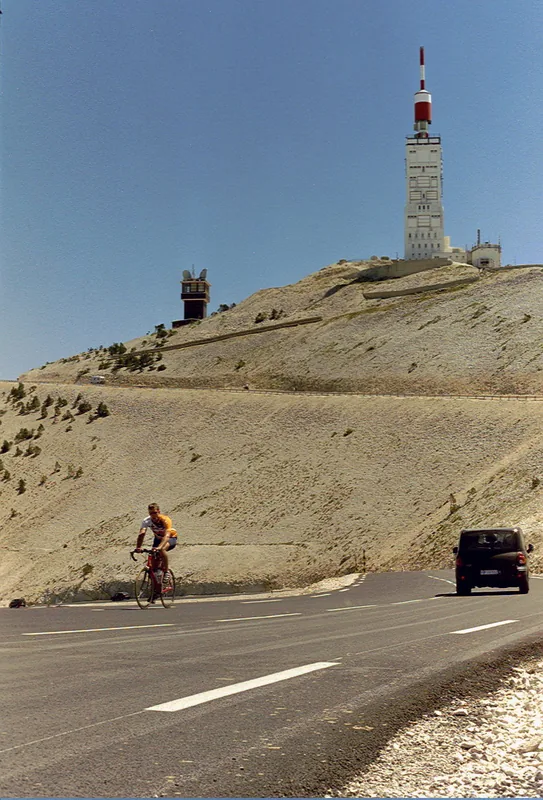
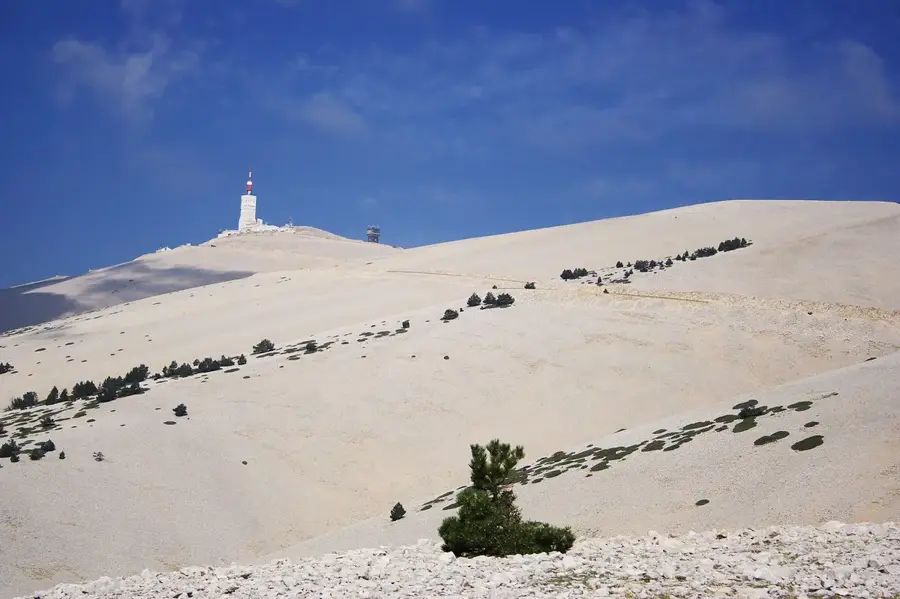
Mont Ventoux, often called the "Giant of Provence," is a prominent limestone peak in the Vaucluse department, reaching an elevation of 1,912 meters. Geographically isolated, it dominates the Provençal landscape, with its bare white summit appearing snow-capped throughout the year. Its name is likely derived from the Occitan word for windy, as Mistral winds exceeding 300 km/h have been recorded at the summit. Historically, the mountain gained fame following Petrarch's ascent in 1336, an event often cited as the birth of modern mountaineering. Today, Mont Ventoux is most famous as one of the most legendary and feared stages of the Tour de France. The ecological significance of the mountain is immense; it hosts an extraordinary range of flora and fauna, transitioning from Mediterranean species at the base to alpine species at the summit. Due to this biological diversity, UNESCO designated the massif as a Biosphere Reserve in 1990. The road to the summit remains a site of pilgrimage for cyclists from all over the world.

Best time to visit & climate

The most pleasant time to visit is Jun–Aug.

JanFebMarAprMayJunJulAugSepOctNovDec
Avg °C2361014202322171373
Rain mm474045546041243156799857

📋 Practical info

🧭
Getting there
The mountain known as the Giant of Provence is typically reached via well-developed, albeit steep, mountain pass roads that are considered legendary routes for both cyclists and drivers.
📅
Best season
The late spring months and early autumn offer the very best conditions, as the summer can become extremely hot, while the winter frequently brings snow and significant road closures.
⛰️
Terrain & paths
The landscape features a distinct, desert-like scree environment in the summit area, whereas the lower slopes are heavily forested and provide various hiking trails of differing steepness.
🎒
What to bring
Excellent sun protection, as the white stones strongly reflect the light, plenty of drinking water, and windproof jackets are absolutely indispensable on the often extremely stormy summit.
🅿️
Parking
Parking areas are usually available along the access roads and at the observatory near the summit, though they tend to fill up very quickly on popular summer weekends or during cycling races.
⚠️
Safety
The summit is notorious for its extremely strong winds, known as the Mistral storms; in the event of an approaching thunderstorm or extreme gusts, the exposed peak must be vacated immediately.
⏱️
Time needed
Driving up the mountain, conducting short explorations of the lunar-like landscape, and returning to the valley typically requires about three to four hours, with hikes taking considerably longer.

Geography

Coordinates
44.17330, 5.27890

Facts

  • The summit elevation of Mont Ventoux is 1,912 meters.
  • The mountain was designated a UNESCO Biosphere Reserve in 1990.
  • Wind speeds at the summit can exceed 300 km/h.
  • Petrarch climbed the summit on April 26, 1336.
  • The white summit consists of bare limestone scree.
  • The Tour de France first included the mountain in 1951.

Explore nearby

Notable places around
Route planner — Car & Motorhome

Where do you start? We build the route here, with stops and country notes along the way.

Vehicle
Only stops with (optional):

© OpenStreetMap contributors · OpenRouteService

Sights in the town Mont Ventoux (4)

Réserve biologique intégrale du Mont Ventoux🌿 nature

A strictly protected forest area on the northern slope of Mont Ventoux.

Mont Ventoux📍 landmark

A prominent mountain peak in Provence, known as the Giant of Provence.

Belvédère des Alpes🌿 nature

A viewpoint on Mont Ventoux offering expansive views of the Alps.

Belvédère de Provence🌿 nature

A panoramic point on Mont Ventoux overlooking the Provence region.

Sights nearby

Frequently asked questions

Why does the summit look white?
It is not snow, but bare limestone, which gives the mountain its characteristic appearance.
Can you drive to the summit?
Yes, the road is open in summer, but often closed in winter (Nov-May) due to snow.
How windy is it up there?
Very windy. The Mistral often blows at over 100 km/h; speeds of 320 km/h have been recorded.
Is the mountain suitable for cyclists?
It is legendary in the Tour de France. The ascent from Bédoin is considered one of the toughest in Europe.
What is the best time to visit?
June to September has the most stable weather and clear roads to the observatory.
Mont Ventoux: where is it located?
Mont Ventoux is located in Provence-Alpes-Côte d'Azur, France.
Mont Ventoux: what is there to see?
Highlights include Réserve biologique intégrale du Mont Ventoux, Mont Ventoux, Belvédère des Alpes.
Mont Ventoux: when is the best time to visit?
The most pleasant time to visit is Jun, Aug.
Mont Ventoux: why is it worth visiting?

Mont Ventoux, often called the "Giant of Provence," is a prominent limestone peak in the Vaucluse department, reaching an elevation of 1,912 meters.
View on map → The Top 50 Attractions → Most beautiful beaches → OpenStreetMap →
Europe
Explore with Plizio Discover more places in Europe
More places in France →

Nearby cities