Plizio Visual Lab

Mont Aiguille
Plizio editorial teamData Sources
Mountain
—°7
Mont Aiguille (France)

Weather…

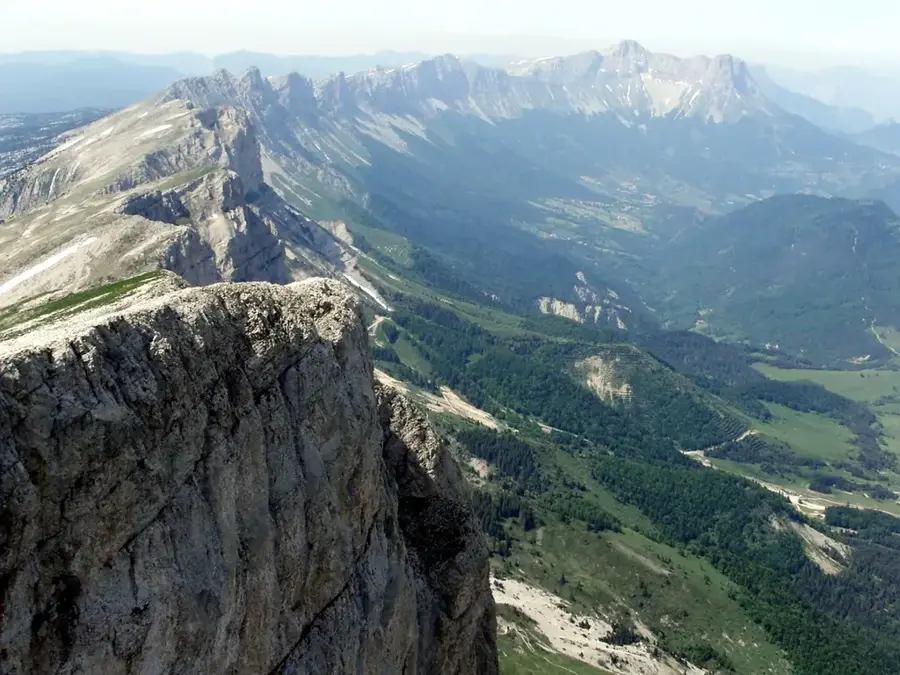
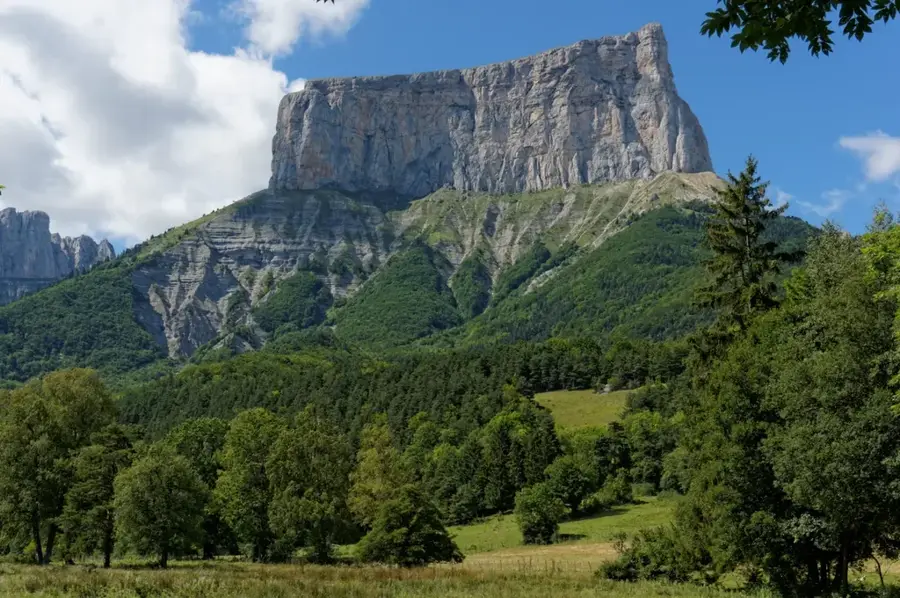
Mont Aiguille is a prominent tabular mountain on the eastern edge of the Vercors Massif in the French Alps, located about 50 kilometers south of Grenoble. Rising to an elevation of 2,085 meters, it stands isolated from the surrounding landscape and is often cited as one of the 'Seven Wonders of the Dauphiné' due to its unique shape. Geologically, the mountain consists of hard limestone resting on a base of softer marl, which resulted in its steep, nearly vertical walls. The first ascent in 1492 by Antoine de Ville, commissioned by King Charles VIII, is widely regarded as the birth of modern alpinism because it was the first time technical aids were used to overcome difficult terrain. Today, Mont Aiguille remains an iconic destination for climbers and hikers and a significant symbol of the geological diversity of the Vercors Plateau. The area is protected as a nature reserve, hosting rare plant species and birds of prey that nest in the cliffs.

Best time to visit & climate

The most pleasant time to visit is Jun–Aug.

JanFebMarAprMayJunJulAugSepOctNovDec
Avg °C-10371115171713940
Rain mm7057686588655658678510077

📋 Practical info

🧭
Getting there
This spectacularly isolated peak in the Vercors massif is generally approached from surrounding small villages, with idyllic approach trails winding through the lower forests directly to the steep base of the imposing cliffs.
📅
Best season
The handy time for a hike around the mountain is from late spring to autumn, when the Vercors plateau is free of snow and reliable conditions prevail, beautifully highlighting the rock pinnacle in bright sunshine.
⛰️
Terrain & paths
While the forest approach trails are moderately steep, the actual ascent of the mountain consists exclusively of near-vertical rock faces that are classed as serious, highly technical rock climbing routes, not hiking trails.
🎒
What to bring
Standard hikers need good boots and poles for the approach trails; however, those intending to scale the extreme peak must obligatorily bring full technical rock climbing gear, ample ropes, and proper safety harnesses.
🅿️
Parking
Visitors typically park their vehicles in the small parking lots of nearby hamlets or designated nature reserve areas, from which the beautiful approach hikes to the direct base of the mountain securely begin.
⚠️
Safety
Hiking around the base of the mountain is generally safe if one stays on paths; however, attempting to climb the near-vertical faces is extremely dangerous and strictly reserved for very experienced rock climbers.
⏱️
Time needed
Walking the base trails to admire the striking profile usually takes a half to a full day, whereas a technical climbing ascent of the peak itself represents a serious, physically demanding full-day undertaking.

Geography

Coordinates
44.84000, 5.56000

Facts

  • Elevation is 2,085 meters above sea level
  • First recorded ascent took place on June 26, 1492
  • Located in the commune of Chichilianne, Isère department
  • Composed primarily of Urgonian limestone
  • Formerly known as 'Mons Inaccessibilis' (The Inaccessible)
  • Became part of the Vercors Regional Natural Park in 1970

Explore nearby

Notable places around
Route planner — Car & Motorhome

Where do you start? We build the route here, with stops and country notes along the way.

Vehicle
Only stops with (optional):

© OpenStreetMap contributors · OpenRouteService

Sights in the town Mont Aiguille (7)

Mont Aiguille📍 landmark

A striking flat-topped mountain in the Vercors Massif, considered one of the seven wonders of Dauphiné.

Petit Veymont📍 landmark

A mountain peak located near Mont Aiguille in the French Alps.

Goutaroux📍 landmark

Rock formation near Mont Aiguille.

Bélvédère de Pansaret🌿 nature

A viewpoint offering panoramic vistas of the surrounding Alpine landscape.

Col de Papavet🌿 nature

A mountain pass providing expansive views of Mont Aiguille.

Galerie Kyeper🏛 museum

A museum dedicated to the history and climbing of the distinct Mont Aiguille.

Chapelle Notre-Dame⛪ religious

Chapel Notre-Dame at the foot of Mont Aiguille.

Sights nearby

Frequently asked questions

Why is Mont Aiguille called a wonder?
It is considered one of the 'Seven Wonders of the Dauphiné' due to its striking, isolated tooth shape.
When was it first climbed?
The first ascent was in 1492 by order of King Charles VIII, considered the birth of alpinism.
Can you climb the mountain without climbing gear?
No, all routes require climbing experience or a mountain guide (normal route II-III).
How high is Mont Aiguille?
The summit is at an altitude of 2085 meters.
In which mountain range is it located?
It is located in the Vercors massif in the Isère department.
Mont Aiguille: where is it located?
Mont Aiguille is located in Provence-Alpes-Côte d'Azur, France.
Mont Aiguille: what is there to see?
Highlights include Mont Aiguille, Petit Veymont, Goutaroux.
Mont Aiguille: when is the best time to visit?
The most pleasant time to visit is Jun, Aug.
Mont Aiguille: why is it worth visiting?

Mont Aiguille is a prominent tabular mountain on the eastern edge of the Vercors Massif in the French Alps, located about 50 kilometers south of Grenoble.
View on map → The Top 50 Attractions → Most beautiful beaches → OpenStreetMap →
Europe
Explore with Plizio Discover more places in Europe
More places in France →

Nearby cities