Plizio Visual Lab
Alesia
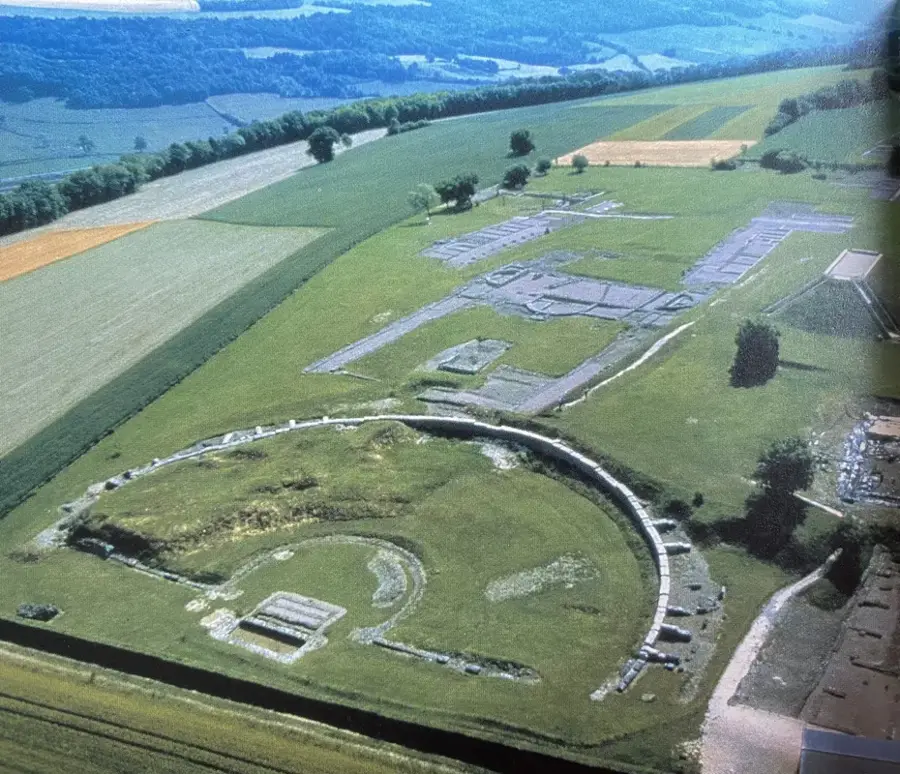
The Siege of Alesia in 52 BC represents one of the most significant turning points in ancient European history, marking the definitive victory of Julius Caesar over the Gallic tribes led by Vercingetorix. Caesar employed a sophisticated double line of fortifications: circumvallation to trap the Gauls within the oppidum, and contravallation to defend his forces against a massive relief army from the outside. After weeks of fighting and a looming famine, Vercingetorix was forced to surrender, signaling the end of organized Gallic resistance and the beginning of the complete Romanization of Gaul. Today, the historical site is located in Alise-Sainte-Reine in the Côte-d'Or department, where archaeological excavations have uncovered extensive remains of the Roman siege works. The MuséoParc Alésia, opened in 2012, provides an immersive experience for visitors through exhibitions, digital reconstructions, and life-size replicas of the siege engines. The landscape still retains the topographic features that dictated the flow of the battle, illustrating Caesar's strategic brilliance. The site is a symbolic location for French identity and the study of Gallo-Roman culture.
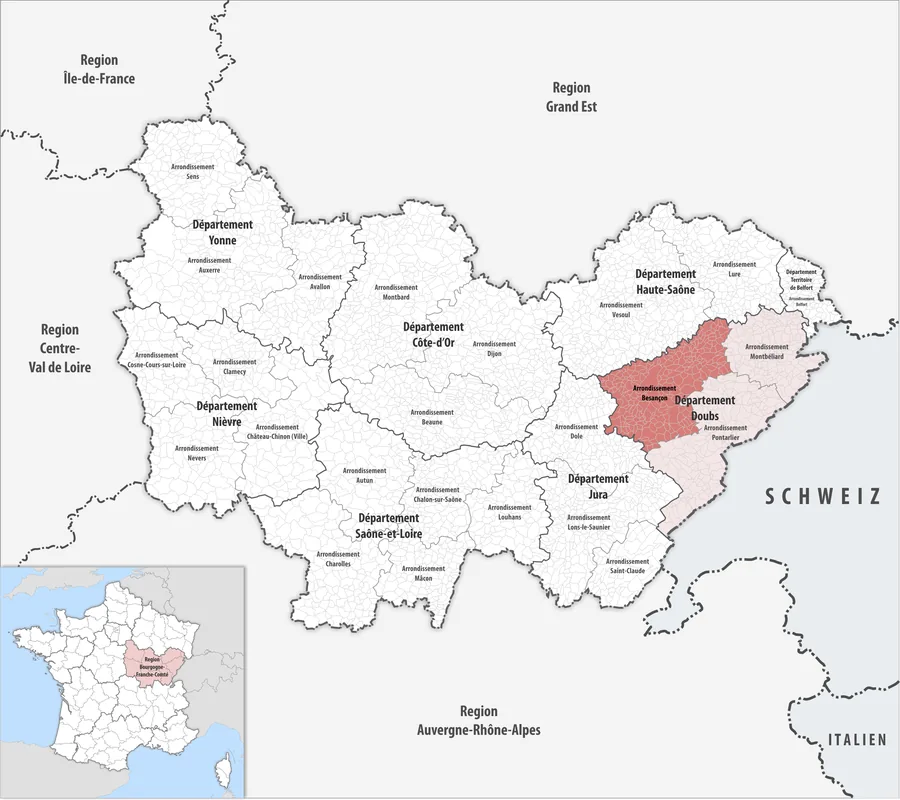
- Location: Bourgogne-Franche-Comté, France
- Top sights: Église Saint-Léger · Camp de Mincey · Viewing Platform
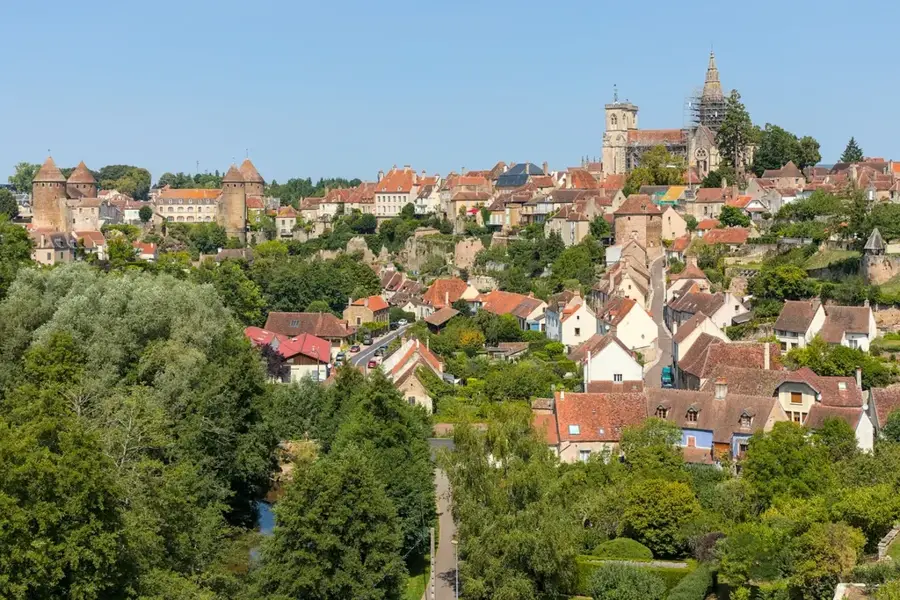
- Nearby: Semur-en-Auxois (14 km)
Best time to visit & climate
The most pleasant time to visit is Jun–Aug.
| Jan | Feb | Mar | Apr | May | Jun | Jul | Aug | Sep | Oct | Nov | Dec | |
|---|---|---|---|---|---|---|---|---|---|---|---|---|
| Avg °C | 1 | 2 | 6 | 9 | 13 | 17 | 19 | 18 | 15 | 11 | 6 | 2 |
| Rain mm | 61 | 50 | 57 | 56 | 77 | 65 | 64 | 68 | 51 | 73 | 70 | 72 |
📋 Practical info
Geography
Facts
- The Battle of Alesia took place in the late summer of 52 BC.
- The Roman fortifications reached a total length of approximately 35 kilometers.
- An estimated 80,000 Gallic warriors were trapped within the oppidum of Alesia.
- Julius Caesar commanded about 10 to 12 Roman legions during the siege.
- Vercingetorix was imprisoned in Rome for six years following his capture.
- Napoleon III erected a 7-meter-tall statue of Vercingetorix on the hill in 1865.
Explore nearby
Notable places around

Route planner — Car & Motorhome
Where do you start? We build the route here, with stops and country notes along the way.
© OpenStreetMap contributors · OpenRouteService
Sights in the town Alesia (10)
Amphitheatre
Roman amphitheatre in the ancient town of Alesia.
Camp A de l'armée de César
Human settlement in France, part of the siege works.
Camp du Mont Drouot
Roman camp on Mont Drouot, part of the siege.
Alésia Muséoparc🏛 museum
Museum in France, presenting the history of Alesia.
Porte du Val
City gate of the ancient settlement of Alesia.
Chapelle du séminaire
Chapel near Alesia.
Sights nearby
Frequently asked questions
What happened at Alesia?
Is there a museum on site?
Can you visit the excavations?
Where is the famous Vercingetorix statue?
How much time should I plan for the visit?
Alesia: where is it located?
Alesia: what is there to see?
Alesia: when is the best time to visit?
Alesia: why is it worth visiting?
Nearby cities