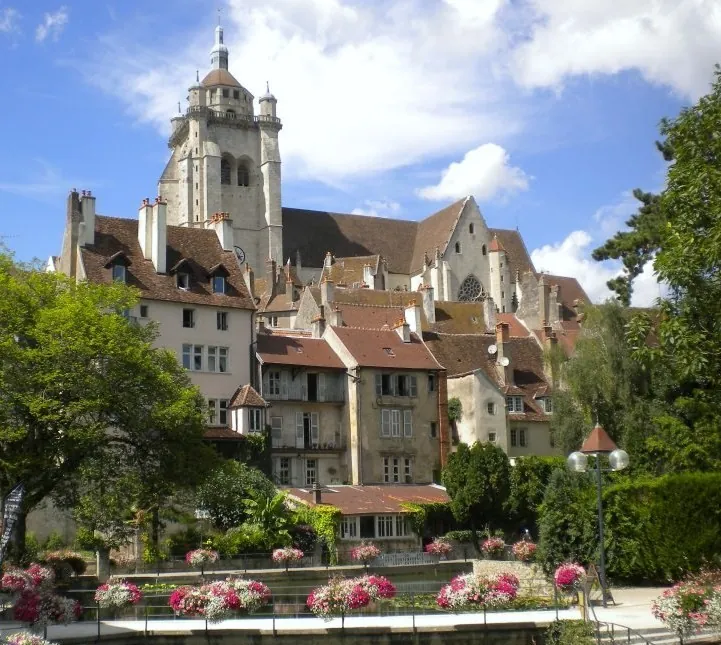
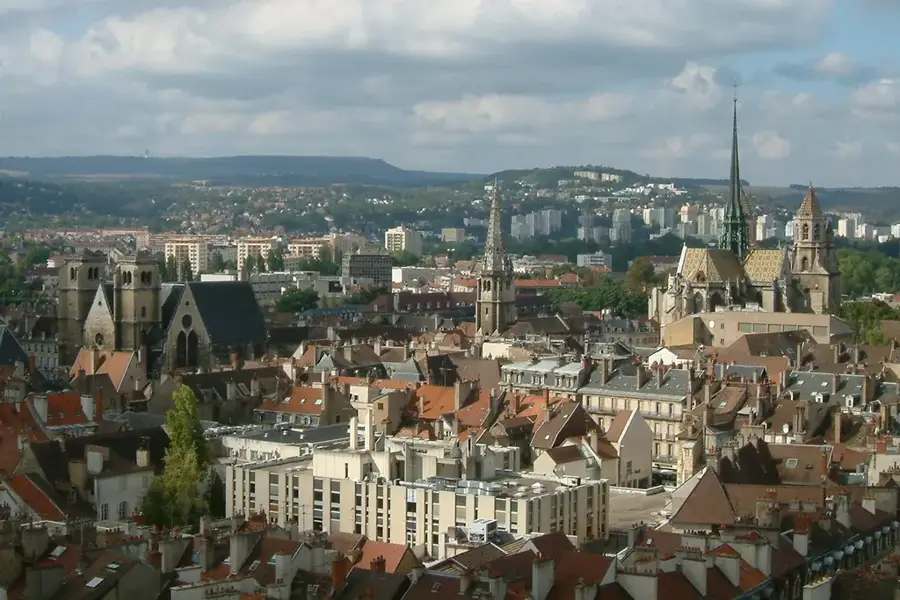
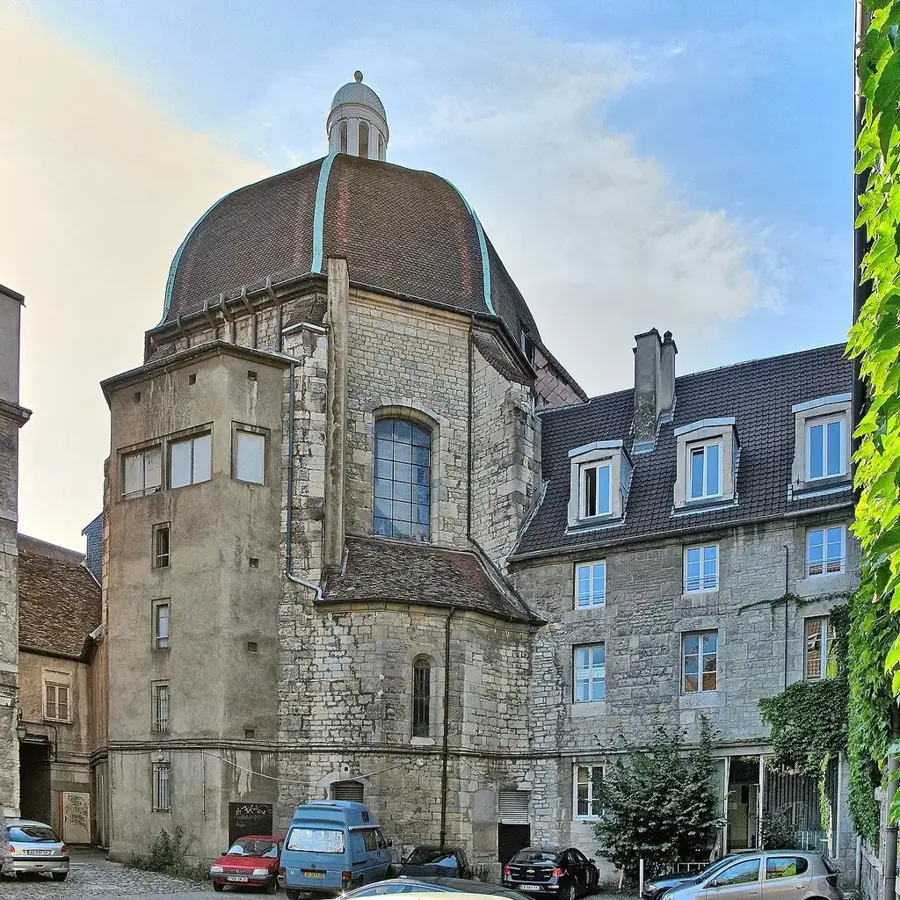
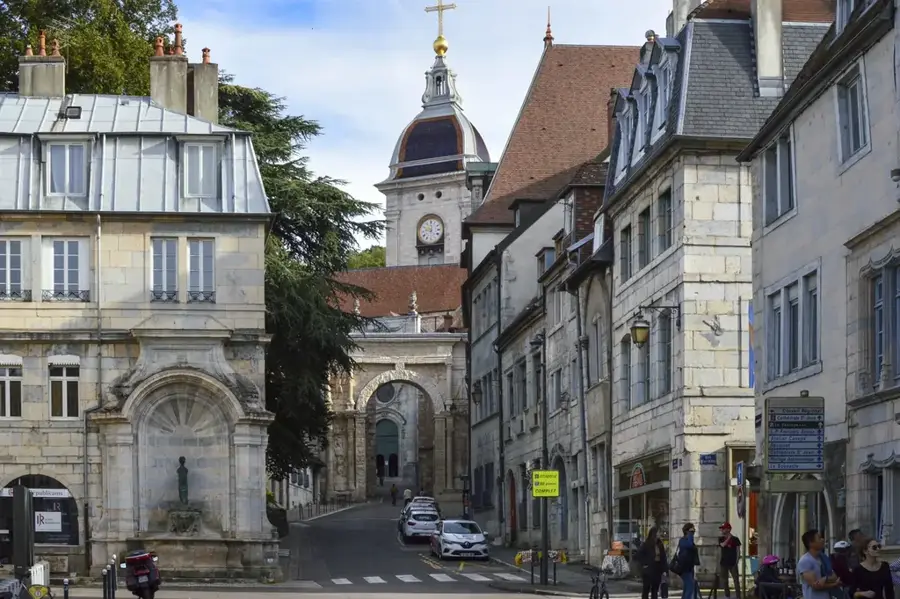
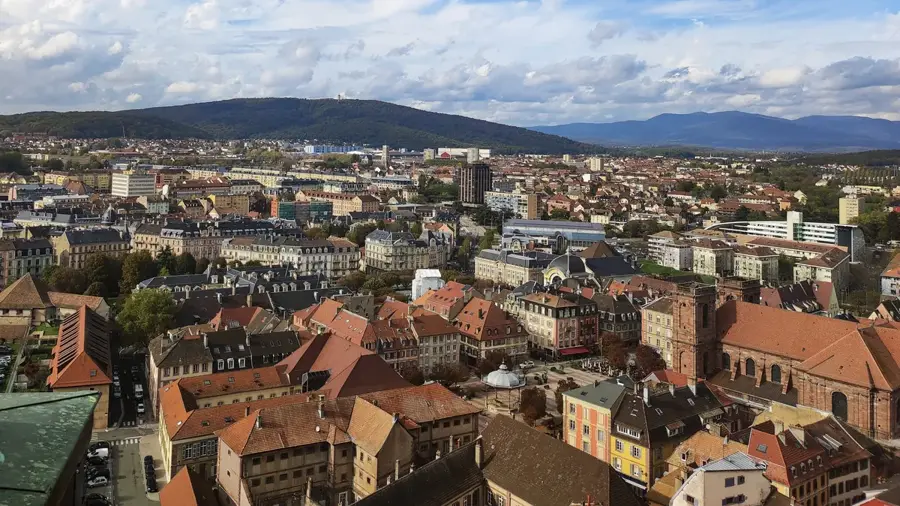
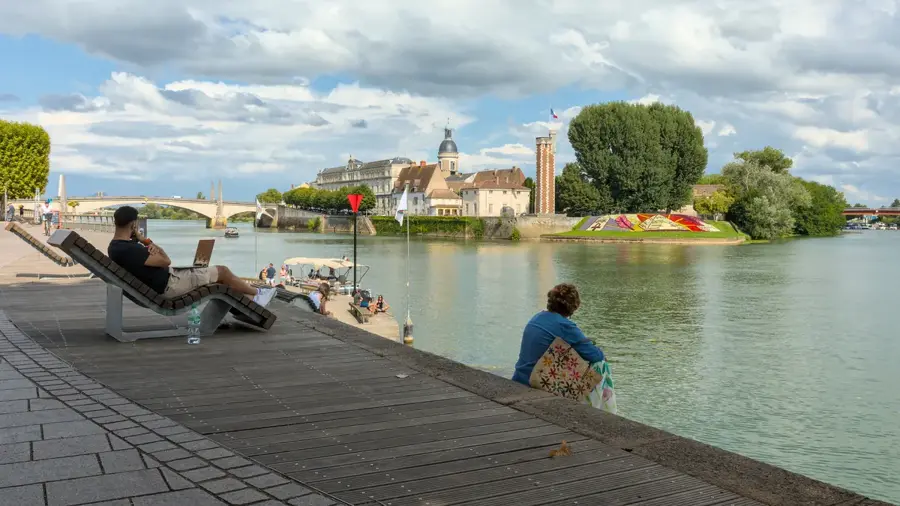
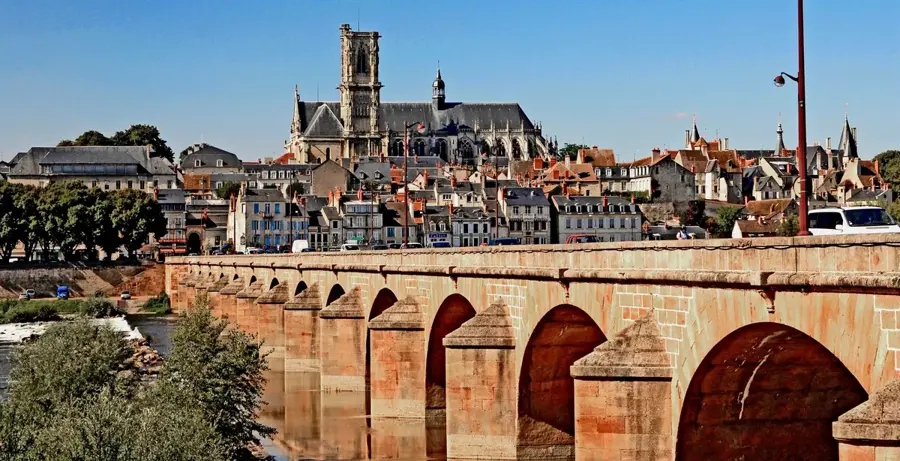
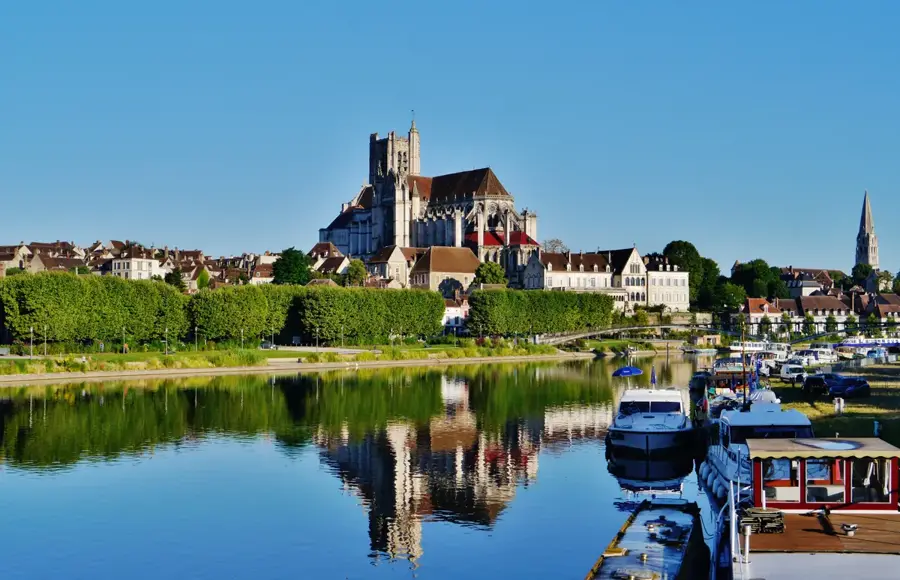
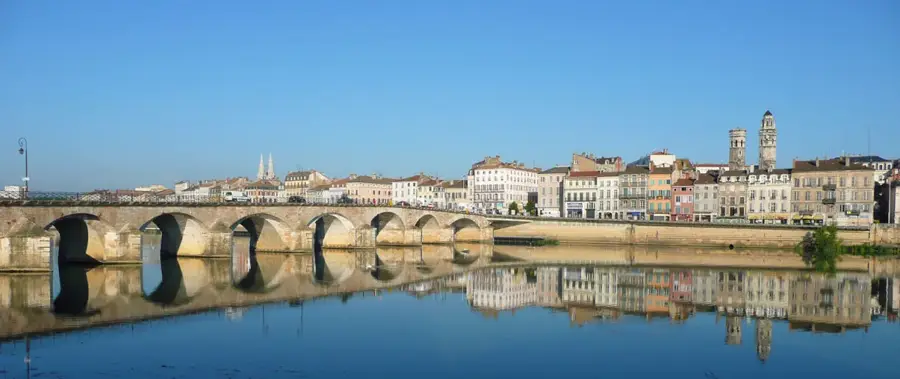
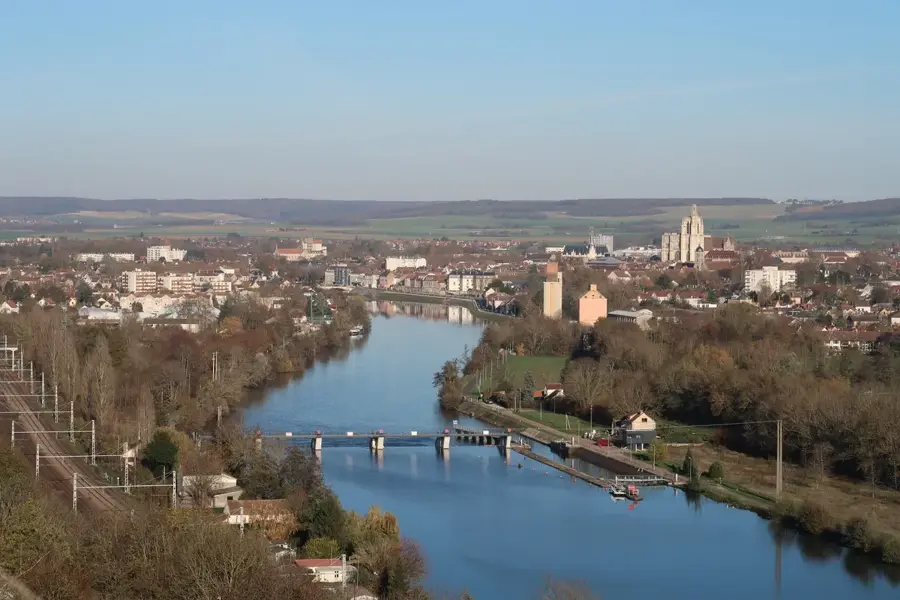
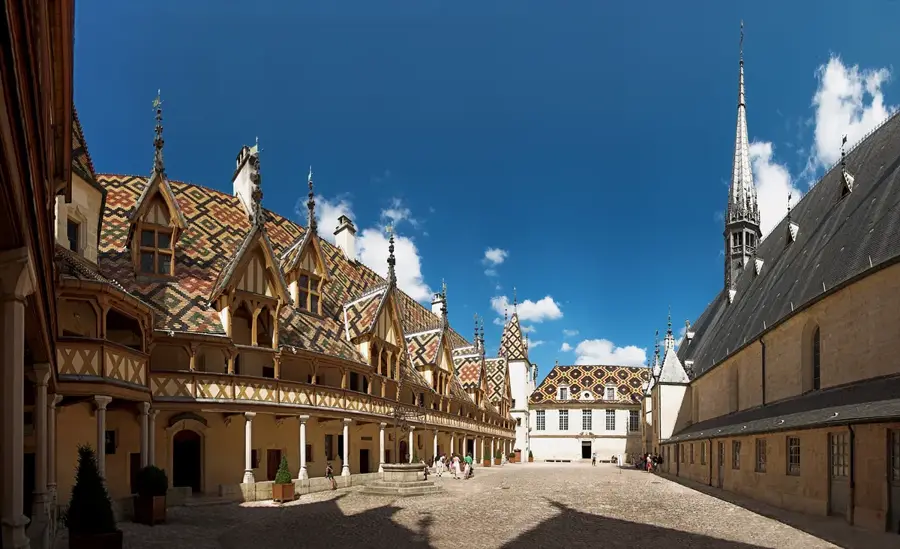
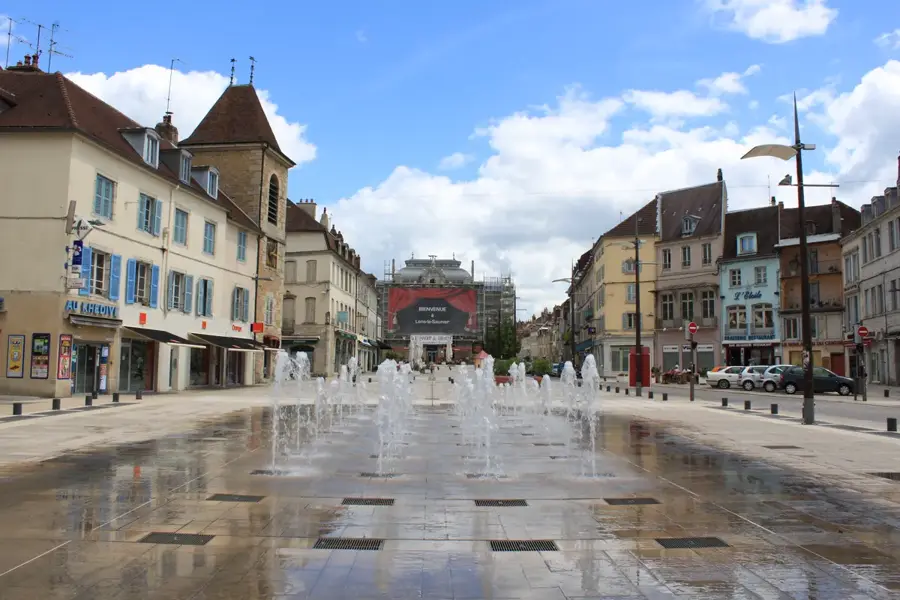
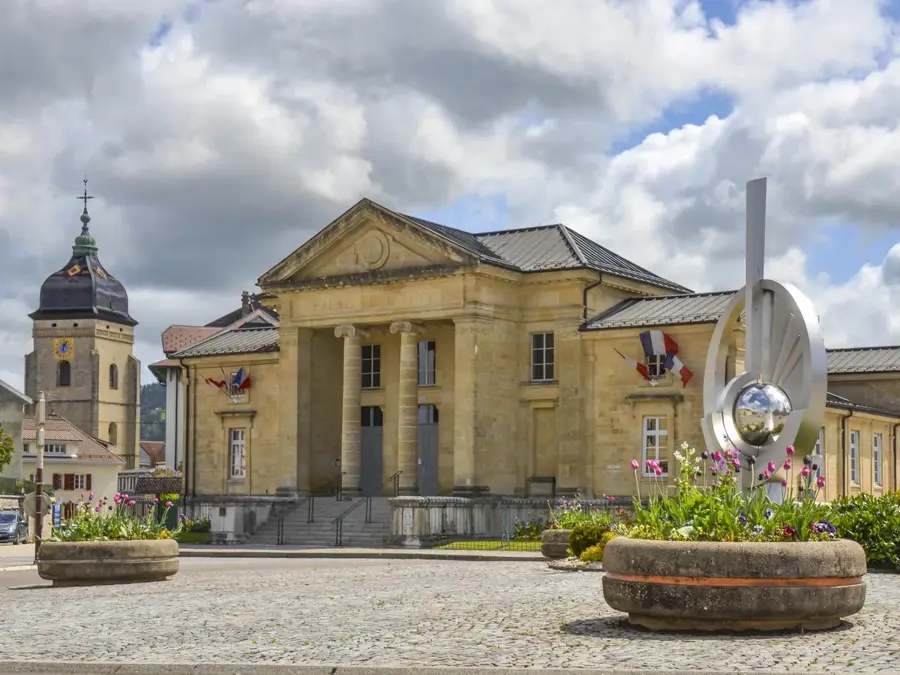
Resting peacefully on the banks of the Doubs River, Dole was once the proud capital of the Franche-Comté region and remains one of the most photogenic towns in the Jura department. It is globally recognized as the birthplace of the pioneering scientist Louis Pasteur; his childhood home, located along a scenic canal, is now a fascinating museum detailing his life and medical breakthroughs. Exploring Dole’s historic center is a joy, especially around the Canal des Tanneurs (Tanners' Canal), a beautifully preserved medieval quarter bordered by stone houses and flower-filled balconies, affectionately known as "Little Venice." Towering above the rooftops is the majestic 16th-century Collégiale Notre-Dame, a basilica boasting a remarkable bell tower over 70 meters high. The architectural blend of late Gothic and Renaissance styles throughout the town, built from glowing local limestone, creates an incredibly warm atmosphere. With its hidden courtyards, grand private mansions, and inviting riverside cafes, Dole is an enchanting destination that perfectly captures the romantic essence of eastern France.
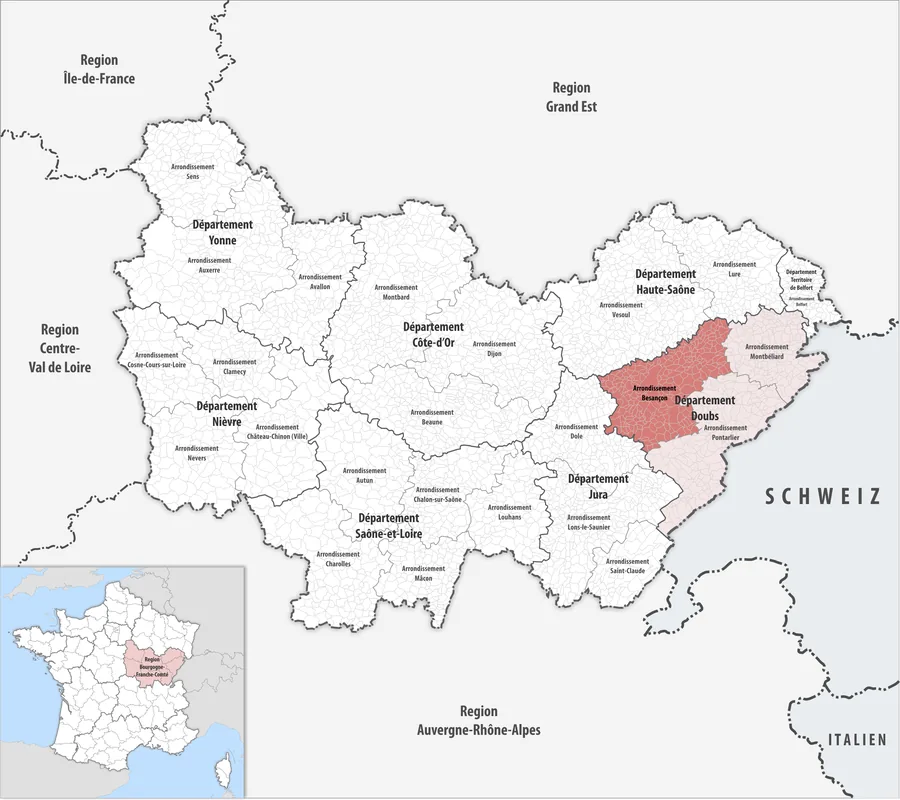
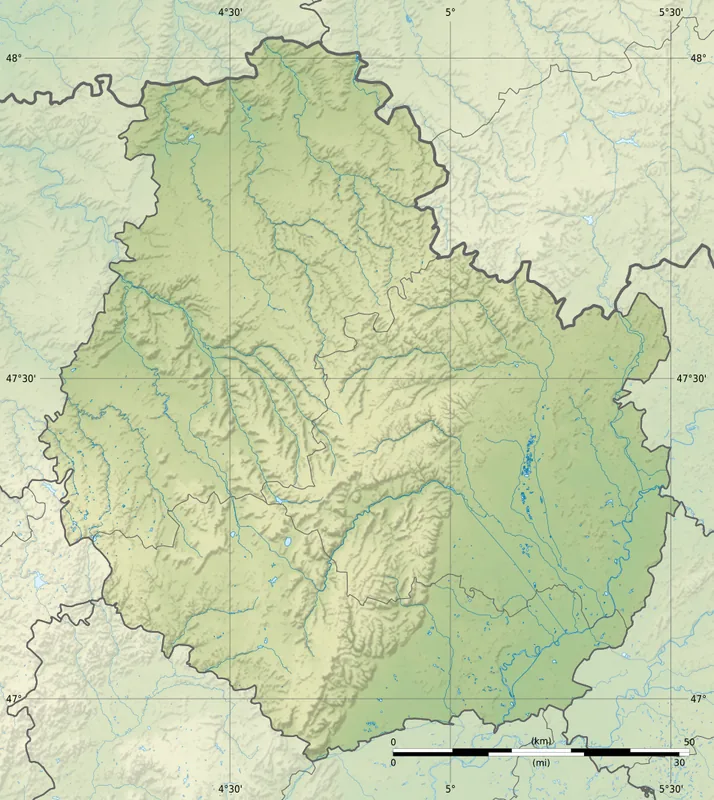
Location: Bourgogne-Franche-Comté, France
Top sights: Collégiale Notre-Dame · Louis Pasteur's Birthplace · Hôtel-Dieu de Dole
Nearby: Auxonne (14 km)
Population: ~29.295
Best time to visit & climate
The most pleasant time to visit is Jun–Aug.
Jan
Feb
Mar
Apr
May
Jun
Jul
Aug
Sep
Oct
Nov
Dec
Avg °C
1
2
6
10
14
18
20
20
16
11
6
2
Rain mm
88
70
83
74
101
90
85
92
72
98
99
103
Geography
Population
25,878
Coordinates
47.09220, 5.48970
Facts
Year Dole lost its capital status to Besançon: 1674.
Height of the bell tower of Notre-Dame: 73 meters.
Birth year of Louis Pasteur in Dole: 1822.
Size of the protected historic center: 114 hectares.
Pick weather + travel mode, get a concrete day plan.
09:00→18:265.2 km walk5 places0/5
Day budget: ≈ 19–25 €Entries 22€ · Transport 0€
Start your day in Dole with an inspiring visit to the Museum of Fine Arts. Around midday, admire the historical architecture of Hôtel-Dieu. In the afternoon, stroll to the majestic collegiate church and relax in Cours Saint-Mauris Park. Your evening concludes peacefully with a long walk by the Bassin de rétention.
← swipe for more places →
🎨
09:10 · 100'
Museum of Fine Arts
Discover regional artworks in the characterful Museum of Fine Arts, where you should pay special attention to the local sculptures on the ground floor.
Visit the majestic collegiate church with its distinctive bell tower, bringing binoculars to appreciate the intricate architectural details on the facade.
Morning starts at the art museum, a perfect refuge from the rain. Midday, explore the Hôtel-Dieu and the collegiate church's stunning interiors to stay dry. In the afternoon, brave the drizzle in the park with a good umbrella. The evening ends by the retention basin, where the water reflections are uniquely atmospheric in the rain.
← swipe for more places →
🎨
09:10 · 100'
Museum of Fine Arts
Admire the impressive collections of local art inside this dry sanctuary; check your umbrella at the entrance.
Crisp winter mornings are ideal for exploring Dole's rich indoor museum collections. By noon, the historical Hôtel-Dieu and Notre-Dame offer warmth and quiet reflection. Afternoon walks through the frosty park require warm layers and brisk steps. The early sunset casts a cold, beautiful light over the basin as the evening chill sets in.
← swipe for more places →
🎨
09:10 · 100'
Museum of Fine Arts
Discover the warm, well-lit galleries featuring regional masterpieces; take your time to warm up before heading back outside.
Start at the birthplace of Louis Pasteur and bike towards the refreshing Aquaparc Isis. At midday, explore the treasures of the Museum of Fine Arts. The afternoon belongs to the old town with Hôtel-Dieu and the imposing Notre-Dame. In the evening, rest your legs in the beautiful Cours Saint-Mauris Park.
← swipe for more places →
🎨
09:10 · 100'
Louis Pasteur's Birthplace
Delve into the life of the famous scientist, but make sure to check the opening hours in advance as they can vary greatly depending on the season.
Visit the majestic collegiate church with its distinctive bell tower, bringing binoculars to appreciate the intricate architectural details on the facade.
Start your rainy ride at Pasteur's indoor birthplace before splashing towards the water park. Midday brings cultural refuge at the art museum and Hôtel-Dieu to dry off. The afternoon continues to the grand church and ends in the misty park. Ride cautiously on wet cobblestones and wear a high-quality rain poncho.
← swipe for more places →
🎨
09:10 · 100'
Louis Pasteur's Birthplace
Learn about the great scientist's early life indoors while waiting out the morning showers; store your wet gear by the door.
A brisk winter ride starts at Pasteur's home, perfect for warming up early. Noon visits to the aquatic center and art museum offer heated reprieves from the frosty air. In the afternoon, the Hôtel-Dieu and collegiate church provide majestic indoor breaks. End your chilly cycle in the park before the 17:00 sunset; wear insulated gloves!
← swipe for more places →
🎨
09:10 · 100'
Louis Pasteur's Birthplace
Explore the cozy rooms where the scientist grew up; it's a great spot to warm your hands after the first cold ride.
After a morning at the Pasteur Museum, drive to the family-friendly Aquaparc. Spend your midday soaking up culture at the Fine Arts Museum. In the afternoon, visit Notre-Dame and the Cours Saint-Mauris Park. The day wraps up with scenic drives to the Bassin de rétention and Étang de la Vèze.
← swipe for more places →
🎨
09:10 · 100'
Louis Pasteur's Birthplace
Delve into the life of the famous scientist, but make sure to check the opening hours in advance as they can vary greatly depending on the season.
Visit the majestic collegiate church with its distinctive bell tower, bringing binoculars to appreciate the intricate architectural details on the facade.
Relax in this photogenic park offering wonderful views, making it a well-suited spot for a short afternoon picnic on one of the comfortable, shaded benches.
Discover the natural beauty around this idyllic lake, providing a well-suited photography subject in the late afternoon just before the panoramic sun sets.
Your rainy drive begins at the fascinating Pasteur museum before heading to the water park. Around noon, park near the fine arts museum and the grand church to minimize outdoor walking. The afternoon takes you through the misty city park. Conclude your wet day driving to the retention basin and Étang de la Vèze, enjoying the dramatic, rain-swept views from the car.
← swipe for more places →
🎨
09:10 · 100'
Louis Pasteur's Birthplace
Dive into the history of science in this dry indoor museum; keep an umbrella handy for the short dash from your parked car.
Start your winter road trip at the cozy Pasteur museum before warming up at the indoor water park. Midday, explore the art museum and the towering collegiate church. The short winter afternoon allows for a crisp walk in the park before driving to the basin. Catch the early 17:00 sunset over the icy Étang de la Vèze from your heated car.
← swipe for more places →
🎨
09:10 · 100'
Louis Pasteur's Birthplace
Start your day exploring the warm, historic rooms of this famous scientist's childhood home; a great escape from the morning frost.
A natural pond in the Jura foothills near Dole, surrounded by reeds and popular with birdwatchers.
Bassin de rétention🌿 nature
A water body in Dole, offering a pleasant environment for walkers.
Aquaparc Isis👨👩👧 family
Enjoy a family day out at this swimming facility in Dole.
Frequently asked questions
What is the most important sight in Dole?
The birthplace of Louis Pasteur, now a museum, and the 16th-century Collegiate Church of Notre-Dame.
Why is Dole called the 'Little Venice of Jura'?
Because of the Canal des Tanneurs and the scenic houses located directly on the waterfront in the historic district.
How far is Dole from Dijon?
By train, the journey takes about 30 minutes, and by car, it's approximately 45-50 kilometers via the A39 motorway.
Are there local specialties in Dole?
Try the Comté cheese and Jura wines, as well as the 'Chat de Dole', a local confectionery specialty.
Is Dole city center pedestrian-friendly?
Yes, the historic center is compact and best explored on foot via the marked 'Circuit du Chat Perché' trail.
Dole: where is it located?
Dole is located in Bourgogne-Franche-Comté, France.
Dole: what is there to see?
Highlights include Collégiale Notre-Dame, Louis Pasteur's Birthplace, Hôtel-Dieu de Dole.
Dole: when is the best time to visit?
The most pleasant time to visit is Jun, Aug.
Dole: why is it worth visiting?
Resting peacefully on the banks of the Doubs River, Dole was once the proud capital of the Franche-Comté region and remains one of the most photogenic towns in the Jura department.