Plizio Visual Lab
Cathedral of St. Anastasia Zadar
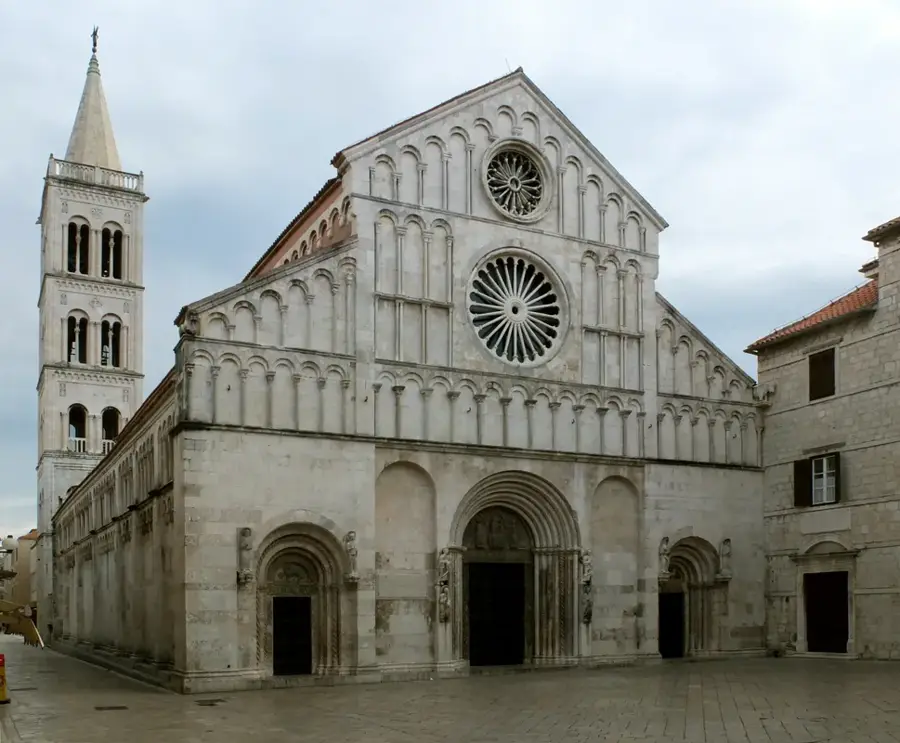
The Cathedral of St. Anastasia (Katedrala sv. Stošije) in Zadar is the largest church in Dalmatia and a masterpiece of Romanesque architecture along the Adriatic coast. Built between the 12th and 13th centuries, it stands on the foundations of an early Christian basilica dating from the 4th and 5th centuries. The striking west facade is characterized by three ornate portals and two large rose windows, showcasing a strong Tuscan Romanesque influence. The structure suffered significant damage in 1202 during the Siege of Zadar by Crusaders, but was subsequently restored and expanded. Inside, the cathedral houses precious artifacts, including remnants of early Christian mosaics and a marble sarcophagus containing the relics of St. Anastasia, gifted by Byzantine Emperor Nikephoros. The bell tower reflects a long construction history: its base was completed in the 15th century, while the upper floors were added in the late 19th century following designs by the English architect Thomas Graham Jackson. Listed on UNESCO's tentative list of World Heritage sites, it continues to serve as the spiritual heart of the Archdiocese of Zadar.
- Location: Croatia
- Top sights: Archeological Museum Zadar · Tower of Sv. Stosija · Zlato i srebro Zadra
- Nearby: Poljana, Ugljan (4 km)
Best time to visit & climate
The most pleasant time to visit is May, Jun, Sep.
| Jan | Feb | Mar | Apr | May | Jun | Jul | Aug | Sep | Oct | Nov | Dec | |
|---|---|---|---|---|---|---|---|---|---|---|---|---|
| Avg °C | 9 | 9 | 11 | 14 | 18 | 23 | 26 | 26 | 22 | 18 | 14 | 10 |
| Rain mm | 90 | 100 | 78 | 66 | 65 | 48 | 40 | 47 | 102 | 93 | 129 | 108 |
📋 Practical info
Geography
Facts
- Largest cathedral found in the region of Dalmatia
- The present structure was mostly built in the 12th and 13th centuries
- Sacked by the Crusaders during the Siege of Zadar in 1202
- Contains a 9th-century sarcophagus with relics of St. Anastasia
- The bell tower was completed in phases over 400 years
- Features three distinct portals and two rose windows on its facade
Explore nearby
Notable places around
Route planner — Car & Motorhome
Where do you start? We build the route here, with stops and country notes along the way.
© OpenStreetMap contributors · OpenRouteService
Sights in the town Cathedral of St. Anastasia Zadar (10)
Kolomanov zvonik
Bell tower in Zadar, named after King Coloman, part of the former church.
Church of St. Donatus
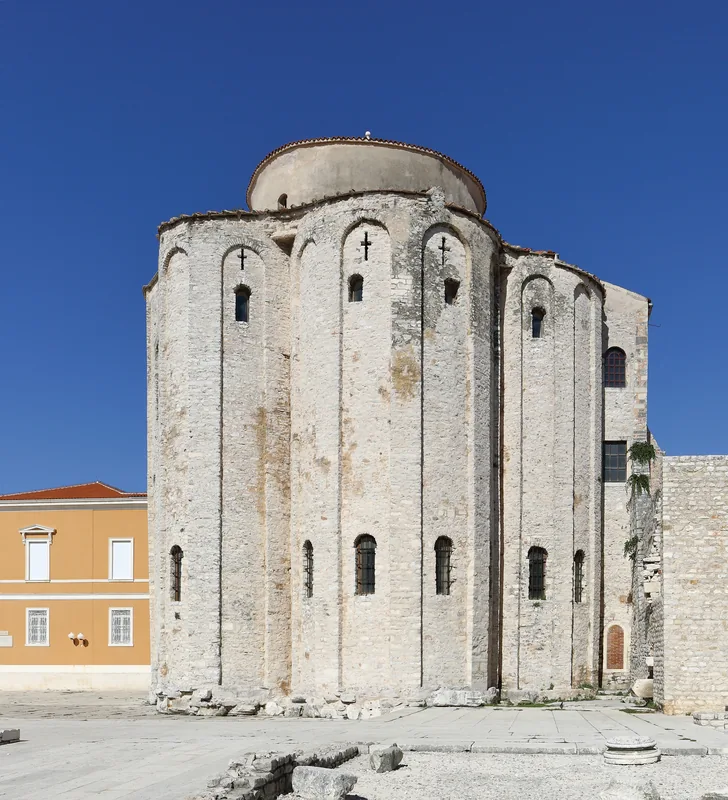
Church in Zadar, Croatia, 9th-century circular Byzantine-style building.
Cathedral of Saint Anastasia
Cathedral in Zadar, seat of the diocese, Romanesque building from the 12th-13th centuries.
crkva svetog Krševana
Roman Catholic church building in Zadar, Croatia, 12th-century Romanesque church.
Biskupska palača🏰 castle
Building in Zadar, Croatia, bishop's palace next to the cathedral, historic seat.
City museum🏛 museum
City museum in Zadar, presenting the history and culture of the city.
Sights nearby
Frequently asked questions
Is this the largest cathedral in Dalmatia?
Can you climb the tower?
What period does the building date from?
Where is the cathedral located?
Are there entrance fees?
Cathedral of St. Anastasia Zadar: where is it located?
Cathedral of St. Anastasia Zadar: what is there to see?
Cathedral of St. Anastasia Zadar: when is the best time to visit?

Nearby cities