Plizio Visual Lab
Kaili / Xijiang Miao Village
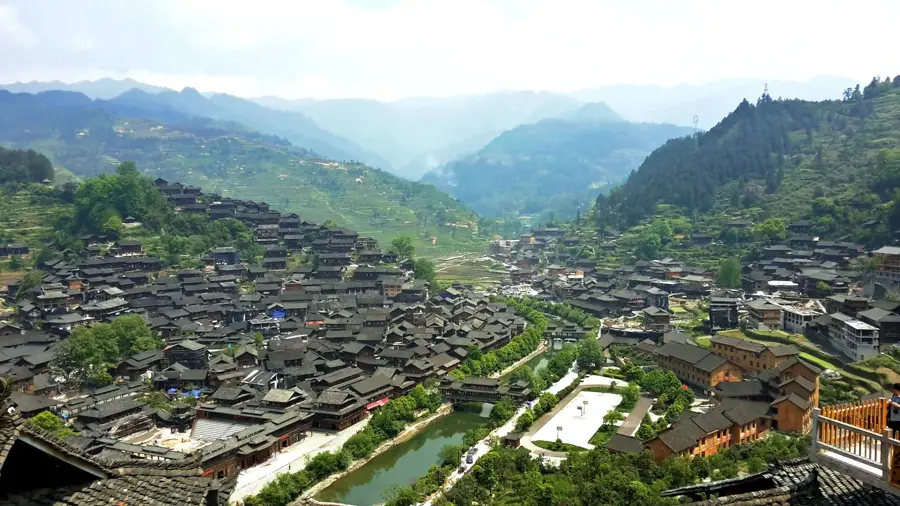
Kaili and the adjacent Xijiang Qianhu Miao Village offer an immersive journey into the heart of the Miao ethnic minority culture. It is the largest Miao village in the world, consisting of thousands of traditional wooden stilted houses cascading down lush green hillsides. Visitors come to experience authentic folklore, colorful traditional festivals, intricate silver jewelry, and beautiful embroidery that define the rich heritage of this bustling community. The village is surrounded by panoramic natural scenery, with terraced fields and rolling mountains providing a serene, easy on the eye environment. As night falls, the illuminated village creates a magical, twinkling landscape. The local cuisine is characterized by sour and spicy flavors, with the signature Sour Soup Fish being an absolute must-try for anyone wanting to taste genuine Guizhou gastronomy. The primary gateway is through Kaili, which is accessible by high-speed train from Guiyang. From Kaili, regular buses take visitors directly to the village. The best seasons to visit are spring and autumn, particularly during traditional festivals like the Miao New Year or the Sisters' Meal Festival, when the village comes alive with joyous music, dancing, and grand celebrations.
📋 Practical info
Geography
Facts
- The largest Miao village in the world.
- Features over 1,000 traditional stilted wooden houses.
- Known for exquisite handmade silver jewelry.
- Famous for elaborate Miao embroidery.
- Beautifully illuminated at night across the hillside.
- The local specialty is the famous Sour Soup Fish.
- Celebrates the vibrant Miao New Year festival.
- Surrounded by lush terraced rice fields.
Route planner — Car & Motorhome
Where do you start? We build the route here, with stops and country notes along the way.
© OpenStreetMap contributors · OpenRouteService
Sights in the town Kaili / Xijiang Miao Village (1)
Sights nearby
Frequently asked questions
Kaili / Xijiang Miao Village: where is it located?
Kaili / Xijiang Miao Village: why is it worth visiting?

Nearby cities








History & landmarks

Nature

More places