Plizio Visual Lab

Pomerape Volcano
Plizio editorial teamData Sources
Mountain
—°3
Pomerape Volcano (Bolivia)

Weather…

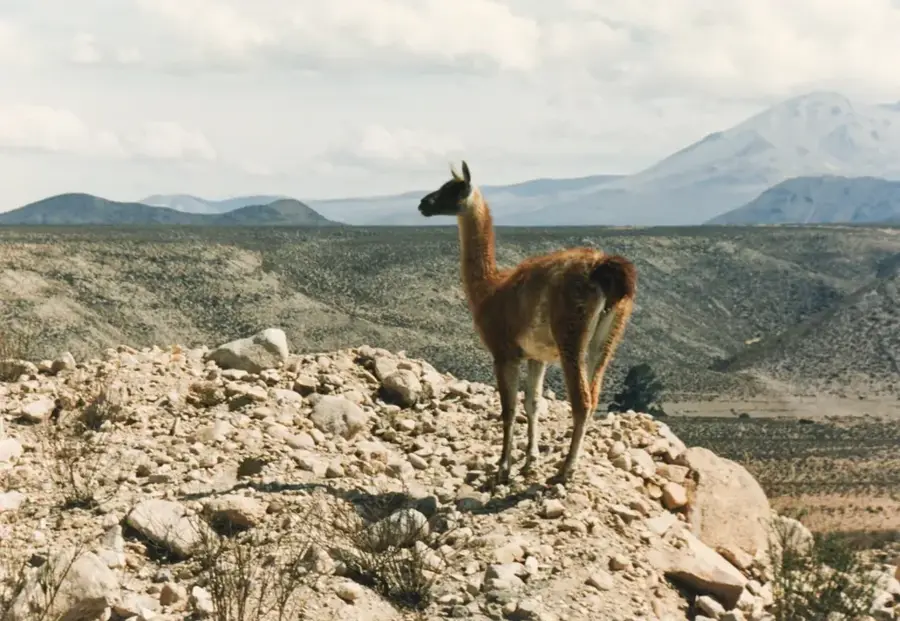
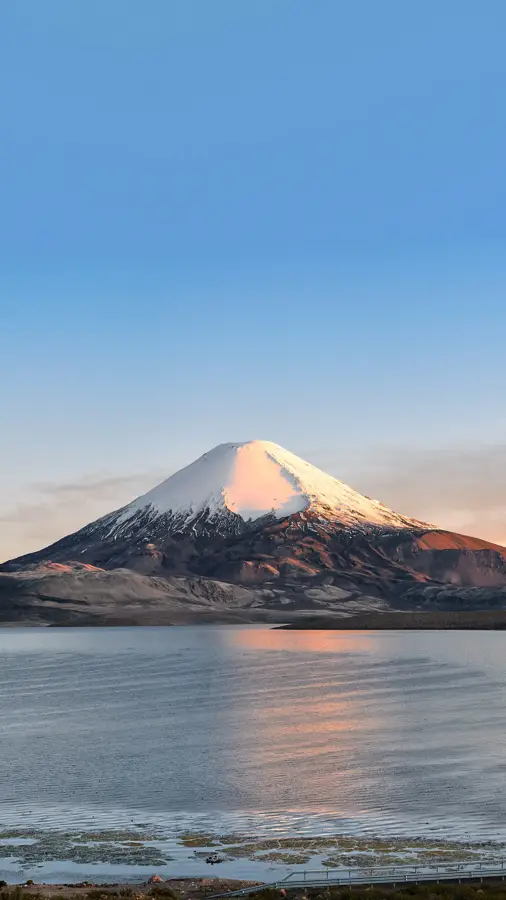
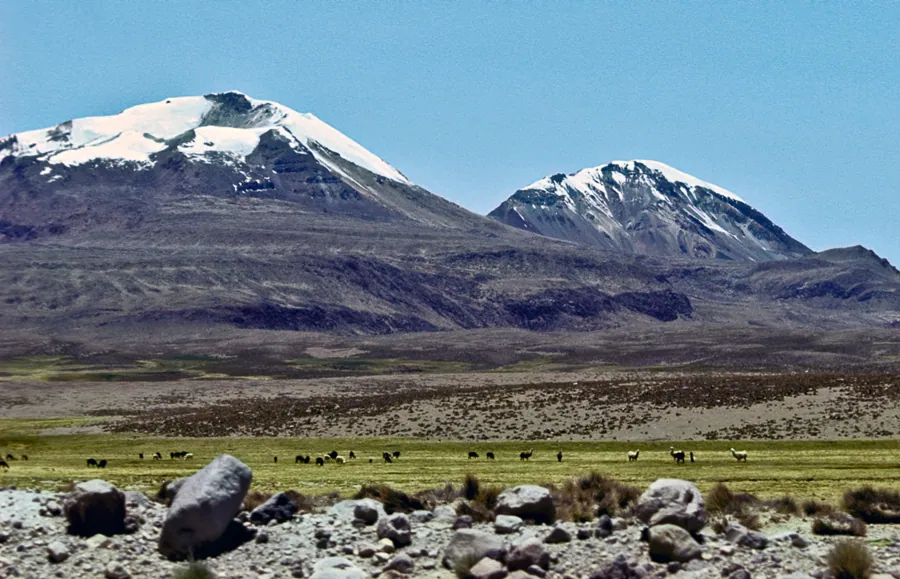
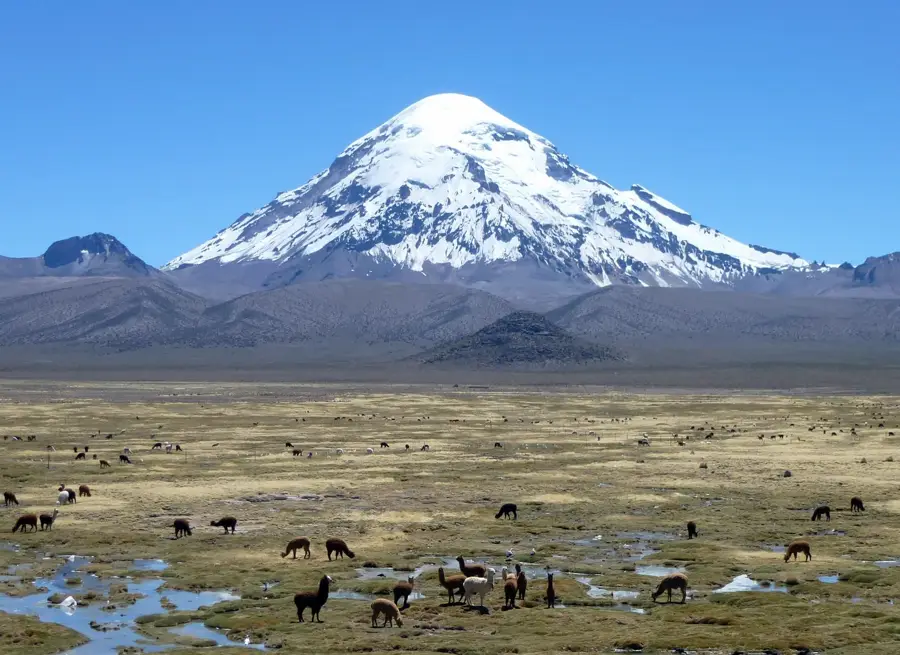
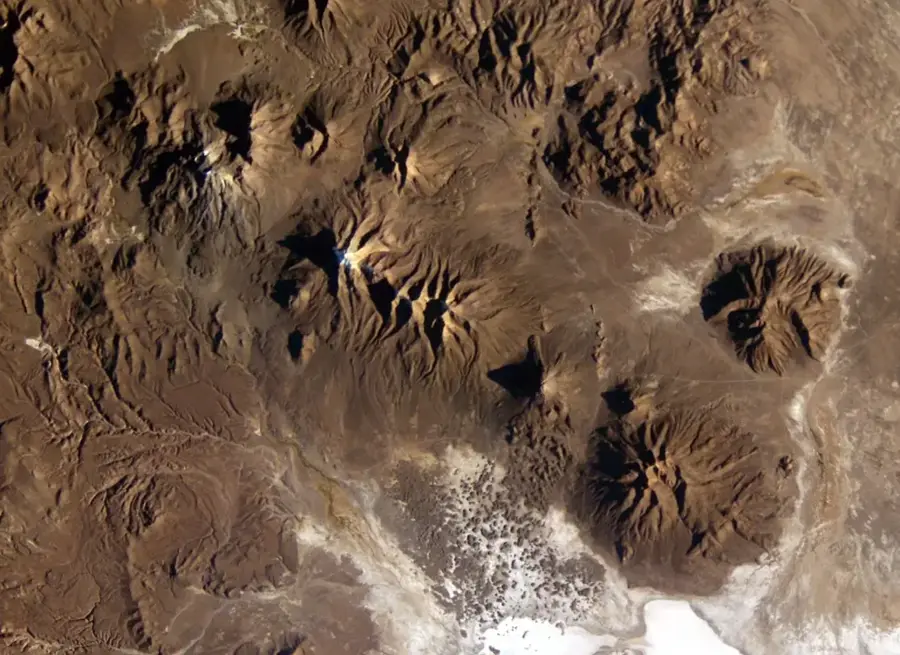
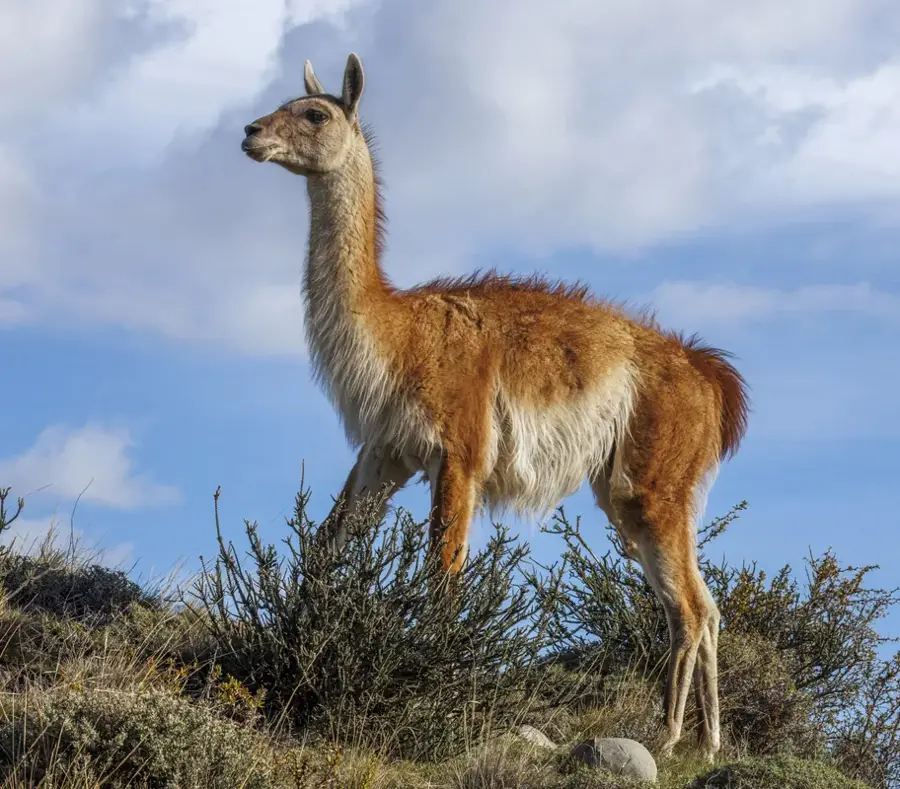
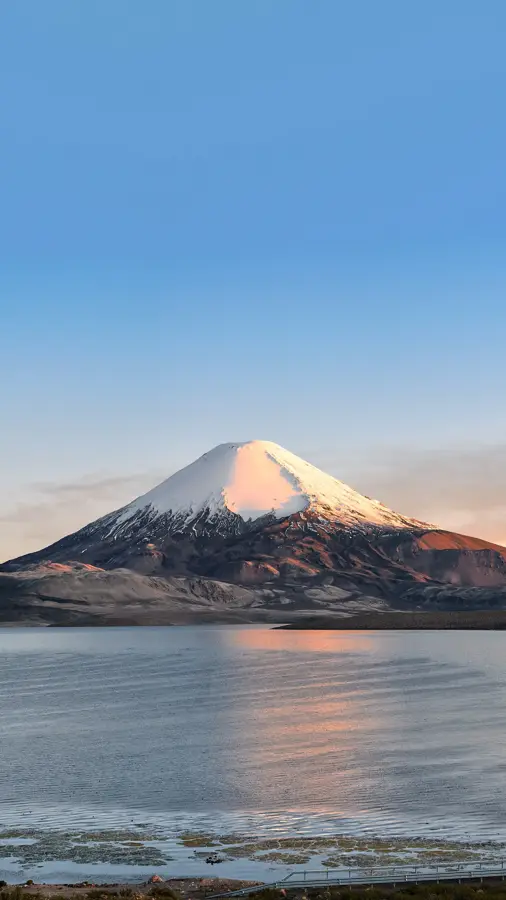
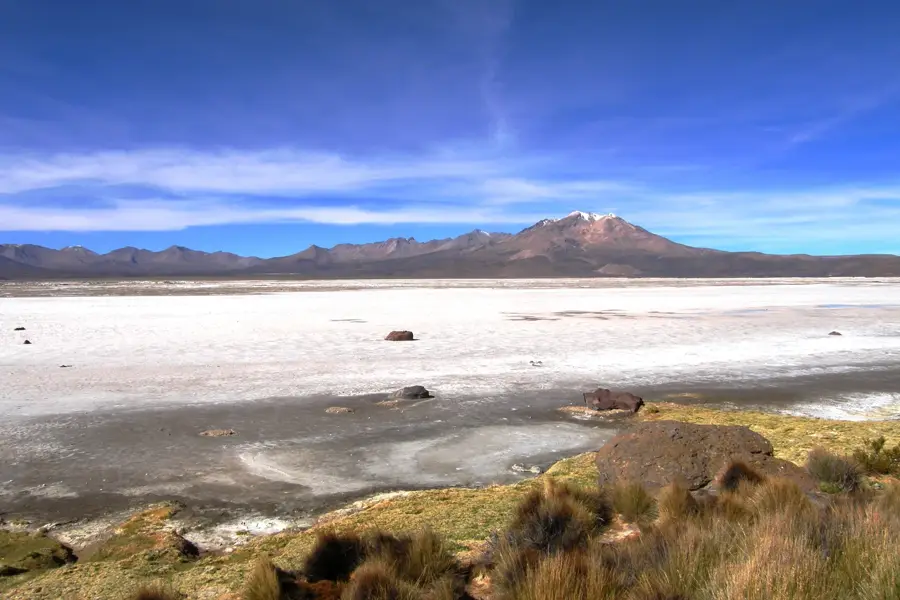
Pomerape is a stratovolcano on the border of Bolivia and Chile, serving as the northern component of the Nevados de Payachata group. Reaching an elevation of 6,282 meters, it is slightly lower than its twin, Parinacota, yet it is geologically older and considered more technically challenging to climb. The volcano is located within Bolivia's Sajama National Park and is connected to Parinacota by a high-altitude saddle. Its structure shows more significant signs of erosion than its symmetrical neighbor, indicating its volcanic activity ceased much earlier. Geologically, Pomerape dates back to the Pleistocene and consists mainly of andesitic lava flows. The surrounding region is characterized by extreme aridity and high winds, conditions that favor the formation of 'penitentes' (spike-like snow structures) on its glaciers. In local folklore, the two mountains are often depicted as a pair of lovers or rival brothers. The slopes provide a habitat for high-altitude specialists such as vicuñas and Andean condors.

Best time to visit & climate

The most pleasant time to visit is Apr, Oct, Nov.

JanFebMarAprMayJunJulAugSepOctNovDec
Avg °C999743346899
Rain mm867347175871015212263

📋 Practical info

🧭
Getting there
Sharing its base with Parinacota, approaches heavily rely on traversing the stark Sajama National Park landscapes using robust 4x4 vehicles guided by knowledgeable local outfitters.
📅
Best season
Mid-winter, strictly spanning from June to August, represents the optimal, most secure climbing season, as the frozen conditions thoroughly stabilize treacherous scree and snowpacks.
⛰️
Terrain & paths
Pomerape is widely considered more technically demanding than its twin, presenting steeper, sustained ice pitches, heavily broken glaciers, and extremely demanding mixed-climbing sections.
🎒
What to bring
Advanced alpine gear is an absolute requirement, encompassing ice screws, snow pickets, high-grade technical ice axes, specialized rope systems, and maximal high-altitude thermal wear.
🅿️
Parking
Vehicles are reliably stationed at high-altitude, wind-battered base camps within the Payachata system, functioning as essential lifelines and emergency retreats for exhausted climbers.
⚠️
Safety
Due to objective hazards like sudden avalanches and deep hidden crevasses, attempting this peak unguided or without extensive previous technical alpine experience is exceptionally reckless.
⏱️
Time needed
A standard expedition profile mimics its neighbor, usually requiring 3 to 4 heavily committed days to establish high camps securely before making the final strenuous push for the summit.

Geography

Coordinates
-18.12670, -69.12640

Facts

  • Elevation: 6,282 meters above sea level
  • The northern peak of the Nevados de Payachata group
  • Geologically older than the neighboring Parinacota
  • Located within the Sajama National Park in Bolivia
  • Mainly composed of andesitic lava flows
  • Offers more technical climbing routes than Parinacota

Explore nearby

Notable places around
Route planner — Car & Motorhome

Where do you start? We build the route here, with stops and country notes along the way.

Vehicle
Only stops with (optional):

© OpenStreetMap contributors · OpenRouteService

Sights in the town Pomerape Volcano (3)

Viscachas🌿 nature

The Viscachas viewpoint in bolivia-volcan-pomerape-relief-v2 features a sweeping panorama of the high-altitude volcanic landscape and is a prime spot for observing native Andean wildlife.

Horned coot🌿 nature

Overlooking the region's high-altitude wetlands, the Horned coot viewpoint in bolivia-volcan-pomerape-relief-v2 is an exceptional vantage point for birdwatchers to spot this rare Andean species.

Phaq'u Q'awa🌿 nature

Phaq'u Q'awa is a prominent volcanic peak in bolivia-volcan-pomerape-relief-v2, dominating the stark Andean skyline of the surrounding Sajama region.

Sights nearby

Frequently asked questions

Is Pomerape harder than Parinacota?
Yes, it is considered more technical due to steeper ice sections.
What should I pack?
Extreme expedition gear for temperatures down to -20°C and wind protection.
Is there water on the mountain?
Only as snow and ice; a powerful stove is needed for melting it.
How long does the expedition take?
Plan for at least 4-5 days including travel and acclimatization.
Are there rescue services?
Very limited; climbers must be extremely cautious and use satellite emergency devices.
Pomerape Volcano: where is it located?
Pomerape Volcano is located in Bolivia.
Pomerape Volcano: what is there to see?
Highlights include Viscachas, Horned coot, Phaq'u Q'awa.
Pomerape Volcano: when is the best time to visit?
The most pleasant time to visit is Apr, Oct, Nov.
Pomerape Volcano: why is it worth visiting?
Pomerape is a stratovolcano on the border of Bolivia and Chile, serving as the northern component of the Nevados de Payachata group.
View on map → The Top 50 Attractions → OpenStreetMap →
South America
Explore with Plizio Discover more places in South America
More places in Bolivia →

Nearby cities

History & landmarks
Nature
More places