Plizio Visual Lab
Palacio Quemado
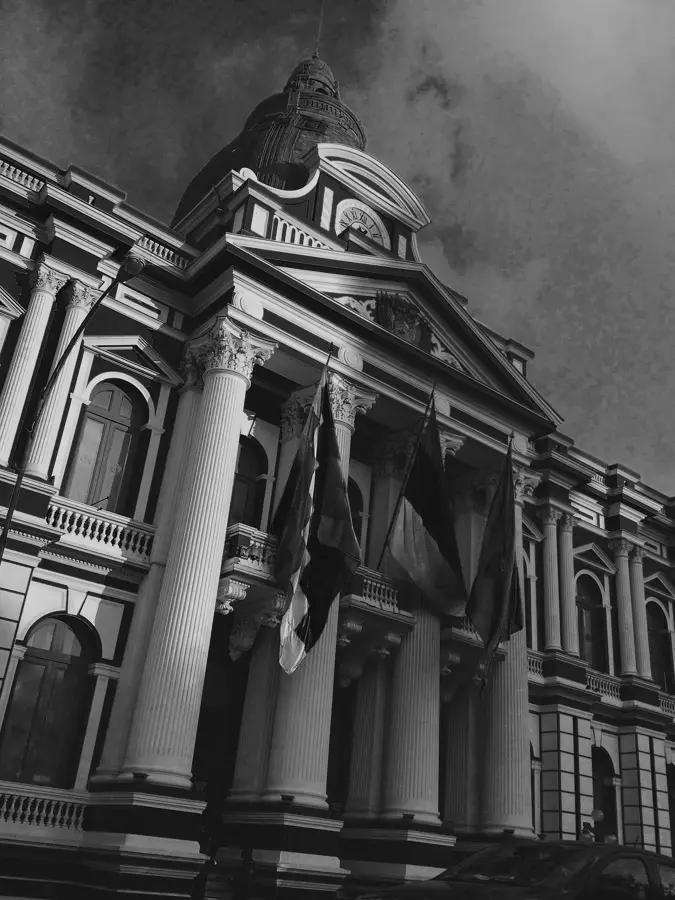
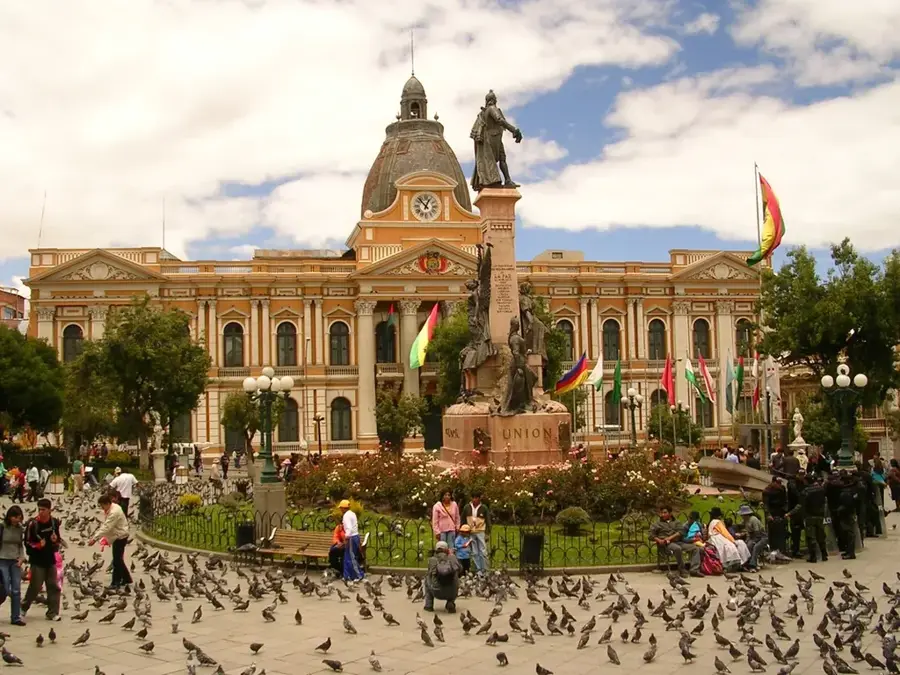
The Palacio Quemado, located on Plaza Murillo in La Paz, served as the official seat of the Bolivian presidency from 1853 until 2018. Construction began in 1845 under the direction of architect José Nuñez del Prado and was completed in 1852. Its name, which translates to 'Burnt Palace,' was earned following a severe fire during a popular uprising against President Tomás Frías in 1875. The building is designed in a Neoclassical style, featuring a façade with Doric and Ionic columns and a central courtyard. Inside, a grand white marble staircase leads to historical halls such as the Red Room, used for diplomatic receptions and state banquets. Throughout its history, the palace has been the site of numerous political upheavals and assassinations, symbolizing the nation's turbulent past. Since the opening of the Casa Grande del Pueblo in 2018, it has functioned primarily as a museum and for ceremonial purposes.
Best time to visit & climate
The most pleasant time to visit is Apr, Sep, Nov.
| Jan | Feb | Mar | Apr | May | Jun | Jul | Aug | Sep | Oct | Nov | Dec | |
|---|---|---|---|---|---|---|---|---|---|---|---|---|
| Avg °C | 9 | 9 | 9 | 8 | 7 | 6 | 5 | 6 | 7 | 9 | 9 | 9 |
| Rain mm | 136 | 114 | 79 | 35 | 13 | 9 | 16 | 22 | 24 | 48 | 44 | 107 |
📋 Practical info
Geography
Facts
- Construction started in 1845
- The defining fire occurred on September 20, 1875
- Designed by architect José Nuñez del Prado
- Official presidential seat until 2018
- Built in the Neoclassical architectural style
- Site of President Gualberto Villarroel's assassination in 1946
Explore nearby
Notable places around
Route planner — Car & Motorhome
Where do you start? We build the route here, with stops and country notes along the way.
© OpenStreetMap contributors · OpenRouteService
Sights in the town Palacio Quemado (1)
Sights nearby
Frequently asked questions
Why is it called the 'Burned Palace'?
Where is the palace located?
Is it still used as the seat of government?
Can you visit the palace?
Who guards the palace?
Palacio Quemado: where is it located?
Palacio Quemado: when is the best time to visit?
Palacio Quemado: why is it worth visiting?
History & landmarks
Nature
More places