Plizio Visual Lab
Hierapolis
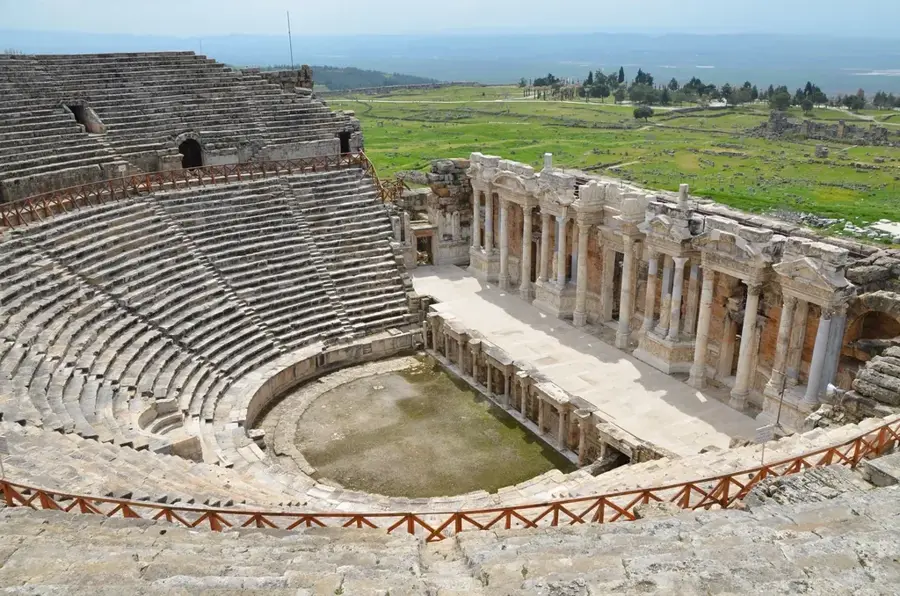
Hierapolis was an ancient Greco-Roman spa city built atop the famous white travertine terraces of Pamukkale in southwestern Turkey. Established in the 2nd century BC by King Eumenes II of Pergamon, the city flourished as a center for healing and wellness thanks to its natural thermal springs. The extensive archaeological site features one of the best-preserved ancient theaters in the world, which could once accommodate over 12,000 spectators. Hierapolis is also home to a massive necropolis, one of the largest in Asia Minor, containing thousands of elaborate sarcophagi and tumuli. The city holds significant religious weight as the traditional site of the martyrdom of Saint Philip the Apostle, commemorated by an octagonal martyrium. Visitors today can still swim in the 'Antique Pool', where submerged Roman columns lie at the bottom of the warm mineral waters. Since 1988, Hierapolis and Pamukkale have been collectively recognized as a UNESCO World Heritage site.
- Location: Turkey
- Top sights: South Basilica · Colonnaded Street · Hierapolis Archaeology Museum
- Nearby: Denizli (17 km)
Best time to visit & climate
The most pleasant time to visit is May, Jun, Sep.
| Jan | Feb | Mar | Apr | May | Jun | Jul | Aug | Sep | Oct | Nov | Dec | |
|---|---|---|---|---|---|---|---|---|---|---|---|---|
| Avg °C | 3 | 5 | 8 | 12 | 18 | 23 | 27 | 27 | 22 | 16 | 10 | 5 |
| Rain mm | 116 | 83 | 60 | 52 | 47 | 29 | 9 | 9 | 20 | 50 | 69 | 103 |
📋 Practical info
Geography
Facts
- Hierapolis was founded around 190 BC by the Kingdom of Pergamon.
- The Roman theater had a seating capacity of over 12,000 people.
- The city's necropolis contains more than 1,200 ancient tombs.
- The 'Plutonium' was believed to be a gateway to the underworld.
- Hierapolis was inscribed on the UNESCO World Heritage list in 1988.
- Saint Philip the Apostle was martyred in the city in 80 AD.
Explore nearby
Notable places around


Route planner — Car & Motorhome
Where do you start? We build the route here, with stops and country notes along the way.
© OpenStreetMap contributors · OpenRouteService
Sights in the town Hierapolis (9)
Travertines
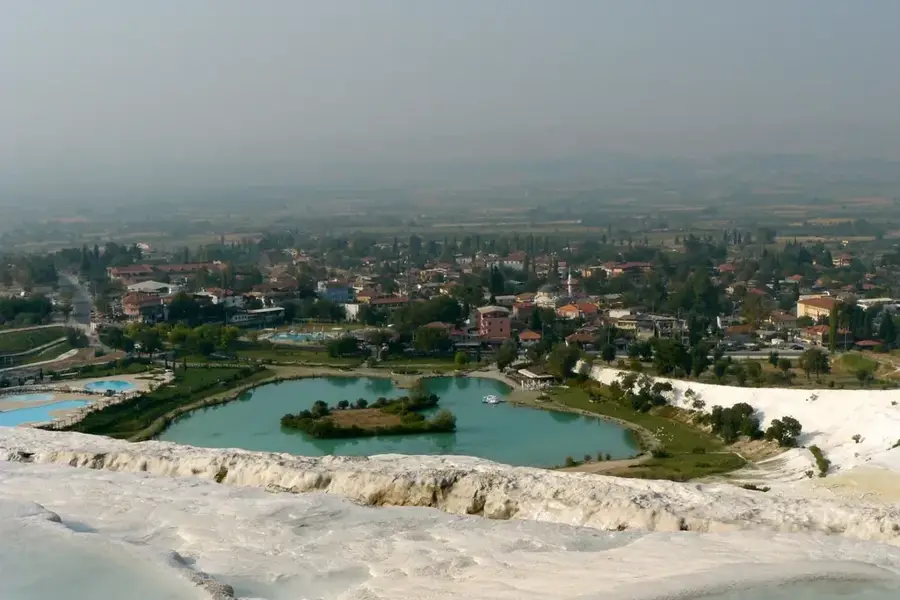
Travertine terraces of Pamukkale, white calcium carbonate pools with warm water.
Pamukkale Travertines
Natural thermal pools in Turkey, white travertine terraces with warm water.
South Byzantine Gate
Monumental Byzantine city gate in Pamukkale District.
Pamukkale Natural Park
Natural park with hot springs in Turkey, thermal water and limestone deposits.
Tomb A18
Tomb A18 in the necropolis of Hierapolis, a Roman-era stone chamber tomb.
Sights nearby
Frequently asked questions
How much time is needed for Hierapolis?
Can I bathe in the ancient pool?
When is the best time for Pamukkale?
Do I need shoes on the terraces?
Is there a museum on site?
Hierapolis: where is it located?
Hierapolis: what is there to see?
Hierapolis: when is the best time to visit?
Hierapolis: why is it worth visiting?

Nearby cities