Plizio Visual Lab

Amphitheatre of El Jem
Plizio editorial teamData Sources
Historical site
—°7
Amphitheatre of El Jem (Tunisia)

Weather…

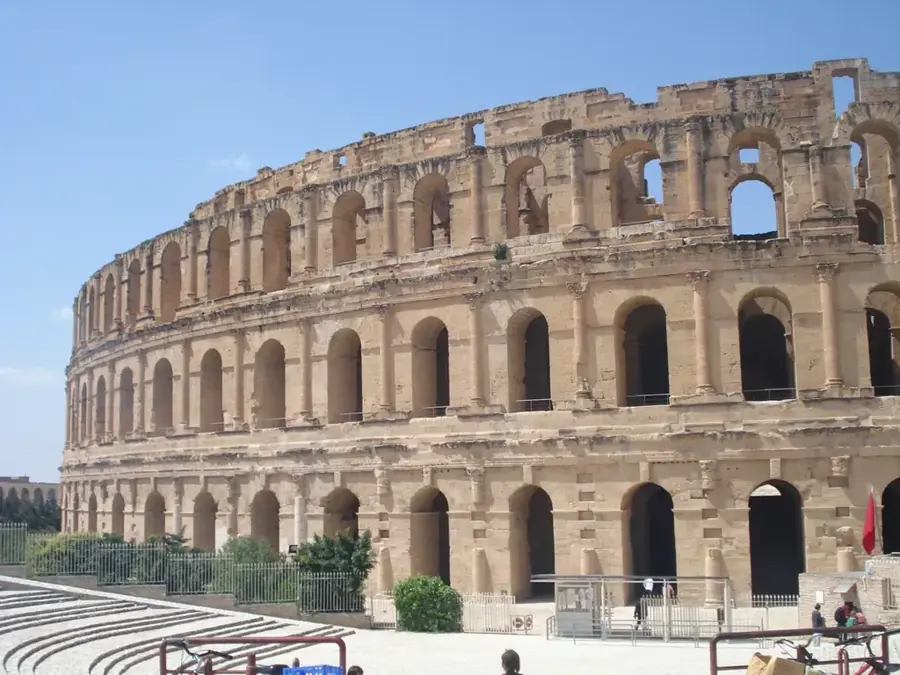
The Amphitheatre of El Jem, located in ancient Thysdrus, is the most impressive Roman monument in North Africa and ranks among the largest arenas in the world. Built around 238 AD under Proconsul Gordian, it had an estimated seating capacity of 35,000 spectators. The structure is constructed entirely of stone blocks and bears a strong architectural resemblance to the Colosseum in Rome, though it stands freely on a flat plain. The three tiers of arcades reach a height of over 30 meters and have remained exceptionally well-preserved through the centuries. Of particular interest are the underground tunnels, where animals and gladiators were held before combat. During the Middle Ages, the amphitheatre served as a fortress, which helped prevent its total demolition. Designated a UNESCO World Heritage site in 1979, it remains a supreme example of Roman engineering in the province of Africa Proconsularis.

Best time to visit & climate

The most pleasant time to visit is Apr, May, Oct.

JanFebMarAprMayJunJulAugSepOctNovDec
Avg °C111114182126292926221612
Rain mm27214129241572360483036

📋 Practical info

🚪
Visiting
The amphitheatre welcomes visitors daily; you can walk through the underground passages where gladiators once stood and climb to the top rows for a panoramic view. Inside, the massive stone structure reveals Roman ingenuity, while outside you can circle the entire monument to appreciate its scale.
🕒
Typical hours
The site is usually open every day from around 8:00 in the morning until late afternoon, roughly 5:00 PM, with longer hours during the summer season. To make the most of your visit, aim to arrive early in the day to beat the crowds and the intense midday sun.
📷
Photography
You are free to take photographs for personal use across most of the amphitheatre, both inside and outside. However, tripods and flash photography may be prohibited in certain sensitive zones to preserve the ancient stonework and ensure visitor safety.
⏱️
Time needed
A typical visit to the amphitheatre takes about one to two hours, covering the main highlights and underground chambers. If you plan to take a guided tour or thoroughly examine the museum exhibits, budget up to three hours in total.
Combine with
The amphitheatre is the main attraction in El Jem; combine it with a stroll through the small but interesting archaeological museum nearby. You can also visit the historic medina of El Jem, which provides local crafts and cafes.
🧭
Getting there
El Jem is easily reachable by train from Tunis or Sousse; the station is a short walk from the amphitheatre. By car, parking is available near the site, and signs guide you from the main road.
💡
Insider tip
Carry a hat and plenty of sunscreen, as shade is scarce inside the amphitheatre and the stone absorbs heat rapidly. The optimal time for photography is early morning or late afternoon, when the low sun casts dramatic shadows on the ancient walls.

Geography

Coordinates
35.29640, 10.70670

Facts

  • Built around 238 AD
  • Capacity for 35,000 spectators
  • Third-largest Roman amphitheatre in the world
  • UNESCO World Heritage site since 1979
  • Well-preserved underground gladiator chambers
  • Facade height exceeds 30 meters

Explore nearby

Notable places around

Route planner — Car & Motorhome

Where do you start? We build the route here, with stops and country notes along the way.

Vehicle
Only stops with (optional):

© OpenStreetMap contributors · OpenRouteService

Sights in the town Amphitheatre of El Jem (7)

Dar El Jem🏛 museum

This local museum complex exhibits traditional regional artifacts and historical finds from the ancient city of Thysdrus.

Maison de Dauphins🏺 historical

The excavated ruins of this wealthy Roman villa are celebrated for their remarkably preserved floor mosaics depicting maritime dolphins.

Amphitheatre of El Jem (small)📍 landmark

The weathered stones of this smaller, older Roman amphitheater reveal the early gladiatorial history of the city prior to the massive colosseum's construction.

Inb Khaldoun Culture House🎭 culture

Named after the famous Arab scholar, this regional arts center hosts theater performances and local cultural workshops.

Baths of Thysdrus🏺 historical

The scattered stone ruins of these public thermal baths demonstrate the advanced ancient Roman plumbing and heating systems in Thysdrus.

Amphitheatre of El Jem📍 landmark

Constructed around 238, this colossal UNESCO Heritage site is one of the largest and best-preserved Roman amphitheaters in the world.

🕒 Sep 16-Apr 30: Mo-Su 07:30 - 17:30; May 01-Sep 15: Mo-Su 07:

El Jem Museum🏛 museum

This museum showcases a spectacular collection of Roman mosaics and features a full-scale reconstruction of an ancient patrician villa.

🕒 Sep 16-Apr 30: Mo-Su 07:30 - 17:30; May 01-Sep 15: Mo-Su 07:

Sights nearby

Frequently asked questions

How much time is needed for the visit?
For a thorough visit, including the underground levels, you should plan about 1 to 2 hours.
When is the best time to visit?
Visit the amphitheater best early in the morning to avoid midday heat and the biggest crowds.
Is the entry ticket expensive?
The entry fee is moderate and includes access to the entire structure, including the tunnels.
Can you climb to the upper tiers?
Yes, there are safely secured paths leading to the upper tiers, offering a great view inside.
Is the amphitheater family-friendly?
Yes, the monumental structure is impressive to children too, but ensure sturdy footwear.
Amphitheatre of El Jem: where is it located?
Amphitheatre of El Jem is located in Tunisia.
Amphitheatre of El Jem: what is there to see?
Highlights include Dar El Jem, Maison de Dauphins, Amphitheatre of El Jem (small).
Amphitheatre of El Jem: when is the best time to visit?
The most pleasant time to visit is Apr, May, Oct.
Amphitheatre of El Jem: why is it worth visiting?

The Amphitheatre of El Jem, located in ancient Thysdrus, is the most impressive Roman monument in North Africa and ranks among the largest arenas in the world.
View on map → The Top 50 Attractions → OpenStreetMap →
Africa
Explore with Plizio Discover more places in Africa
More places in Tunisia →

Nearby cities

History & landmarks
More places