Day of the Virgen de los Remedios
The celebration honoring the patron saint of Olvera, a deeply rooted local festival with special spiritual significance for the residents.
PlizioGo
A traditional hearty soup made with bread, garlic, and wild asparagus. Find it in authentic family-run 'ventas' (inns) around town.
The region is famous for its olive oil. Enjoy it simply poured over toasted bread for breakfast at a local cafe.
Pork tenderloin cooked in a savory garlic and whiskey sauce. A staple dish in most traditional tapas bars in the main plazas.
Purchase high-quality local oil directly from the agricultural cooperative (cooperativa) on the outskirts of town.
Excellent local sausages and hams can be found at the indoor municipal market or small independent butcher shops.
Walk or cycle a section of this peaceful nature trail that starts in town, passing through tunnels and rural landscapes.
A serene sanctuary located a couple of kilometers from the center, offering quiet reflection and panoramic views of the olive groves.
Water temperature…
The celebration honoring the patron saint of Olvera, a deeply rooted local festival with special spiritual significance for the residents.
The biggest celebration of the year in Olvera, featuring flamenco dresses, equestrian shows, music, and a festive Andalusian atmosphere.
The streets of Olvera are beautifully covered with rushes, flowers, and branches, giving the town a wonderful fragrance.
The oldest pilgrimage in the province of Cádiz, where locals walk to the sanctuary of Los Remedios to give thanks for the rain of 1715.
Solemn and emotional processions by brotherhoods, navigating the challenging, steep streets up towards the castle.
A celebration of Andalusian identity with concerts, cultural activities, and tastings of Olvera's traditional olive oil.
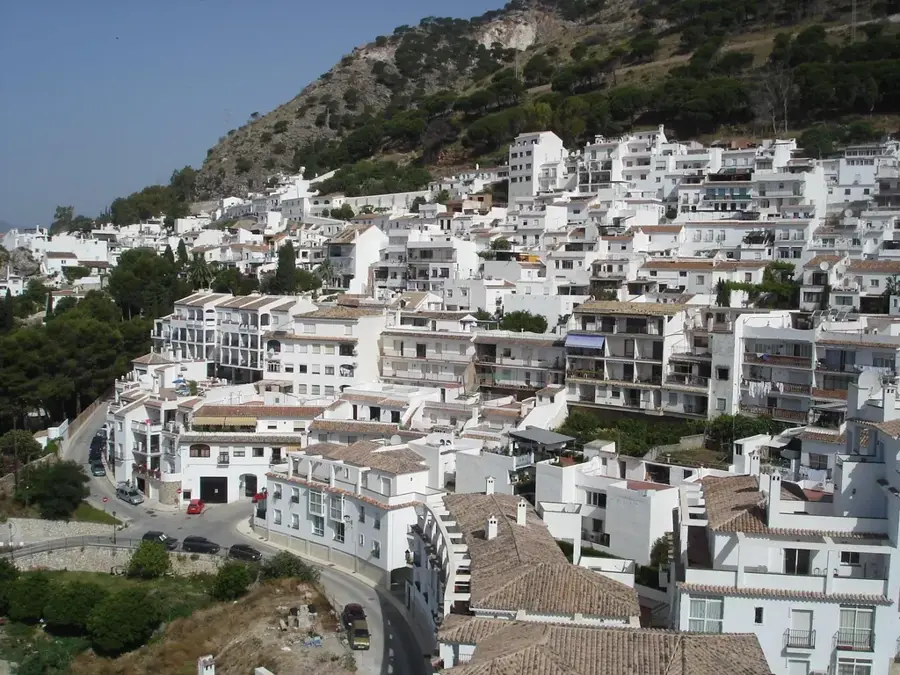
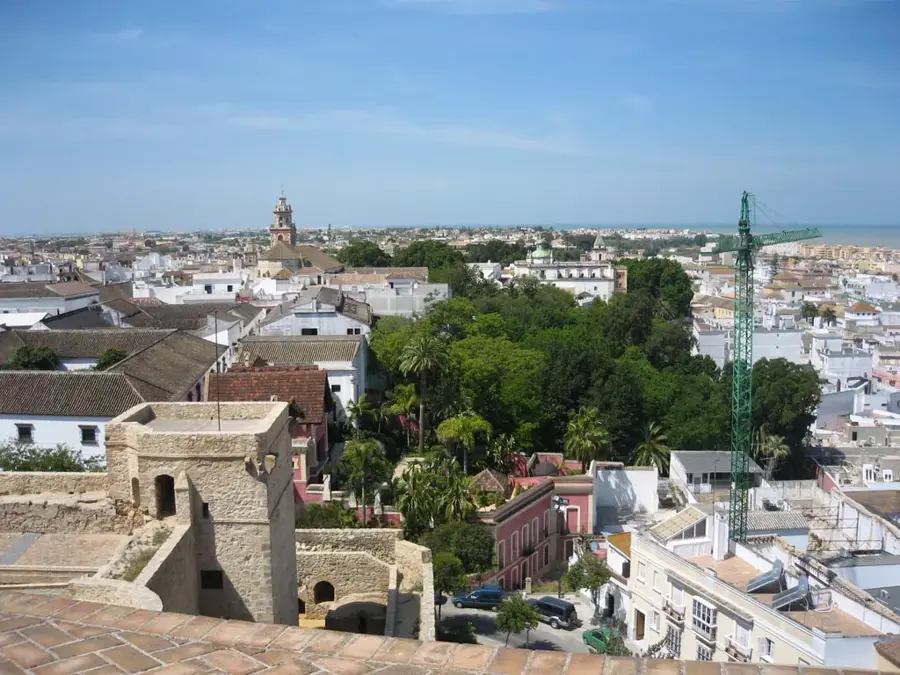
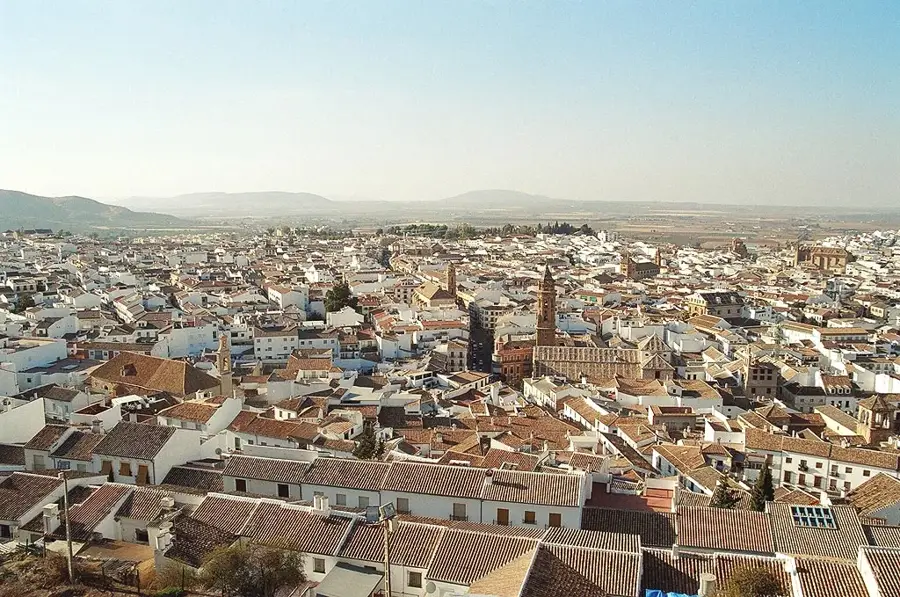
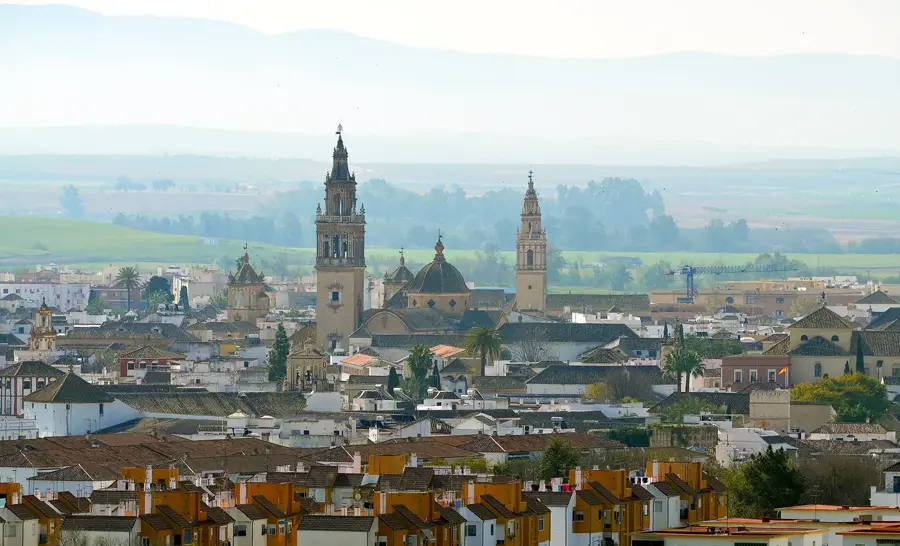
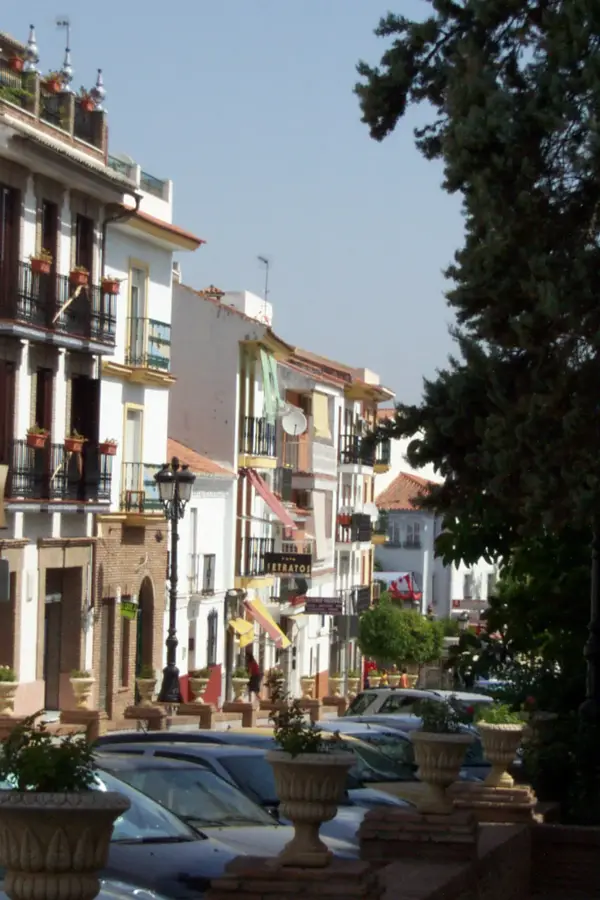
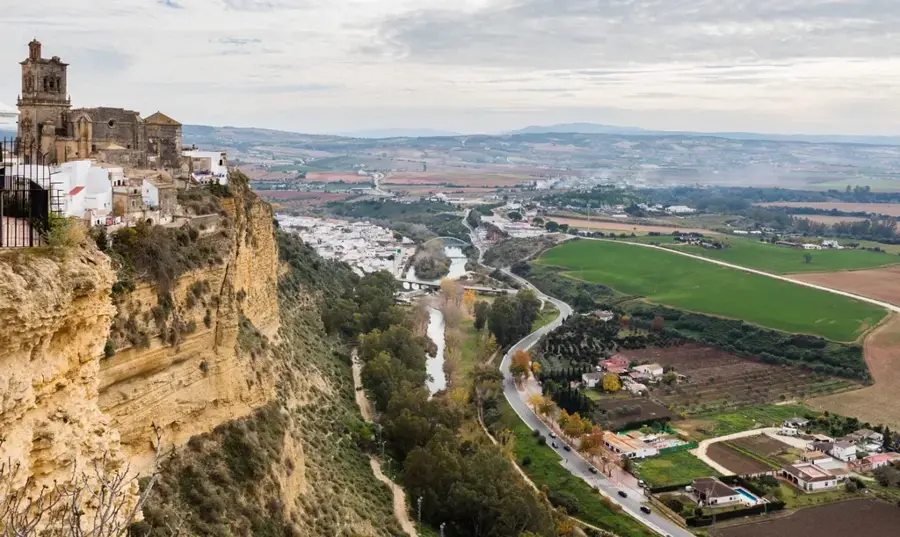
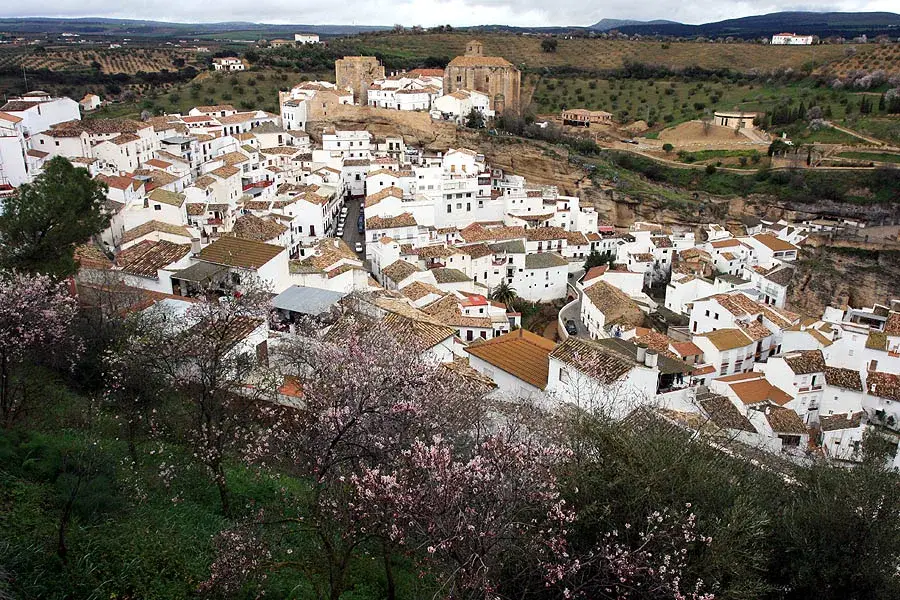
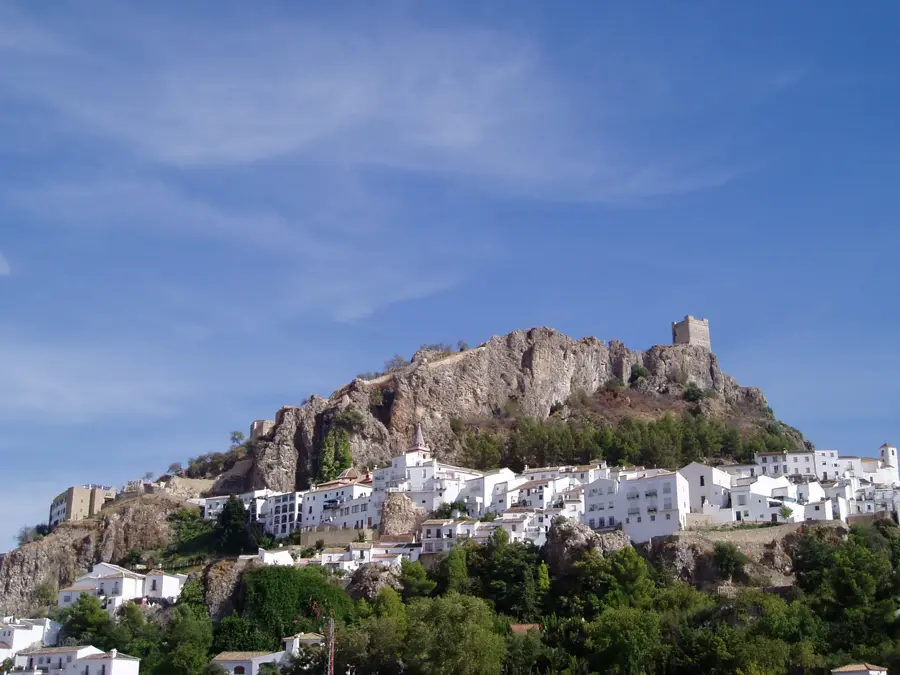
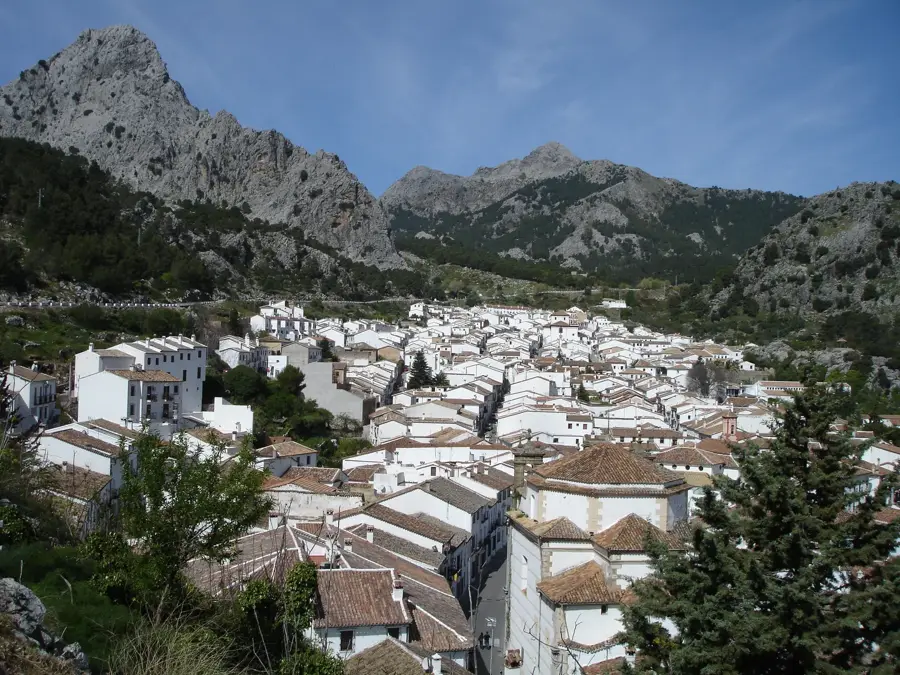
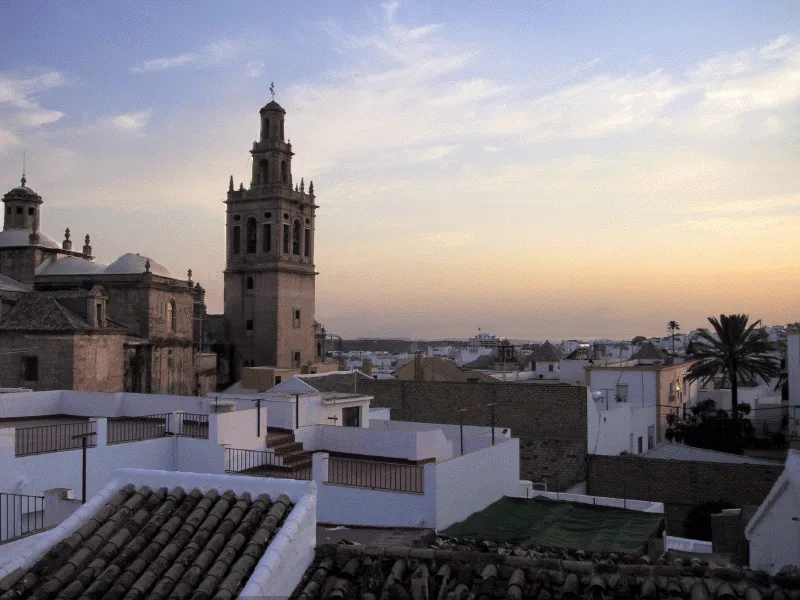
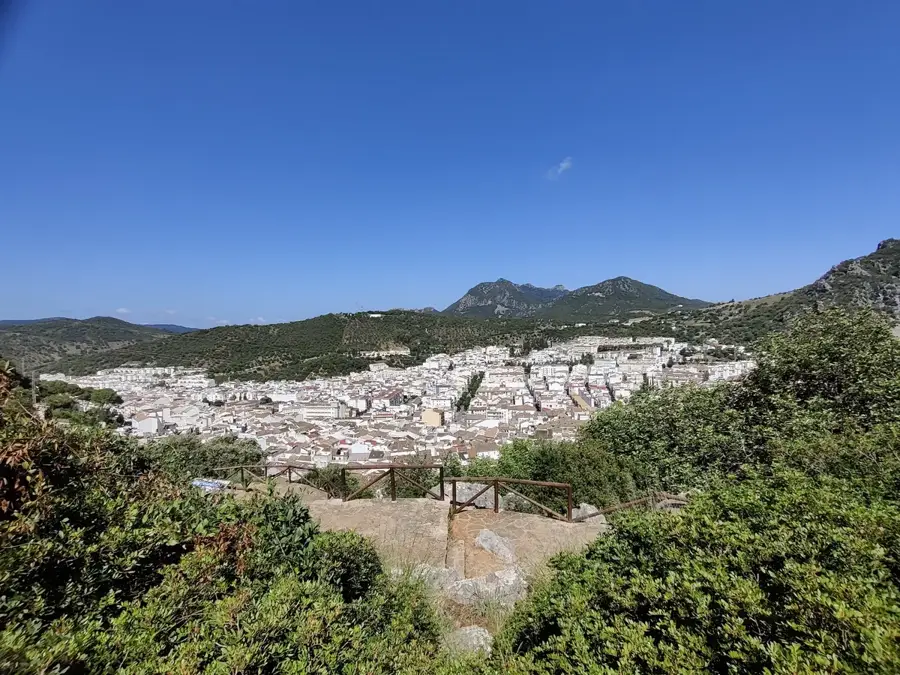
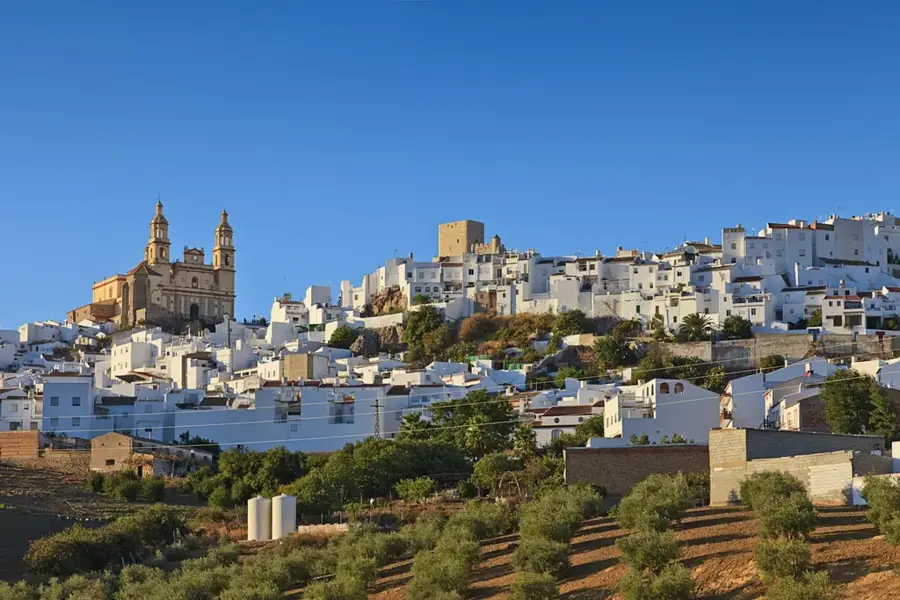
Crowning a steep hill surrounded by vast expanses of olive groves, Olvera is one of the most striking and authentic white villages in the province of Cádiz. The town is visually dominated by two monumental structures that define its skyline: a twelfth-century Moorish castle perched precariously on a rocky crag, and the imposing neoclassical Parroquia de Nuestra Señora de la Encarnación, which features elegant twin towers. Walking through the steep, narrow streets of the historic center reveals centuries of history and the deeply ingrained agricultural traditions of the region. Olvera is widely celebrated for its high-quality olive oil production, and visiting a local cooperative to taste the liquid gold is an essential experience. The town also serves as a primary access point to the Vía Verde de la Sierra, an award-winning greenway built along an abandoned railway line, first-rate for cycling and hiking through tunnels and across viaducts. A popular stop along this trail is the Peñón de Zaframagón, home to one of the largest griffon vulture colonies in Europe. Enjoy a hearty local stew in a traditional tavern after exploring.
The most pleasant time to visit is May, Jun, Sep.
| Jan | Feb | Mar | Apr | May | Jun | Jul | Aug | Sep | Oct | Nov | Dec | |
|---|---|---|---|---|---|---|---|---|---|---|---|---|
| Avg °C | 9 | 10 | 12 | 15 | 19 | 24 | 27 | 27 | 23 | 19 | 13 | 10 |
| Rain mm | 56 | 56 | 69 | 55 | 29 | 4 | 1 | 3 | 26 | 72 | 79 | 71 |
Notable places around
Where do you start? We build the route here, with stops and country notes along the way.
© OpenStreetMap contributors · OpenRouteService
Start your day in the picturesque Barrio del Villa, where white houses cascade down the hillside. At noon, explore the majestic Castillo Árabe and enjoy the sweeping views over the Andalusian countryside. The afternoon is dedicated to the impressive church and the museum, which dives deep into local culture. End the day with a quiet walk to the historical cemetery, spectacularly carved into the rock face.
Morning starts in the narrow alleys of Barrio del Villa, which take on a special glow in the rain. The whitewashed walls reflect the soft light as you climb toward Plaza de la Iglesia. At midday, the massive Neoclassical Church of Nuestra Señora de la Encarnación provides an ideal dry sanctuary to admire the impressive interior architecture. In the afternoon, explore the Arabic Castle. The stone steps can be slippery, but the view of the mist-covered Sierra de Cádiz is dramatic and unique. The day ends at the Museo de la Cilla, where you can delve into local agricultural history while staying dry before dusk settles over the white village.
A clear winter morning in Barrio del Villa offers the best visibility. The cool air makes the climb toward Plaza de la Iglesia more pleasant than in the hot Andalusian summer. At midday, the low-hanging sun warms the plaza while you admire the Neoclassical splendor of the church. The light conditions inside are particularly soft now. An afternoon at the Arabic Castle offers a golden panorama. The surrounding olive groves glow in the winter light before the sun disappears behind the mountains around 18:00. After visiting Museo de la Cilla, wrap up the day in a local bar with warm tapas, as temperatures drop noticeably after sunset.
Explore Olvera and its surroundings on two wheels. After a brief overview of the city center, the route leads to Vía Verde de la Sierra, a former railway line now turned into a nature paradise. Cycle to the remote Sanctuary before returning to the castle for a grand finale. The day ends peacefully in the shade of the old quarter.
The day starts at Plaza de la Iglesia with a quick route check. Be careful on the smooth tiles in the center when it rains. At midday, you reach Vía Verde de la Sierra. The old station provides shelter, while the tunnels along the route protect you from the worst of it. In the afternoon, head to Santuario de los Remedios. The paved roads are manageable, but splashing mud is part of the experience today. The day ends with the climb to the Arabic Castle and a ride through Barrio del Villa, where you can warm up with hot coffee in a bar.
A cool start at Plaza de la Iglesia. The fresh winter air gives you energy for the upcoming tour through the Andalusian hills. At midday, riding the Vía Verde is a joy. The low sun perfectly illuminates the wide valleys, even if it's cool in the shadow of the tunnels. In the afternoon, head to Santuario de los Remedios, offering ideal conditions for a picnic in the mild winter sun before the cool breeze picks up. To finish, the climbs to the Arabic Castle and through Barrio del Villa give your muscles a final workout, which is ideal in moderate winter temperatures.
By car, you can comfortably reach Olvera's highlights. Start at the monumental castle and the church in the center. Then, a short drive leads to the remote Santuario de los Remedios, a place of deep spirituality. Discover the Vía Verde from a different perspective before ending the day in the historical city core.
Start at the Arabic Castle; the parking lot is nearby and the path to the tower is short. In the rain, the car is the most comfortable base for Olvera. At midday, head to the parish church. Park nearby and use umbrellas for the short walk to the imposing building. Next, the drive leads to Santuario de los Remedios. The road offers spectacular views of the rainy landscape while you stay dry. The day continues to Vía Verde, where you can take a short walk from the parking lot before exploring Barrio del Villa from the protection of your car.
A bright winter morning at the Arabic Castle. The view from the car on the way in is breathtaking, with frost glistening on the fields. At midday, the drive to the parish church offers a chance to experience the town without the summer heat. Parking is much more relaxed in winter. The excursion to Santuario de los Remedios leads through winter olive groves. The low sun creates a beautiful play of light on the car's hood. After a stop at Vía Verde, the day ends in Barrio del Villa. As it gets cool in the evening, you'll appreciate the seat heaters on the way back to the hotel.
March–May for blossoming almond groves and gentle breeze. October after the olive harvest – aroma everywhere. Summers are brutal, restrict outdoor activity to morning and evening.
Very safe and rural. Steep climbs up to the castle – wear sturdy shoes. Park down in the village; barely any space up top. Some Vía Verde tunnels are unlit – cyclists need a light.
Olvera is a 'pueblo blanco', Spanish-led. Everyone knows the 'Vía Verde de la Sierra' – the famous rail-trail bike route. Local 'aceite de oliva' is excellent, every bar offers a taste.
Set between the massive castle and the impressive church, this square forms the bustling center of Olvera's upper town. The exposed location serves as a spectacular viewing platform, revealing sweeping vistas across the surrounding Andalusian countryside. Taking a quiet walk here allows visitors to feel the deep historical roots of this elevated enclave. A visit during the clear morning hours is highly recommended for the best photo opportunities.