Plizio Visual Lab

Figuig Oasis
Plizio editorial teamData Sources
Relief
—°5
Figuig Oasis (Morocco)

Weather…

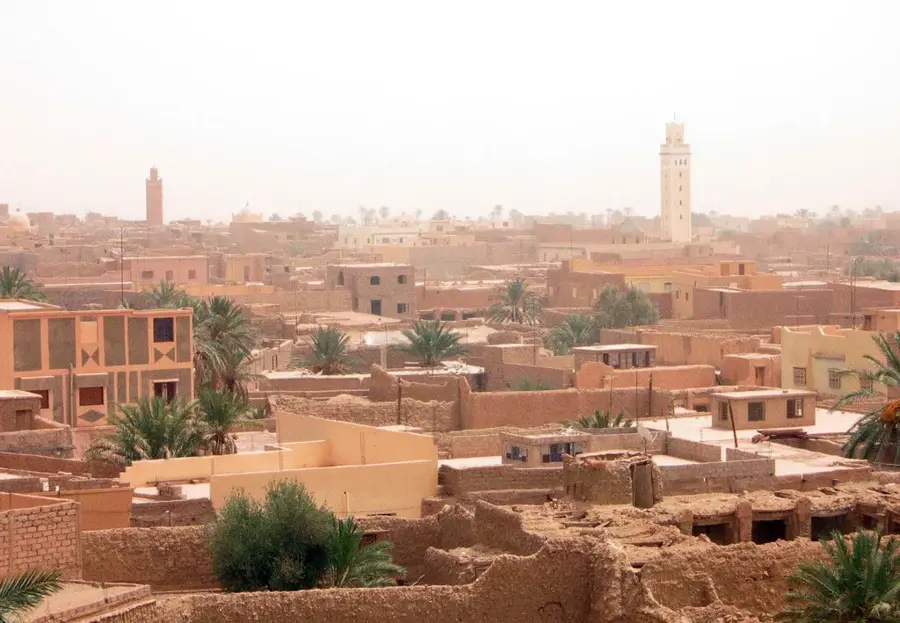
The Figuig Oasis is located in the far east of Morocco, near the Algerian border, and represents an exceptional example of Saharan survival. The settlement consists of seven distinct ksours (fortified villages) arranged around a vast cluster of date palm groves, which are fed by an ingenious ancient underground irrigation system known as foggara. For centuries, Figuig served as a vital hub for trans-Saharan trade and as a spiritual center, home to numerous historical mosques and libraries. The architecture of the mud-brick buildings is perfectly adapted to the extreme desert climate, preserving millennial traditions of Berber culture. Today, the region is primarily known for its high-quality dates, though it faces challenges such as falling groundwater levels and the migration of youth to larger urban centers.

Best time to visit & climate

The most pleasant time to visit is Apr, May, Oct.

JanFebMarAprMayJunJulAugSepOctNovDec
Avg °C8101418232933312620138
Rain mm141112119631319262613

📋 Practical info

🧭
Getting there
This isolated oasis town is typically reached via long bus or car journeys from major Moroccan cities like Oujda, navigating somewhat remote but generally paved regional roads. The drive can be lengthy, highlighting the destination's secluded charm near the eastern border.
📅
Best season
Spring and autumn are considered the most pleasant times to explore the palm groves, offering moderate temperatures first-rate for leisurely walking. Summer afternoons here can become uncomfortably hot, while winter nights sometimes bring surprisingly brisk chills.
⛰️
Terrain & paths
The area consists mainly of dense, shaded date palm plantations intersected by a labyrinth of narrow, unpaved paths and ancient irrigation canals. Walking is relatively flat and straightforward, but navigating the maze-like agricultural zones can be gently disorienting.
🎒
What to bring
Comfortable, dust-resistant walking shoes are highly recommended for strolling through the agricultural tracks and exploring the traditional mud-brick architecture. A sun hat, a reusable water bottle, and a camera to capture the dramatic landscape contrasts are also very useful.
🅿️
Parking
Most visitors leave their cars securely parked near their guesthouses or in the designated central squares of the modern town before venturing out on foot. Driving directly into the dense, historical palm groves is generally impractical and strongly discouraged.
⚠️
Safety
Wandering through the palm groves is generally very safe and tranquil, though visitors should take care not to accidentally damage the fragile, ancient mud irrigation channels. Basic precautions regarding intense midday sun and hydration should always be maintained during the warmer months.
⏱️
Time needed
A thorough walk to appreciate the scale of the palm groves, observe traditional farming techniques, and enjoy the viewpoints typically occupies about a half day. Those interested in local architecture and slow-paced relaxation often stay for a couple of nights in the area.

Geography

Coordinates
32.10000, -1.20000

Facts

  • Figuig is composed of 7 fortified ksours
  • Over 100,000 date palms grow within the oasis
  • The irrigation system utilizes ancient foggara channels
  • The area is situated at about 900 meters above sea level
  • It was a major stop on the trade route to Timbuktu
  • Parts of the city walls date back to the 15th century

Explore nearby

Notable places around
Route planner — Car & Motorhome

Where do you start? We build the route here, with stops and country notes along the way.

Vehicle
Only stops with (optional):

© OpenStreetMap contributors · OpenRouteService

Sights in the town Figuig Oasis (5)

Le Minaret Pierreux📍 landmark

A recognized heritage attraction in the Figuig oasis featuring an ancient, structurally distinct stone minaret.

Mellah Oudaghir📍 landmark

The historical Jewish quarter located within the traditional mud-brick lanes of the palm-fringed Figuig oasis.

Ksar Oulad Mahrez📍 landmark

A fortified mud-brick village representing the intricate oasis architecture unique to the Figuig palm groves.

Ksar Tachroumet🏺 historical

The weathered earthen ruins of an ancient fortified ksar hidden among the date palms of the Figuig oasis.

Maison de Culture🎭 culture

This local arts center hosts cultural events and community gatherings in the heart of the Figuig oasis.

Sights nearby

Frequently asked questions

Where is the Figuig oasis?
It is located remotely in the far east of Morocco, near the Algerian border.
How to get there?
Only possible with a long journey via Oujda or Bouarfa.
What makes this place special?
The traditional architecture and the remote, peaceful location.
Is there accommodation there?
There are some guesthouses offering an authentic experience.
When is the best time?
Spring or autumn, when the temperatures are bearable.
Figuig Oasis: where is it located?
Figuig Oasis is located in Morocco.
Figuig Oasis: what is there to see?
Highlights include Le Minaret Pierreux, Mellah Oudaghir, Ksar Oulad Mahrez.
Figuig Oasis: when is the best time to visit?
The most pleasant time to visit is Apr, May, Oct.
Figuig Oasis: why is it worth visiting?

The Figuig Oasis is located in the far east of Morocco, near the Algerian border, and represents an exceptional example of Saharan survival.
View on map → The Top 50 Attractions → OpenStreetMap →
Africa
Explore with Plizio Discover more places in Africa
More places in Morocco →

Nearby cities

Nature

More places