Plizio Visual Lab

El Djouf
Plizio editorial teamData Sources
Mountain
—°
El Djouf (Mauritania)

Weather…

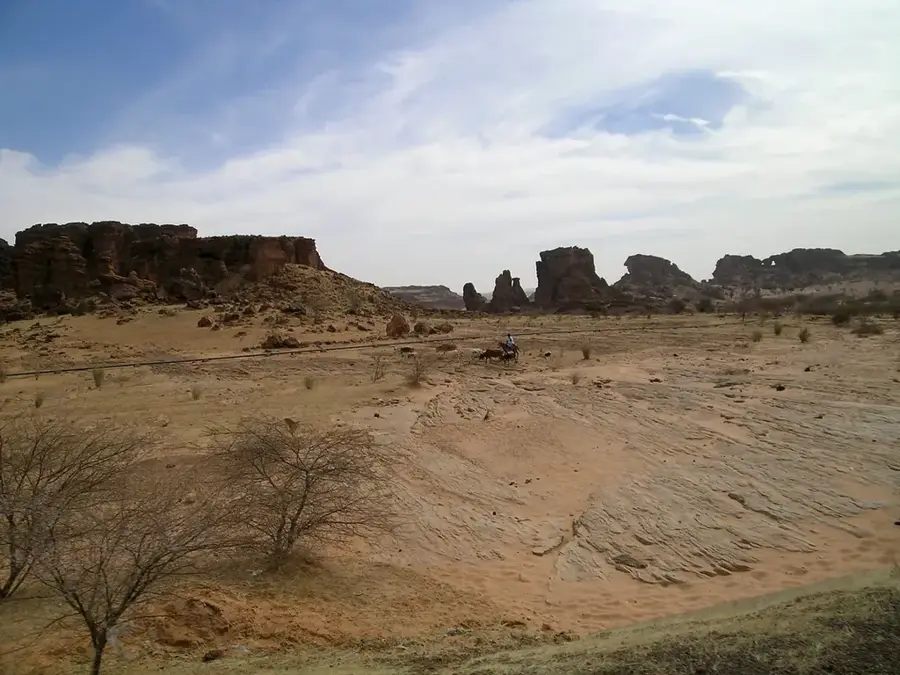
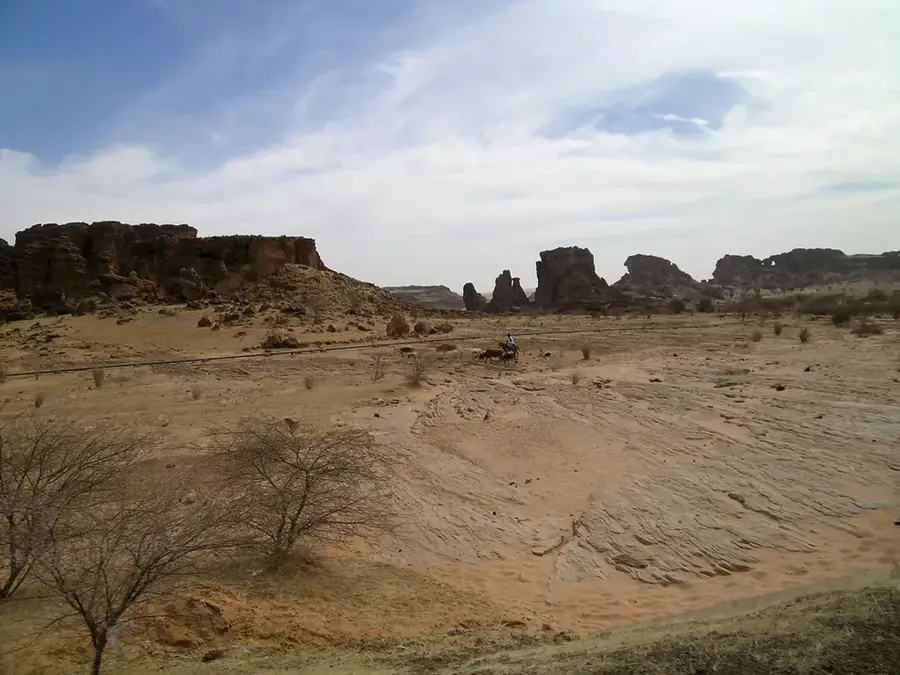
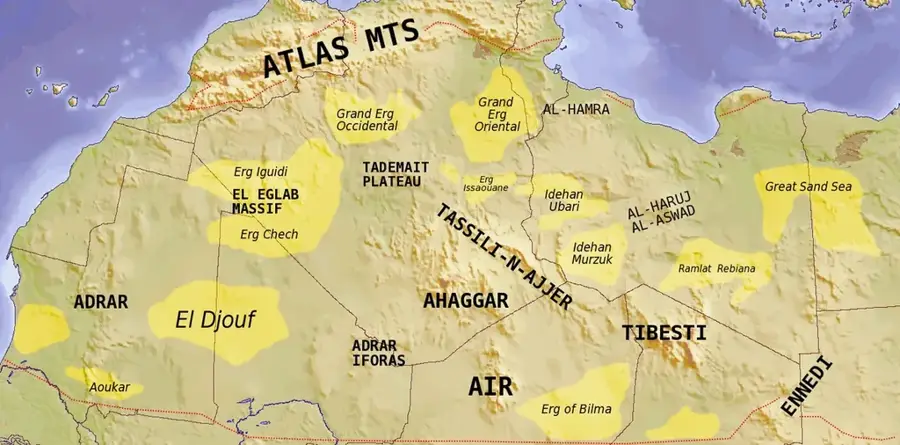
El Djouf is a vast and hyper-arid basin located in the heart of the Sahara, spanning northeastern Mauritania and parts of Mali. Often referred to as the 'Empty Quarter' of the Sahara, it is characterized by immense dune fields known as ergs, interspersed with gravel plains and rocky outcrops. The region is notorious for its complete lack of surface water and extreme temperatures, making it one of the most remote and inhospitable places on Earth. Geologically, the El Djouf basin is thought to occupy the site of an ancient inland sea, with its fine-grained sediments now fueling the shifting sands that define its surface. Historically, it acted as a formidable natural barrier, forcing trans-Saharan trade routes to skirt its edges rather than crossing its center. For scientists, the area provides critical data on desertification and climate history. For those who study the desert, El Djouf represents the raw, unyielding power of nature, where the horizon stretches infinitely and the landscape is constantly reshaped by the prevailing winds.

Best time to visit & climate

The most pleasant time to visit is Feb, Mar, Nov.

JanFebMarAprMayJunJulAugSepOctNovDec
Avg °C161923273134363533292217
Rain mm1111113147512

📋 Practical info

🧭
Getting there
Entering this incredibly vast and unforgiving desert basin requires specialized desert expedition logistics, including fully equipped 4x4 convoys. Only highly experienced local Tuareg or Mauritanian desert guides should be trusted to navigate this completely trackless expanse.
📅
Best season
Expeditions must absolutely be restricted to the core winter months, specifically December to February, when temperatures are somewhat survivable. During the rest of the year, the scorching solar radiation and extreme heat make human survival in this barren basin nearly impossible.
⛰️
Terrain & paths
The landscape consists of seemingly endless stretches of soft sand dunes mixed with harsh, flat plains of loose rock and arid rubble. The completely featureless nature of the basin makes visual navigation almost impossible without advanced GPS equipment and deep local knowledge.
🎒
What to bring
Preparation requires professional-grade desert survival gear, including heavy-duty sun protection, satellite communication devices, and sand ladders for vehicles. Most importantly, convoys must carry massive reserves of fuel and drinking water, as there are zero resupply points.
🅿️
Parking
Conventional parking concepts do not apply here; vehicles simply stop wherever the sand is compacted enough to support their weight overnight. Campments and vehicle stops must be carefully chosen to avoid deep hollows where sudden, powerful sandstorms might bury the equipment.
⚠️
Safety
The sheer isolation and extreme environment pose profound, life-threatening risks, from severe dehydration to catastrophic vehicle breakdowns. Traveling without a multi-vehicle convoy and failing to register your expedition route with local authorities is extremely dangerous and ill-advised.
⏱️
Time needed
Due to its immense size and extreme remoteness, an expedition into the heart of the basin is a major undertaking lasting multiple days or weeks. Short visits are impractical; travelers must commit to significant travel time just to reach the fringes of this formidable desert region.

Geography

Coordinates
21.00000, -8.00000

Facts

  • The depression lies at an average elevation of 200 to 300 meters.
  • El Djouf is often referred to as the 'Empty Quarter' of the Sahara.
  • Meteorite finds, such as the Adrar meteorite, have been documented in the region.
  • Vegetation is almost entirely restricted to rare oases on its periphery.
  • In the geological past, the basin was part of an extensive lake system.
  • Daytime temperatures can reach 50°C, with significant drops at night.

Route planner — Car & Motorhome

Where do you start? We build the route here, with stops and country notes along the way.

Vehicle
Only stops with (optional):

© OpenStreetMap contributors · OpenRouteService

Sights nearby

Frequently asked questions

What is El Djouf?
One of the driest and most inhospitable areas in the world.
Can you travel there?
Only with a professional, well-equipped expedition.
Are there settlements there?
No, it is completely uninhabited.
What is the biggest risk?
Getting lost and water shortage at extreme temperatures.
What to bring?
First aid kit, emergency transmitter, and lots of water.
El Djouf: where is it located?
El Djouf is located in Mauritania.
El Djouf: when is the best time to visit?
The most pleasant time to visit is Feb, Mar, Nov.
El Djouf: why is it worth visiting?
El Djouf is a vast and hyper-arid basin located in the heart of the Sahara, spanning northeastern Mauritania and parts of Mali.
View on map → The Top 50 Attractions → OpenStreetMap →
Africa
Explore with Plizio Discover more places in Africa
More places in Mauritania →

Nearby cities

More places