Plizio Visual Lab

Mosque of Ibn Tulun
Plizio editorial teamData Sources
Landmark
—°6
Mosque of Ibn Tulun (Egypt)

Weather…

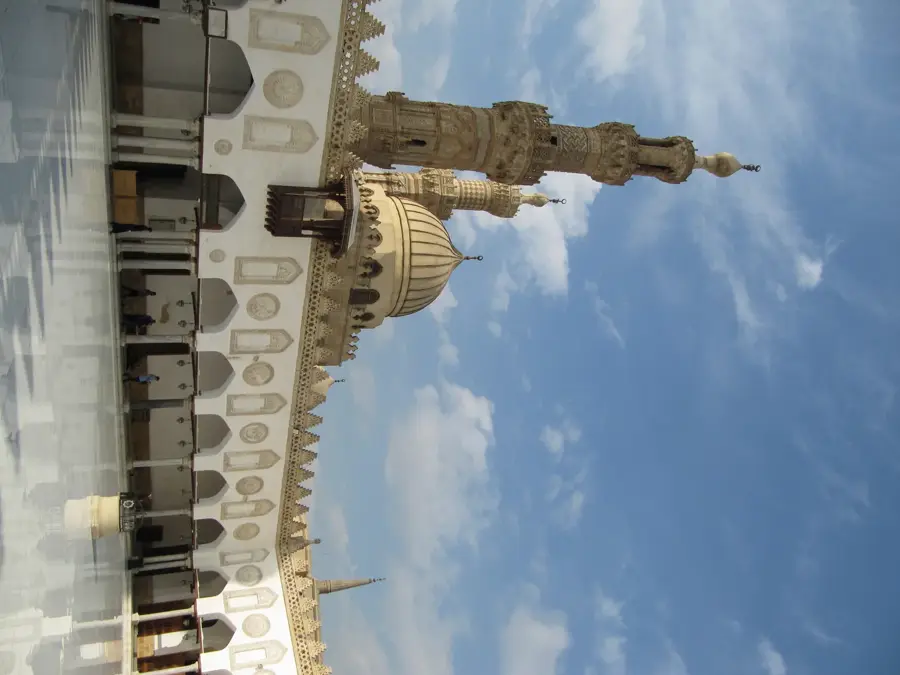
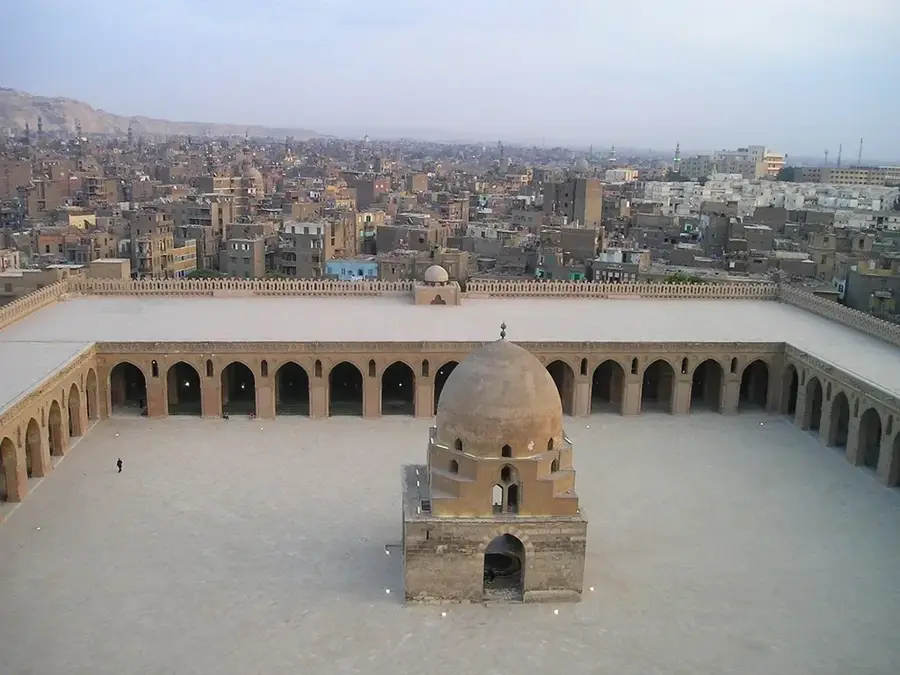
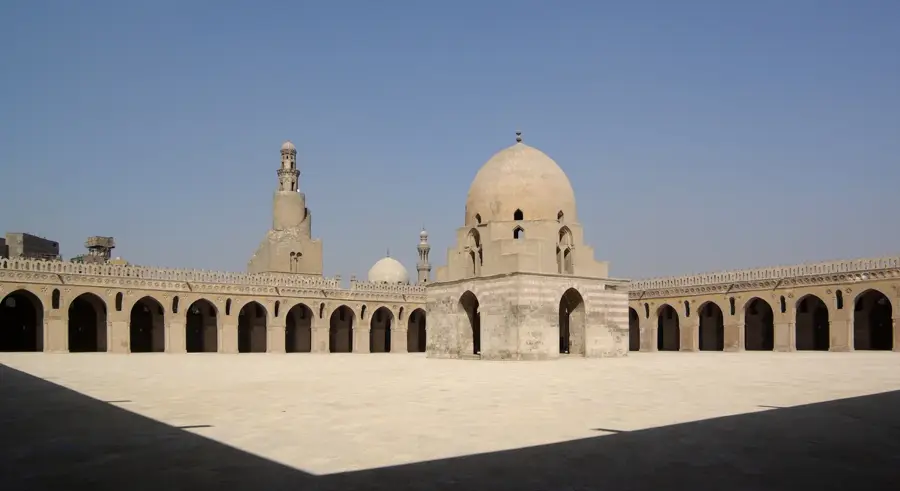
The Mosque of Ahmad ibn Tulun in Cairo is the oldest mosque in the city that survives in its original form, representing a peak of Abbasid architecture. It was commissioned between 876 and 879 AD by Ahmad ibn Tulun, the founder of the Tulunid dynasty. The mosque is distinguished by its vast open courtyard and the surrounding arcades with pointed arches resting on sturdy brick piers. Unique to Egypt is its minaret with an external spiral staircase, strongly resembling the Great Mosque of Samarra in modern-day Iraq. The walls of the prayer hall are adorned with intricate stucco carvings featuring geometric and floral patterns. Covering a total area of about 2.5 hectares, it is one of the largest mosques in the world by land area. Its austere elegance and monumental silence make it one of the most important monuments in Islamic art history.

Best time to visit & climate

The most pleasant time to visit is Apr, Oct, Nov.

JanFebMarAprMayJunJulAugSepOctNovDec
Avg °C121417212529303028241914
Rain mm8779000005177

📋 Practical info

🚪
Visiting
Visitors are generally welcome to explore both the vast central courtyard and the arched arcades of this massive, historic mosque. As with all active mosques, you must remove your shoes before entering the carpeted prayer areas, and modest dress is mandatory.
🕒
Typical hours
The mosque is typically open to tourists from mid-morning until late afternoon, except during the Friday midday prayer when access is restricted to worshippers. It is usually quietest in the early morning, offering a remarkably peaceful atmosphere.
📷
Photography
Photography is allowed and the stark, geometric architecture of the courtyard makes for incredibly dramatic shots, especially when playing with light and shadows. Climbing the unique spiral minaret (if open) provides excellent panoramic photography opportunities of the surrounding city.
⏱️
Time needed
Plan to spend about 45 minutes to an hour taking in the sheer scale of the courtyard and walking the perimeter of the arcades. If you intend to climb the minaret and explore the adjacent Gayer-Anderson Museum, allocate at least two hours in total.
Combine with
Directly abutting the mosque's outer walls is the excellent Gayer-Anderson Museum, a beautifully preserved example of domestic Ottoman architecture that should not be missed. You can also easily walk to the nearby Sultan Hassan Mosque from here.
🧭
Getting there
The mosque is located in the Sayyida Zeinab neighborhood, which is best reached by taking a taxi directly to the entrance. Alternatively, it is a moderate, albeit somewhat dusty and chaotic, walk from the Sayyida Zeinab metro station if you prefer using public transit.
💡
Insider tip
To fully grasp the vastness of the complex, make sure to walk the narrow outer enclosure, or ziyada, which was designed to physically and acoustically separate the sacred prayer space from the bustling street noise of the surrounding city.

Geography

Coordinates
30.02860, 31.24940

Facts

  • Built between 876 and 879 AD
  • Features a unique spiral minaret
  • Oldest intact mosque in Cairo
  • Covers an area of roughly 6.5 acres
  • Commissioned by Ahmad ibn Tulun
  • Inspired by the architecture of Samarra

Explore nearby

Notable places around

Route planner — Car & Motorhome

Where do you start? We build the route here, with stops and country notes along the way.

Vehicle
Only stops with (optional):

© OpenStreetMap contributors · OpenRouteService

Sights in the town Mosque of Ibn Tulun (6)

Gayer-Anderson Museum🏛 museum

Adjoining the Ibn Tulun Mosque, this art museum preserves authentic 17th-century Islamic domestic architecture and famously featured in a James Bond film.

💶

Bayt al-Sinnari🏛 museum

Built in 1794, this historic house museum showcases traditional Islamic residential architecture with its characteristic wooden mashrabiya windows.

Talaat Harb Culture Center🏛 museum

This cultural venue provides a space for local artistic exhibitions, workshops, and literary events in the historic district.

Masoleum of Sayyida Ruqayya🏺 historical

Dedicated to a descendant of the Prophet Muhammad, this Fatimid-era shrine is celebrated for its highly ornate stucco mihrab and ribbed dome.

Khanqah of Shaykhu⛪ religious

Established as a recognized heritage site in 1355, this Islamic complex originally functioned as a prominent center for Sufi gatherings.

Mosque of Ibn Tulun⛪ religious

Renowned as the oldest mosque in Cairo surviving in its original form, it is visually striking due to its unique spiral minaret inspired by the Great Mosque of Samarra.

Sights nearby

Frequently asked questions

How old is the Ibn Tulun Mosque?
It was completed in 879 AD and is the oldest mosque in Cairo preserved in its original form.
Can you climb the minaret?
Yes, the spiral-shaped minaret features a great 360-degree view of Cairo.
Is there a museum right next to it?
Yes, the Gayer-Anderson Museum is directly adjacent to the mosque.
How much time should I plan for the visit?
About 30-45 minutes for the mosque, plus time for the minaret.
Is the entry free?
Entry is usually free, but small tips for shoe storage are customary.
Mosque of Ibn Tulun: where is it located?
Mosque of Ibn Tulun is located in Egypt.
Mosque of Ibn Tulun: what is there to see?
Highlights include Gayer-Anderson Museum, Bayt al-Sinnari, Talaat Harb Culture Center.
Mosque of Ibn Tulun: when is the best time to visit?
The most pleasant time to visit is Apr, Oct, Nov.
Mosque of Ibn Tulun: why is it worth visiting?

The Mosque of Ahmad ibn Tulun in Cairo is the oldest mosque in the city that survives in its original form, representing a peak of Abbasid architecture.
View on map → The Top 50 Attractions → OpenStreetMap →
Africa
Explore with Plizio Discover more places in Africa
More places in Egypt →

Nearby cities

History & landmarks
Nature
More places