Plizio Visual Lab
Zhoukoudian Site
Weather…
Water temperature…
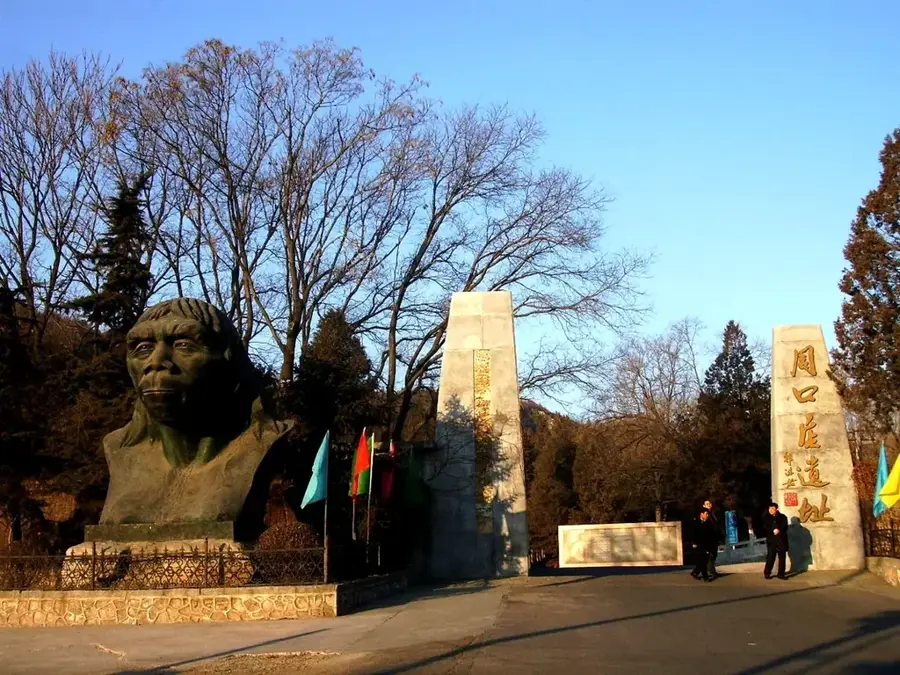
The Zhoukoudian site, located in the Fangshan District southwest of Beijing, is one of the world's most critical paleoanthropological locations for understanding human evolution. It gained international fame in the 1920s and 1930s with the discovery of the 'Peking Man' (Homo erectus pekinensis), whose remains date back between 750,000 and 200,000 years. Excavations provided early evidence of controlled fire use and the manufacture of stone tools by hominids, significantly shaping theories on the expansion of early humans. In addition to Peking Man, the Upper Cave yielded remains of Homo sapiens dating back about 30,000 years, bridging the gap to modern humans. A major mystery remains the disappearance of the original fossils in 1941 during a failed attempt to evacuate them to the United States during World War II; they have never been recovered. Despite this loss, the site was inscribed as a UNESCO World Heritage site in 1987 and remains a center for ongoing scientific inquiry. The modern museum and the preserved cave sections offer visitors a deep dive into the prehistoric life of our ancestors.
- Location: China
- Top sights: Silver Fox cave · Stone Flower cave · Shihuadong Scenic Area
- Nearby: Baoding (64 km)
Best time to visit & climate
The most pleasant time to visit is Apr, May, Sep.
| Jan | Feb | Mar | Apr | May | Jun | Jul | Aug | Sep | Oct | Nov | Dec | |
|---|---|---|---|---|---|---|---|---|---|---|---|---|
| Avg °C | -4 | -1 | 6 | 14 | 22 | 26 | 28 | 26 | 21 | 13 | 4 | -3 |
| Rain mm | 2 | 6 | 9 | 25 | 35 | 77 | 149 | 109 | 59 | 28 | 14 | 2 |
📋 Practical info
Geography
Facts
- The first specimen of Peking Man was discovered in 1923.
- Evidence from the site suggests the use of fire 500,000 years ago.
- Remains of approximately 40 individual hominids were found at the site.
- The original fossils vanished in 1941 and remain missing today.
- UNESCO designated Zhoukoudian as a World Heritage site in 1987.
- Stone tools found here date back as far as 700,000 years.
Explore nearby
Notable places around

Route planner — Car & Motorhome
Where do you start? We build the route here, with stops and country notes along the way.
© OpenStreetMap contributors · OpenRouteService
Sights in the town Zhoukoudian Site (6)
Sights nearby
Frequently asked questions
Why is Zhoukoudian famous?
Where is this site located?
Is there a museum there?
Is the archaeological site accessible?
How much time do you need for a visit?
Zhoukoudian Site: where is it located?
Zhoukoudian Site: what is there to see?
Zhoukoudian Site: when is the best time to visit?
Zhoukoudian Site: why is it worth visiting?

Nearby cities
History & landmarks
More places