Plizio Visual Lab

Forbidden City
Plizio editorial teamData Sources
tourist-attraction
—°17
Forbidden City (China)

Weather…

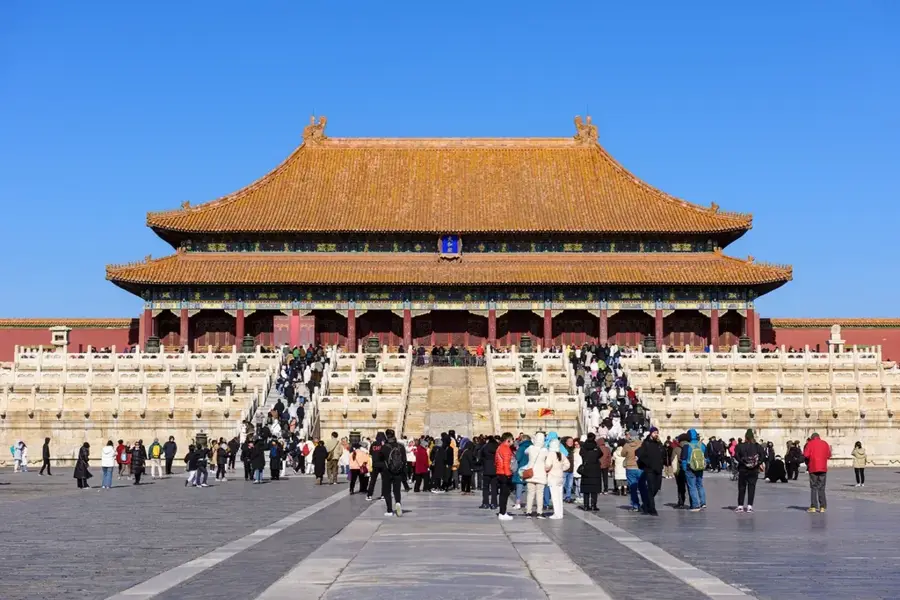
The Forbidden City, located in the heart of Beijing, served as the imperial palace of China and the political center of the empire for nearly 500 years, from the mid-Ming to the end of the Qing Dynasty. Constructed between 1406 and 1420 by the Yongle Emperor, the complex spans 720,000 square meters and comprises 980 surviving buildings, making it the largest palatial complex in the world. Its layout strictly adheres to traditional Chinese cosmology and Feng Shui principles, with buildings aligned along a north-south axis to represent the Emperor's role as the intermediary between Heaven and Earth. The complex is divided into the Outer Court for ceremonial functions and the Inner Court for the imperial family's private life. Iconic features include the massive vermilion walls and golden-yellow glazed roof tiles, a color reserved exclusively for the Emperor. Following the end of imperial rule in 1912, it became the Palace Museum in 1925. Designated a UNESCO World Heritage site in 1987, it stands as an unparalleled monument to China’s imperial history and architectural mastery.

Best time to visit & climate

The most pleasant time to visit is May, Jun, Sep.

JanFebMarAprMayJunJulAugSepOctNovDec
Avg °C-5-25132125272520123-4
Rain mm2692438841511096430142

📋 Practical info

🚪
Visiting
This immensely historically significant imperial palace complex inherently requires extensive outdoor walking across massive paved courtyards to view the magnificent exteriors and meticulously preserved indoor exhibitions.
🕒
Typical hours
Given its profound global status, the complex operates with highly structured and reliable daily schedules from morning to late afternoon, but crucially note that it is universally closed on Mondays year-round to visitors.
📷
Photography
Architectural photography of the dramatically colored traditional roofs is completely permitted, though strict bans on flash photography and tripods exist to thoroughly protect delicate artifacts in the inside galleries.
⏱️
Time needed
Traversing the central primary axis from the main entrance to the exit takes around two hours, yet dedicating absolutely no less than half a day is almost universally advised to truly appreciate the sprawling side areas.
Combine with
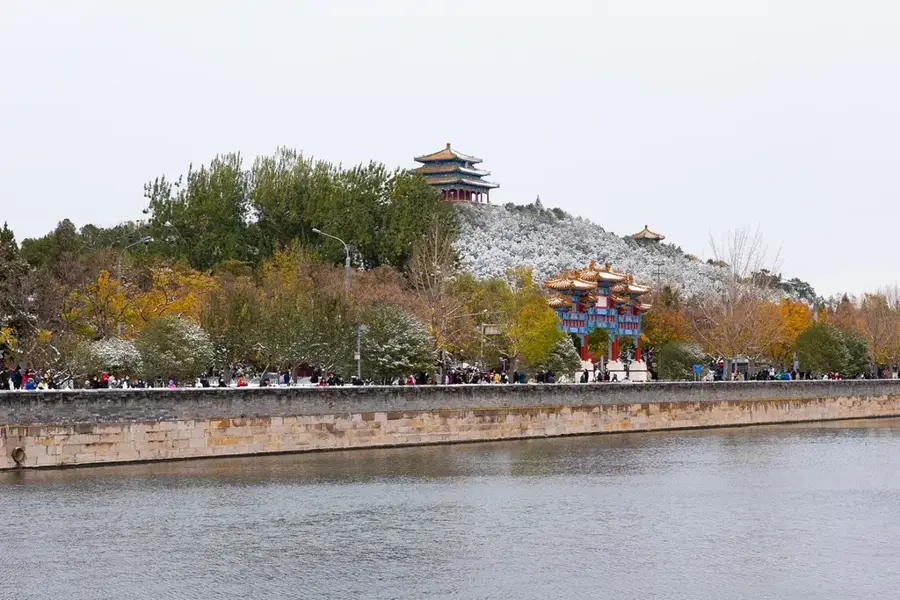
It is incredibly popular to seamlessly link this monumental visit with a stroll across the adjacent Tiananmen Square, or a highly scenic hike up nearby Jingshan Park for an awe-inspiring aerial view of the palace roofs.
🧭
Getting there
Strategically anchored right in the center of the bustling capital city, the massive complex is phenomenally well-served by the remarkably efficient public subway system directly reaching stations wonderfully near the gates.
💡
Insider tip
Since on-site ticketing was eliminated for strict daily quotas, it is absolutely mandatory to book your entry tickets online several days in advance, as same-day entry is entirely impossible.

Geography

Population
18,960,744 (2025)
Coordinates
39.91600, 116.39750

Facts

  • The palace complex consists of 980 buildings with a total of 8,707 rooms.
  • Construction involved over 1 million workers and 100,000 specialized artisans.
  • The yellow roof tiles were colored specifically to symbolize the Emperor's power.
  • The Forbidden City is surrounded by a 52-meter-wide moat and a 10-meter-high wall.
  • It remained the imperial residence for 492 years (1420–1912).
  • The Palace Museum was established in 1925, shortly after the last emperor left.

Explore nearby

Notable places around
Route planner — Car & Motorhome

Where do you start? We build the route here, with stops and country notes along the way.

Vehicle
Only stops with (optional):

© OpenStreetMap contributors · OpenRouteService

Sights in the town Forbidden City (17)

Palace Museum🏛 museum

Located within the Forbidden City, this museum houses a massive collection of imperial treasures and artworks.

Beijing Police Museum🏛 museum

This museum showcases the history of the Beijing police force, including antique uniforms and weapons.

🕒 Tu-Su 09:00-16:00

Chairman Mao Memorial Hall🏛 museum

A monumental mausoleum on Tiananmen Square where the embalmed body of Mao Zedong is displayed.

🕒 Tu-Su 07:00-11:00

Temple of Wisdom Attained (Zhìhuà sì)🏺 historical

A Ming-dynasty temple famous for its intricate ceiling carvings and traditional Buddhist music.

🕒 Tu-Su 08:30-16:30💶

Palace of Heavenly Purity🏺 historical

The largest hall in the Inner Court, which served as the Emperor's primary sleeping quarters.

Palace of Tranquile Longevity🏺 historical

A lavish palace complex built as a retirement retreat for the Qianlong Emperor.

Archery tower of Zhengyangmen🛡️ fortress

A massive 15th-century defensive tower standing at the southern end of Tiananmen Square.

Zhengyangmen🛡️ fortress

Also known as Qianmen, this historic city gate was once the main entrance to the Inner City.

Gate of Uprightness🛡️ fortress

A grand ceremonial gate situated directly on the central axis between Tiananmen and the Forbidden City.

Dongyue Temple⛪ religious

A Taoist temple famous for its "Departments of the Underworld" featuring numerous life-sized statues.

St. Joseph's Wangfujing Cathedral⛪ religious

A Romanesque-style Catholic church located on the Wangfujing shopping street, known for its three domes.

Pudu Temple⛪ religious

A Ming-dynasty temple with unique architectural features that once served as a prince's residence.

Beijing Concert Hall🎭 culture

A premier venue for classical music, featuring a modern auditorium with world-class acoustics.

Beijing Ancient Observatory📍 landmark

A historic observatory featuring pre-telescopic astronomical instruments from the Ming dynasty on a stone watchtower.

🕒 Mo-Su 09:00-17:00

National Centre for the Performing Arts📍 landmark

A modern performing arts center with a striking titanium and glass dome surrounded by an artificial lake.

Imperial Ancestral Temple📍 landmark

An imperial temple complex from the Ming and Qing eras dedicated to the ancestral worship of the ruling family.

Ritan Park🌳 park

A Ming-era public park housing the historic Altar of the Sun used for imperial solar sacrifices.

🕒 Mo-Su 06:00-22:00

Sights nearby

Frequently asked questions

Do I need to book tickets in advance?
Yes, tickets must be booked online in advance as daily visitor numbers are limited.
When is the Forbidden City closed?
The complex is typically closed on Mondays for maintenance.
Is a passport required?
Yes, foreign visitors must present their passport at the entrance.
How large is the site?
It is the world's largest palace complex with 980 buildings across 72 hectares.
Are there food options inside?
There are small cafes and kiosks, but options are limited and relatively expensive.
Forbidden City: where is it located?
Forbidden City is located in China.
Forbidden City: what is there to see?
Highlights include Palace Museum, Beijing Police Museum, Chairman Mao Memorial Hall.
Forbidden City: when is the best time to visit?
The most pleasant time to visit is May, Jun, Sep.
Forbidden City: why is it worth visiting?

The Forbidden City, located in the heart of Beijing, served as the imperial palace of China and the political center of the empire for nearly 500 years, from the mid-Ming to the end of the Qing Dynasty.
View on map → The Top 50 Attractions → OpenStreetMap →
Asia
Explore with Plizio Discover more places in Asia
More places in China →

History & landmarks

More places