Plizio Visual Lab
Tsodilo Hills
Weather…
Water temperature…
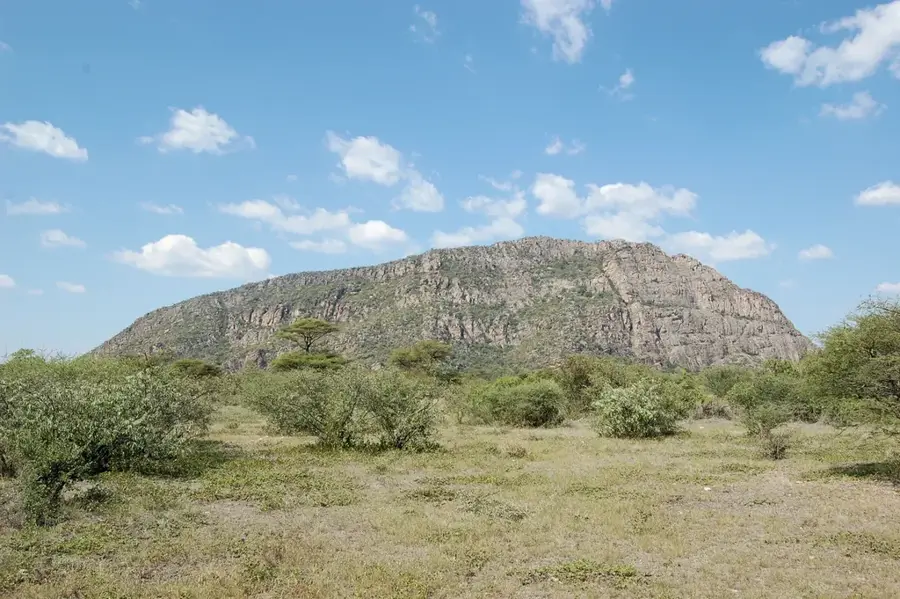
The Tsodilo Hills in northwestern Botswana are a sacred site of immense spiritual and historical significance, designated a UNESCO World Heritage site in 2001. Rising abruptly from the flat Kalahari landscape, the four main hills are known by the San people as the 'Male', 'Female', 'Child', and a smaller, unnamed hill. Hosting over 4,500 rock paintings at more than 400 individual sites, Tsodilo is often referred to as the 'Louvre of the Desert'. These artworks span various eras, with the oldest estimated to be thousands of years old, depicting animals, humans, and abstract geometric patterns. The hills have served as a settlement for early humans for over 100,000 years, making them one of the oldest continuously inhabited sites in the world. For the local San and Hambukushu communities, the hills are the dwelling place of ancestral spirits and remain a site for religious ceremonies. The raw beauty of the quartzite rock formations and the deeply rooted myths provide the location with a mystical atmosphere. Archaeological excavations have revealed Middle Stone Age tools and evidence of early pastoralism and metalwork in the region.
- Location: Botswana
- Top sights: Whale and Penguin · Rhino · Tsodilo
Best time to visit & climate
The most pleasant time to visit is May, Jun, Aug.
| Jan | Feb | Mar | Apr | May | Jun | Jul | Aug | Sep | Oct | Nov | Dec | |
|---|---|---|---|---|---|---|---|---|---|---|---|---|
| Avg °C | 26 | 26 | 25 | 24 | 21 | 18 | 17 | 21 | 25 | 29 | 28 | 27 |
| Rain mm | 156 | 100 | 96 | 32 | 2 | 1 | 0 | 0 | 1 | 7 | 54 | 110 |
📋 Practical info
Geography
Facts
- Tsodilo contains the highest concentration of rock art in Southern Africa.
- The highest point of the hills reaches approximately 1,400 meters above sea level.
- Some rock paintings depict whales and penguins, suggesting early long-distance trade.
- Rhino Cave has provided evidence of ritualistic behavior dating back 70,000 years.
- The 'Female' hill covers an expansive area of approximately 10 square kilometers.
- There are two permanent water springs in the hills that have been used for millennia.
Explore nearby
Notable places around


Route planner — Car & Motorhome
Where do you start? We build the route here, with stops and country notes along the way.
© OpenStreetMap contributors · OpenRouteService
Sights in the town Tsodilo Hills (4)
Sights nearby
Frequently asked questions
Why are the Tsodilo Hills sacred?
How many rock paintings are there?
Do I need a guide for the visit?
How strenuous is hiking in the hills?
How do you reach Tsodilo?
Tsodilo Hills: where is it located?
Tsodilo Hills: what is there to see?
Tsodilo Hills: when is the best time to visit?
Tsodilo Hills: why is it worth visiting?

History & landmarks
More places