Plizio Visual Lab

Flemish Valley
Plizio editorial teamData Sources
valley
—°2
Flemish Valley (Belgium)

Weather…

The Flemish Valley (Vlaamse Vallei) is an extensive geomorphological system in northern Belgium, formed during the Pleistocene through the erosion of major rivers such as the Scheldt, the Lys, and the Dendre. Originally a deeply incised river system, it was gradually filled with sand and silt during glacial periods due to sea-level rises and massive sediment deposition. Today, this region forms a broad, flat plain covering parts of the provinces of East Flanders and Flemish Brabant. Geologically, it is characterized by thick Pleistocene sedimentary layers that can reach up to 30 meters in depth. The fertility of these alluvial soils has made the region a center for agriculture since the Middle Ages and later for the textile industry. Managing the area's drainage has been a historic challenge, leading to the construction of numerous canals and dikes. The Flemish Valley is now one of the most densely populated and economically active zones in Belgium.

Best time to visit & climate

The most pleasant time to visit is Jun–Aug.

JanFebMarAprMayJunJulAugSepOctNovDec
Avg °C3361013161818151174
Rain mm696055385964768157677379

📋 Practical info

🧭
Getting there
The wide depression in northern Belgium is seamlessly accessible via modern major roads and a vast, intricate network of dedicated cycling routes. Navigating to any point within the valley is exceptionally straightforward regardless of your chosen transportation.
📅
Best season
Due to the paved infrastructure, year-round accessibility is fully guaranteed, but the lively spring and summer months offer the most remarkably pleasant weather. These sunny periods perfectly illuminate the expansive, flat landscapes for outdoor recreational activities.
⛰️
Terrain & paths
Visitors can consistently expect a very wide, remarkably flat geographical depression characterized entirely by heavily modified, easy-to-navigate terrain. The area is dominated by impeccably paved paths and gentle rural roads perfectly suited for effortless movement.
🎒
What to bring
Standard, comfortable walking or specialized cycling gear is completely sufficient for traversing this exceptionally accommodating landscape. Because the wide open flat areas can frequently become rather breezy, packing adequate wind protection is strongly advised.
🅿️
Parking
You will encounter absolutely abundant and highly convenient parking facilities distributed generously throughout the numerous towns and smaller villages. It is practically effortless to safely leave a vehicle close to the starting point of any planned local route.
⚠️
Safety
The geographical layout presents a very safe, hazard-free terrain with virtually zero natural obstacles or unexpected physical challenges. The only real requirement is to strictly observe standard road safety rules when sharing the extensive routes with local vehicles.
⏱️
Time needed
The highly accessible nature of the valley means duration is entirely flexible, seamlessly accommodating anything from a quick hour-long brisk walk to extensive, full-day cycling tours. You can effortlessly adjust your schedule based directly on your personal energy levels.

Geography

Coordinates
51.05000, 3.70000

Facts

  • The Flemish Valley was formed approximately 150,000 to 200,000 years ago.
  • The sedimentary fill consists primarily of fine sand and loam.
  • The width of the valley system reaches up to 50 kilometers in some areas.
  • The city of Ghent is located in the central part of this geological formation.
  • During the Eemian interglacial, the valley was partially flooded by the sea.
  • The sedimentary layers reach a maximum depth of approximately 30 meters.

Explore nearby

Notable places around
Route planner — Car & Motorhome

Where do you start? We build the route here, with stops and country notes along the way.

Vehicle
Only stops with (optional):

© OpenStreetMap contributors · OpenRouteService

Sights in the town Flemish Valley (2)

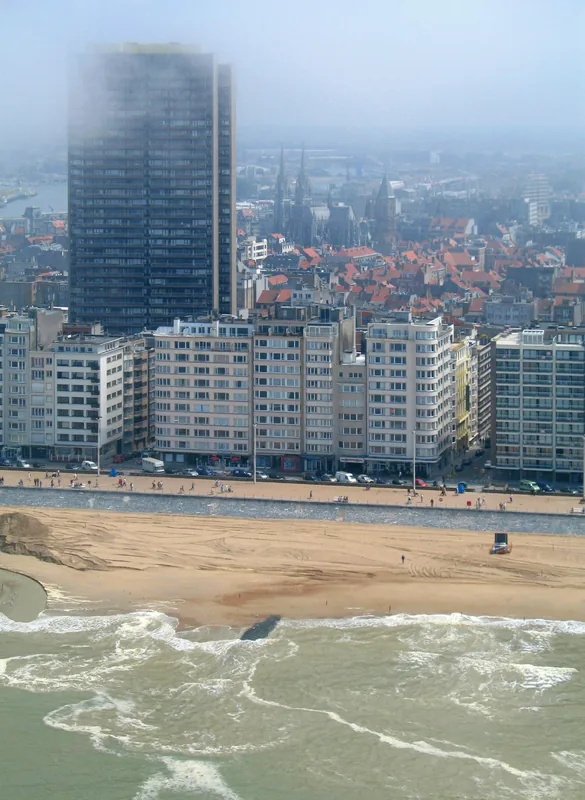
Surfstrand🎡 recreation

Surf beach in the Flemish Valley.

Sportstrand🎡 recreation

Sports beach in the Flemish Valley.

Sights nearby

Frequently asked questions

What characterizes the Flemish Valley?
It is a wide, flat lowland in Northern Flanders, formed by glacial river systems.
Which cities are located in the area of the Flemish Valley?
Large parts of Ghent and areas north of it are located within this geomorphological zone.
Is the region suitable for cyclists?
Yes, due to the extremely flat topography, it is well-suited for relaxed cycling and long-distance cycle paths.
What natural features can be found here?
You can find many polder landscapes, canals, and wetlands that are important for water birds.
When should you visit the Flemish Valley?
Between May and September, the weather is most stable for exploring nature and the cities.
Flemish Valley: where is it located?
Flemish Valley is located in Belgium.
Flemish Valley: what is there to see?
Highlights include Surfstrand, Sportstrand.
Flemish Valley: when is the best time to visit?
The most pleasant time to visit is Jun, Aug.
Flemish Valley: why is it worth visiting?

The Flemish Valley (Vlaamse Vallei) is an extensive geomorphological system in northern Belgium, formed during the Pleistocene through the erosion of major rivers such as the Scheldt, the Lys, and the Dendre.
View on map → The Top 50 Attractions → OpenStreetMap →
Europe
Explore with Plizio Discover more places in Europe
More places in Belgium →

Nearby cities