Plizio Visual Lab
La Polvorilla Viaduct
Weather…
Water temperature…
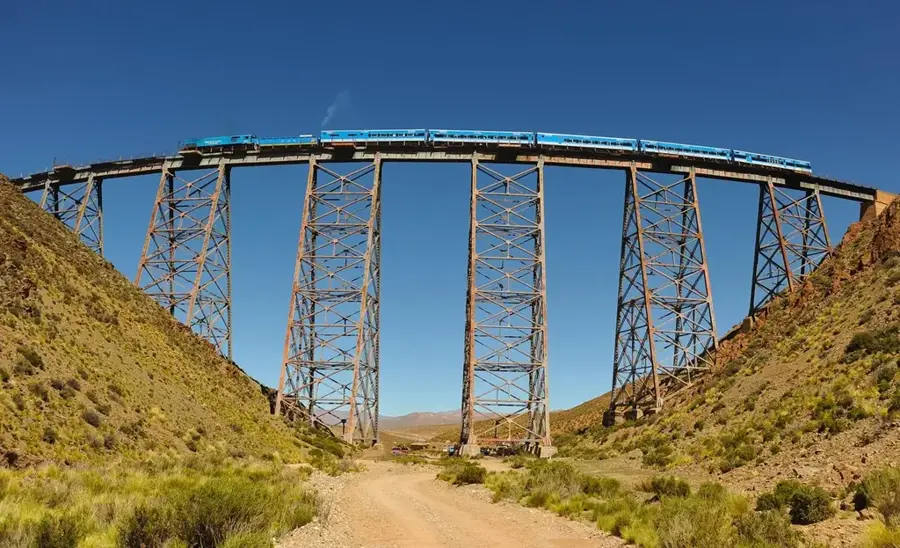
The La Polvorilla Viaduct is an architectural marvel and the most famous landmark along the Salta-Antofagasta railway, known as the 'Train to the Clouds.' Located in Salta province, Northwest Argentina, near San Antonio de los Cobres, it sits at a staggering altitude of approximately 4,220 meters above sea level. This makes it one of the highest railway bridges in the world. Completed in 1932 according to the designs of engineer Richard Maury, the steel structure stretches 224 meters across a deep desert canyon. It reaches a height of 63 meters from the ground and is notably curved with a radius of 200 meters. The bridge was constructed using rivets instead of welding to account for the extreme thermal expansion caused by the Andean climate. Lacking side railings, it features passengers a thrilling sensation of suspended flight as the train crosses the vast gap. Today, the viaduct is a National Historic Monument and remains a symbol of 20th-century engineering prowess and a major highlight for international tourists.
- Location: Argentina
- Nearby: San Antonio de los Cobres (10 km)
Best time to visit & climate
The most pleasant time to visit is Sep–Nov.
| Jan | Feb | Mar | Apr | May | Jun | Jul | Aug | Sep | Oct | Nov | Dec | |
|---|---|---|---|---|---|---|---|---|---|---|---|---|
| Avg °C | 10 | 9 | 8 | 5 | 2 | 1 | 1 | 2 | 4 | 7 | 9 | 10 |
| Rain mm | 154 | 146 | 107 | 48 | 10 | 4 | 2 | 3 | 5 | 28 | 54 | 130 |
📋 Practical info
Geography
Facts
- The viaduct was completed in the year 1932.
- It is located at an altitude of 4,220 meters above sea level.
- The total length of the steel structure is 224 meters.
- The bridge stands 63 meters above the canyon floor.
- The entire structure weighs approximately 1,600 tons.
- The engineering project was led by Richard Maury.
Explore nearby
Notable places around


Route planner — Car & Motorhome
Where do you start? We build the route here, with stops and country notes along the way.
© OpenStreetMap contributors · OpenRouteService
Sights nearby
Frequently asked questions
Is this a famous structure?
How high is the viaduct?
Do I need to acclimatize?
How to get there?
What should one bring?
La Polvorilla Viaduct: where is it located?
La Polvorilla Viaduct: when is the best time to visit?
La Polvorilla Viaduct: why is it worth visiting?
History & landmarks
More places