Plizio Visual Lab

Cabo de Gata-Níjar
Plizio editorial teamData Sources
park
—°5
Cabo de Gata-Níjar (Spain)

Weather…

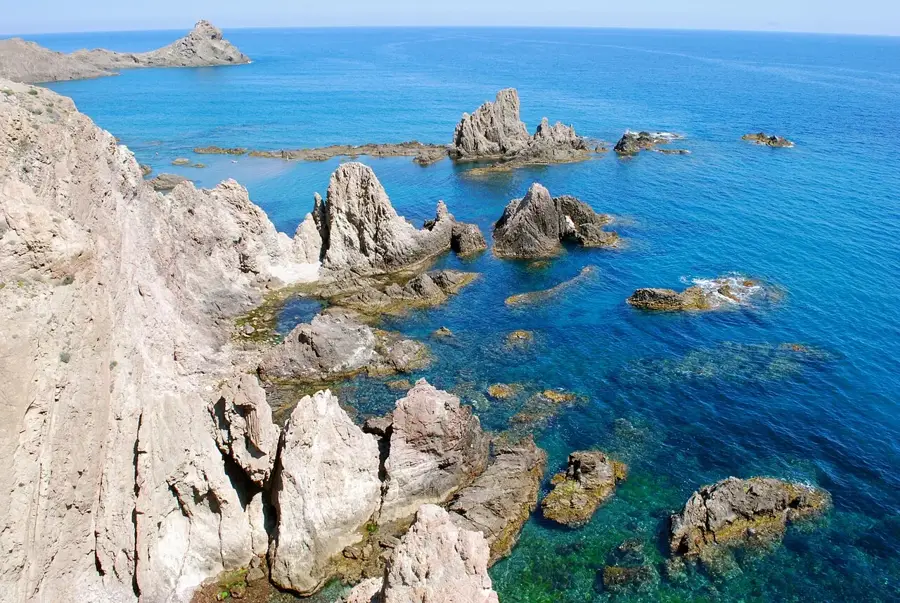
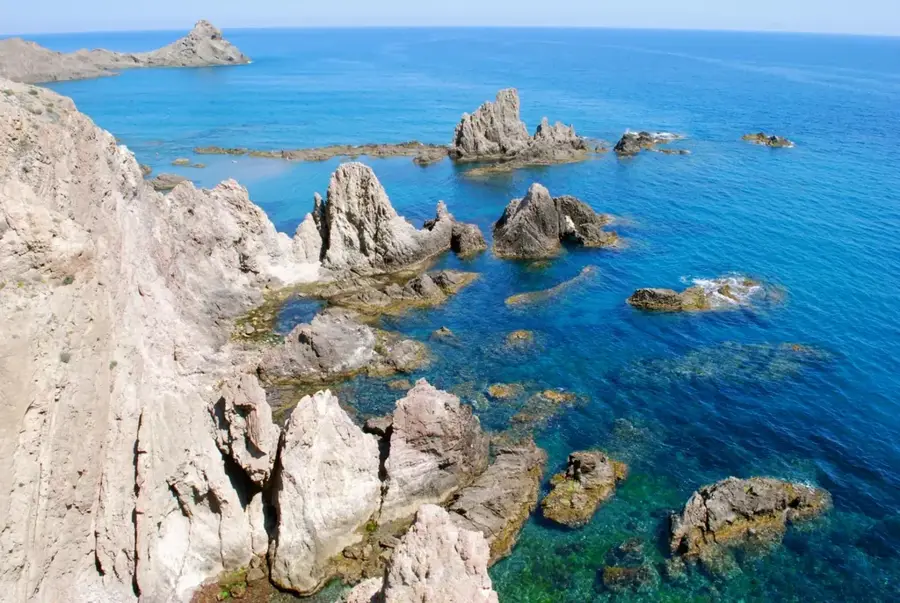
The Cabo de Gata-Níjar Natural Park, located in the Andalusian province of Almería, is Andalusia's largest protected coastal area, celebrated for its rugged, untamed beauty. The landscape is fundamentally shaped by an ancient volcanic massif that drops dramatically into the Mediterranean Sea, characterized by solidified lava flows, dark volcanic cliffs, and secluded coves. Receiving less than 200 millimeters of rainfall annually, it ranks as one of the driest regions in Europe. Despite these harsh, arid conditions, the park is home to a remarkable array of highly adapted desert flora, including the endemic European fan palm and various resilient succulents. The striking contrast between the dark, jagged volcanic rocks and the pristine, golden-sand beaches makes it a uniquely scenic environment. Designated as a UNESCO Biosphere Reserve for its exceptional geological and ecological value, the park's cinematic desert-meets-ocean landscapes have served as the backdrop for numerous famous films, including blockbusters like Indiana Jones and the Last Crusade.

Best time to visit & climate

The most pleasant time to visit is Jun, Jul, Oct.

JanFebMarAprMayJunJulAugSepOctNovDec
Avg °C141415161922242524211815
Rain mm362829301642721324337

📋 Practical info

🧭
Getting there
Reaching the various natural attractions usually requires driving along rural coastal routes that branch off the main provincial highways. Some of the most pristine bays are only accessible by parking further away and walking down long dirt paths.
📅
Best season
The milder temperatures of early spring and late autumn are highly recommended for enjoying the coastal trails without the burden of severe heat. Summer brings intense sunshine and very little rain, making early mornings the best time for activities.
⛰️
Terrain & paths
The environment is exceptionally dry and rugged, characterized by volcanic rock formations, scarce vegetation, and hidden sandy stretches. Trails can range from completely flat beachside promenades to narrow, steep paths clinging to the cliffs.
🎒
What to bring
Bringing ample hydration is absolutely critical, as facilities are practically non-existent in the wilder sections of the park. Good hiking footwear is essential to comfortably navigate the sharp volcanic rocks and loose gravel paths safely.
🅿️
Parking
Official parking areas are provided near significant landmarks and popular beaches, but they fill rapidly during peak holiday periods. To protect the arid landscape, visitors must strictly avoid driving or parking on unmarked coastal scrubland.
⚠️
Safety
Unpredictable and strong winds can make walking along the exposed headlands surprisingly treacherous for unwary hikers. Swimming conditions can change rapidly, and visitors should never underestimate the power of the open Mediterranean currents.
⏱️
Time needed
While a brief visit to a single lighthouse or viewpoint might take an hour, thoroughly experiencing the coastline is a multi-day endeavor. Most nature lovers dedicate at least a full day to combine hiking, photography, and relaxing by the sea.

Geography

Coordinates
36.72000, -2.20000

Explore nearby

Notable places around
Route planner — Car & Motorhome

Where do you start? We build the route here, with stops and country notes along the way.

Vehicle
Only stops with (optional):

© OpenStreetMap contributors · OpenRouteService

Sights in the town Cabo de Gata-Níjar (5)

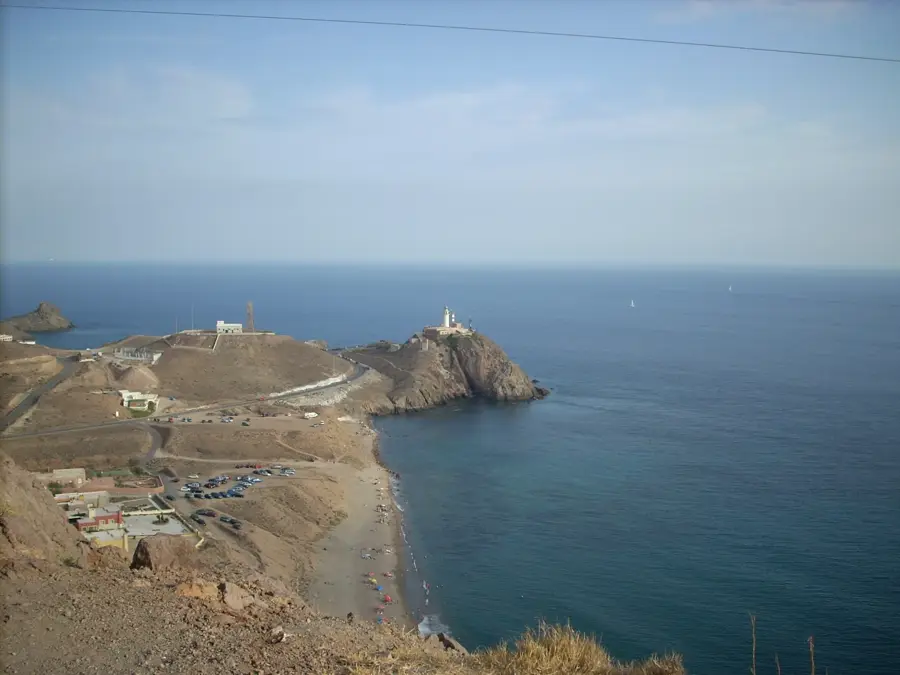
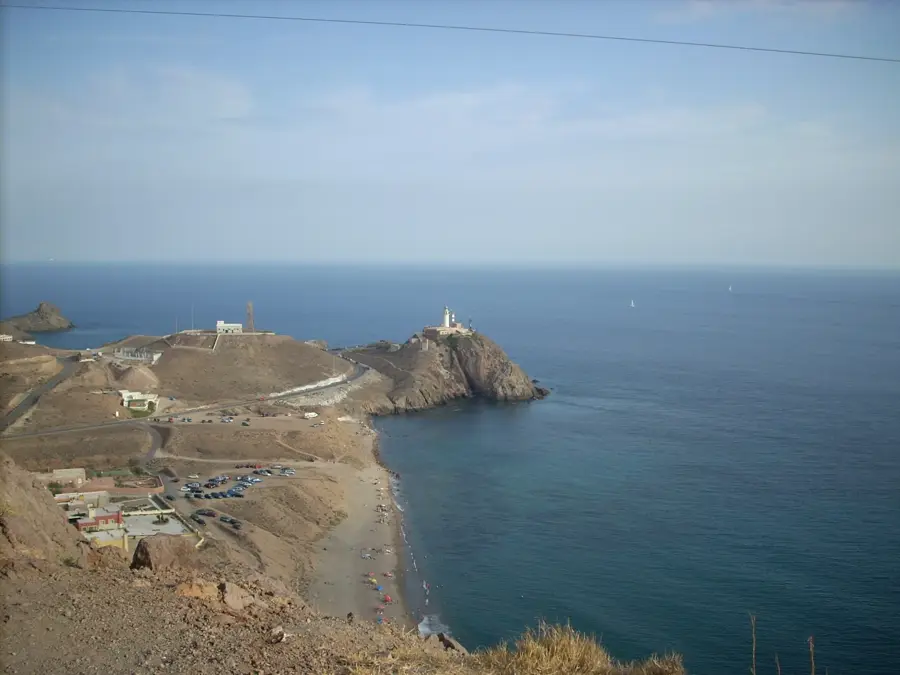
Faro de Cabo de Gata📍 landmark

An iconic lighthouse on the coast of the Cabo de Gata natural park.

Playa del Corralete🎡 recreation

A quiet beach located near the Cabo de Gata lighthouse.

Cala Arena🎡 recreation

A secluded cove with crystal clear water in the Cabo de Gata natural park.

Cala Rajá🎡 recreation

A small, pristine beach in an easy on the eye cove near Cabo de Gata.

Aula del Mar🏛 museum

A visitor centre and museum about the marine ecosystem in Cabo de Gata.

Sights nearby

Frequently asked questions

What is the geological origin of Cabo de Gata?
It is one of Spain's most important volcanic areas, featuring fossil reefs and lava domes.
What is the Arrecife de las Sirenas?
An iconic group of volcanic rock formations in the sea near the Cabo de Gata lighthouse.
Are there salt pans there?
Yes, 'Las Salinas de Cabo de Gata' are an important wetland for migratory birds.
What is the 'Palmito' plant?
The only palm native to Europe (Chamaerops humilis), which is common in the park.
What color are the rocks usually?
Due to volcanic activity, dark gray, red, and ochre tones predominate.
Cabo de Gata-Níjar: where is it located?
Cabo de Gata-Níjar is located in Galicia, Spain.
Cabo de Gata-Níjar: what is there to see?
Highlights include Faro de Cabo de Gata, Playa del Corralete, Cala Arena.
Cabo de Gata-Níjar: when is the best time to visit?
The most pleasant time to visit is Jun, Jul, Oct.
Cabo de Gata-Níjar: why is it worth visiting?

The Cabo de Gata-Níjar Natural Park, located in the Andalusian province of Almería, is Andalusia's largest protected coastal area, celebrated for its rugged, untamed beauty.
View on map → The Top 50 Attractions → Most beautiful beaches → OpenStreetMap →
Europe
Explore with Plizio Discover more places in Europe
More places in Spain →

Nearby cities

History & landmarks