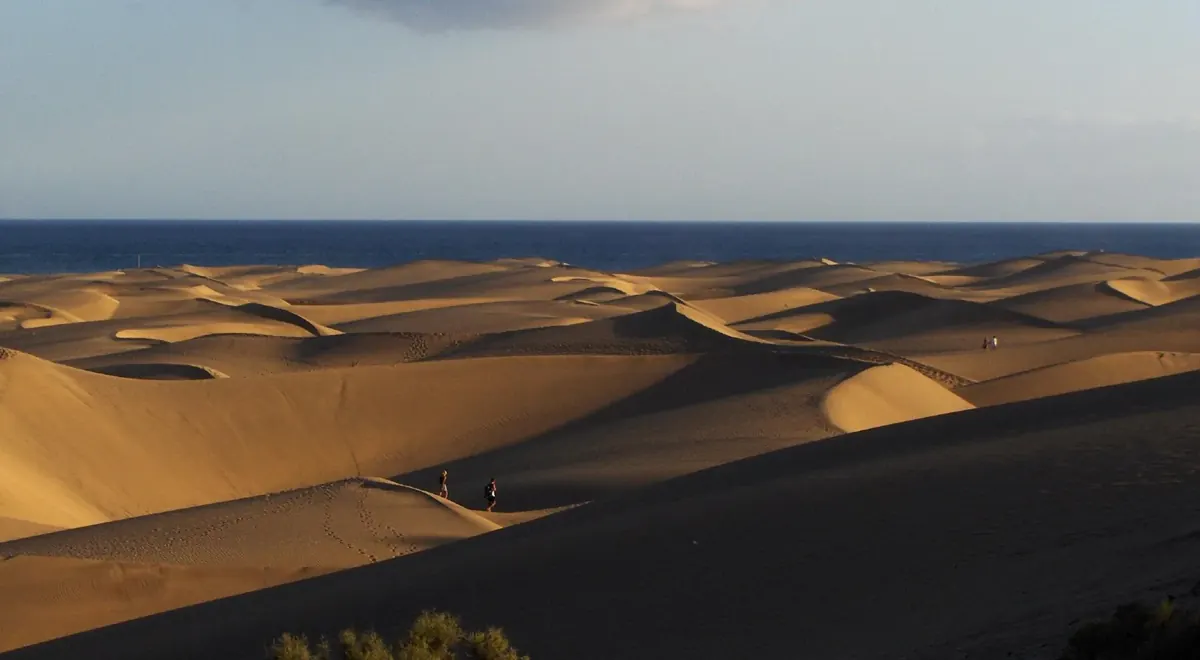
Maspalomas Dunes
Maspalomas Dunes beach is an iconic stretch of golden sand located on the southern coast of Gran Canaria. Famous for its breathtaking, Sahara-like sand dunes that meet the deep blue of the Atlantic Ocean, this nature reserve offers a unique coastal landscape. The contrast between the rolling, wind-sculpted dunes, the vibrant sea, and the historical Maspalomas Lighthouse creates a truly magical setting.
Stretching for nearly three kilometers, the beach seamlessly connects the sophisticated Meloneras area with the lively Playa del Inglés, providing a vast expanse for walkers, sunbathers, and nature lovers. The beach is divided into distinct zones catering to all visitors. The area near the lighthouse is highly developed with excellent facilities and calm waters, making it perfect for families.
As you walk further east, the beach transitions into famous designated naturist zones, celebrated for their freedom and pristine environment. Finally, it merges into the bustling sporting areas of Playa del Inglés. Beyond sunbathing, the dunes offer spectacular sunset views and a serene atmosphere if you venture away from the main access points. The protected nature reserve status ensures that the backdrop remains wild and undeveloped.
Practical info
Family-friendly & For kids
The beach section directly near the lighthouse (Faro) is extremely family-friendly, offering shallower waters and excellent infrastructure. Families often avoid the middle naturist sections and prefer the well-equipped edges.
For children, the massive sand dunes provide a huge natural playground for climbing and running. The western end offers shallow waters for safe splashing, along with nearby promenade restaurants featuring kid-friendly menus.
Food & drink
- Papas Arrugadas con Mojo — Wrinkly salted potatoes served with red and green spicy sauces, available at nearly all restaurants along the Meloneras promenade.
- Fresh Atlantic Fish (Vieja) — Try the local parrotfish at one of the seafood restaurants located right around the Maspalomas Lighthouse.
- Gofio Escaldao — A traditional Canarian dish made from roasted grain flour mixed with fish stock, perfect as a warm appetizer in local taverns.
Facilities
- Sunbeds
- Umbrellas
- Showers
- Beach kiosks
- Lifeguards
- Public toilets
- Wheelchair access
Events nearby
- Maspalomas International Carnival annually in late February/March; 2026 edition 10-22 March (theme 'El Circo') · annual
Gran Canaria's most colourful carnival, declared a Fiesta de Interes Turistico de Canarias. Features the drag queen gala, grand parade (Gran Cabalgata), street parties (mogollones) and the Entierro de la Sardina, mostly free events around Playa del Ingles and Maspalomas. Source - Maspalomas Pride by Freedom annually in May; 2026 edition (25th anniversary) 4-10 May, main float parade Saturday 9 May · annual
One of Europe's largest LGBTQ+ Pride celebrations, centred on the Yumbo Centre in Playa del Ingles. The week includes the Grand Float Parade, pool and foam parties, beach events and live performances. Source - Maspalomas Soul Festival annually in July; 2026 edition (10th) 17-19 July at Playa de San Agustin · annual
A free open-air music festival blending soul, funk and R&B rhythms with the seaside setting of San Agustin beach near Maspalomas. Source - Fiestas de San Bartolome de Tirajana (Patron Saint Festivities) annually 14-24 August; main day 24 August · annual
Patron-saint festivities of the municipality honouring San Bartolome, with the dawn Diana Floreada, solemn mass and procession, traditional Canarian Sancocho meal, the 'Lluvias de Agosto' festival and gastronomy competitions (gofio and mojo). Source - Maspalomas Winter Pride annually in November; 2026 edition (12th) 2-8 November · annual
Week-long LGBTQ+ winter celebration in Gran Canaria's south with live shows, pool parties, excursions and the Pride Walk, taking advantage of the mild November climate. Source - Feria de Artesania del Faro de Maspalomas (Artisan Craft Fair) recurring craft fair held at the Maspalomas Lighthouse, organised by FEDAC (typically around holiday periods) · annual
Traditional Canarian artisan craft fair set around the emblematic Maspalomas Lighthouse, showcasing local handcrafts organised by FEDAC. Source
Tips
- Wear closed shoes when walking through the dunes, as the sand can become blisteringly hot in the midday sun.
- Bring plenty of drinking water with you, especially if venturing away from the established beach kiosks.
- Watch the sunset from the top of the dunes; the shifting colors and shadows are a photographer's dream.
- Respect the roped-off conservation areas to protect the delicate flora and fauna of the reserve.
FAQ
Is the beach sandy or rocky?
Are there nudist areas?
Is it safe for children to swim?
Can I walk through the dunes?
Places nearby
- Playa del Inglés 3 km
- Puerto Rico de Gran Canaria 13 km
- Puerto de Mogán 19 km
- Cruce de Arinaga 21 km
- Arinaga 23 km
- Ingenio 24 km
- Telde 32 km
- Jinámar 36 km
- Las Palmas de Gran Canaria 45 km
Beaches nearby
- Playa del Inglés 1 km
- Playa de Las Canteras 47 km
- El Médano 99 km
- Playa de Las Teresitas 104 km