Plizio Visual Lab
Sao Bento Palace
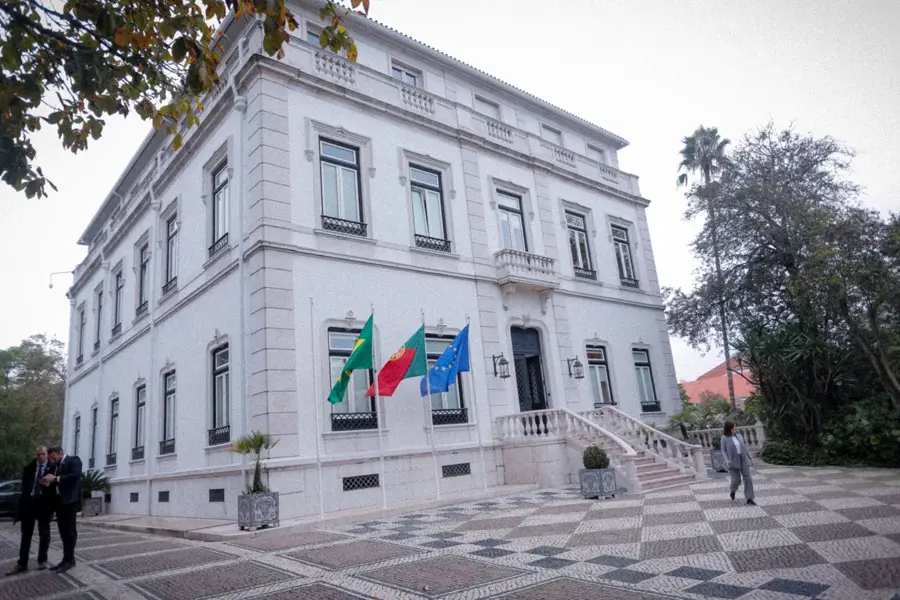
The São Bento Palace in Lisbon is the seat of the Assembly of the Republic, the Portuguese Parliament. Originally built in the late 16th century as a Benedictine monastery (Mosteiro de São Bento da Saúde), the building underwent a major transformation after religious orders were dissolved in 1834. Its grand Neoclassical facade, which defines its current look, was mostly developed in the late 19th and early 20th centuries following designs by architects such as Ventura Terra. The interior features magnificent spaces like the Session Hall, the Senate Hall, and an impressive library containing over 180,000 volumes. Monumental statues symbolizing virtues like Justice and Prudence guard the main entrance. At the rear of the palace sits the official residence of the Portuguese Prime Minister, a 19th-century mansion set within private gardens. The palace is not only a political hub but also a national monument representing Portugal's journey from monastic life to modern democracy.
- Location: Portugal
- Top sights: Palácio Mendia · Casa do Parlamento - Centro Interpretativo · Palácio Alcáçovas
- Nearby: Amadora (9 km)
Best time to visit & climate
The most pleasant time to visit is Jun, Jul, Sep.
| Jan | Feb | Mar | Apr | May | Jun | Jul | Aug | Sep | Oct | Nov | Dec | |
|---|---|---|---|---|---|---|---|---|---|---|---|---|
| Avg °C | 11 | 11 | 13 | 15 | 18 | 22 | 23 | 24 | 22 | 19 | 14 | 11 |
| Rain mm | 60 | 51 | 60 | 54 | 34 | 13 | 3 | 5 | 28 | 78 | 86 | 61 |
📋 Practical info
Geography
Facts
- 1834 was the year the former monastery became the Parliament.
- 1598 saw the start of construction for the Benedictine monastery.
- 180,000 volumes are held in the historic parliamentary library.
- 1903 was when the competition for the new facade was won.
- 4 statues on the facade represent different civic virtues.
- 2002 was the year it was officially designated a national monument.
Explore nearby
Notable places around

Route planner — Car & Motorhome
Where do you start? We build the route here, with stops and country notes along the way.
© OpenStreetMap contributors · OpenRouteService
Sights in the town Sao Bento Palace (10)
Capela de Nossa Senhora de Jesus
A chapel in Lisbon, Portugal.
Atelier-Museu Júlio Pomar🏛 museum
An art museum in Lisbon dedicated to the artist Júlio Pomar.
Igreja de Nossa Senhora de Jesus
The church was built in 1615, the convent inaugurated in 1632. Rebuilt after the earthquake, with a facade...
Aqueduto da Rua de São Bento
An aqueduct in Lisbon, Portugal.
Convento de Jesus⛪ monastery
The Franciscan Third Order convent was inaugurated in 1632. After 1834 it was donated to the Academy of Sciences.
Palacete do Marquês Fontes Pereira de Melo🏰 castle
An 18th-century palace, Baroque and Pombaline architecture, renovated after 1755, municipal interest.
Sights nearby
Frequently asked questions
What is the São Bento Palace used for today?
Can you visit the interior?
Was the building a monastery before?
Are the stairs in front of the palace accessible?
What is the best way to get there?
Sao Bento Palace: where is it located?
Sao Bento Palace: what is there to see?
Sao Bento Palace: when is the best time to visit?
Sao Bento Palace: why is it worth visiting?

Nearby cities



History & landmarks