Wolves in the Throne Room - Metal
Atmospheric black metal with Wolves in the Throne Room live at Hype Park in Krakow.
Plizio Visual Lab
Weather…
Water temperature…
Atmospheric black metal with Wolves in the Throne Room live at Hype Park in Krakow.
Experience the unique and captivating performance of WITCHZ at Kamienna 12 in Krakow.
Roby Lakatos and the Szymon Klima Quartet present 'Gypsy Love' at the Summer Jazz Festival.
Hardcore legends Agnostic Front storm Hype Park alongside Slavenkust and Minor God.
An intensive evening with Cryptopsy, Terror, and Vulvodynia for all extreme metal fans at Hype Park.
As part of the 31st Summer Jazz Festival, the Henryk Miśkiewicz Quartet performs at Radio Krakow.
The American blues-rock band Welshly Arms brings their high-energy show to Hype Park in Krakow.
Experience the experimental sounds of Geordie Greep live at Hype Park in Krakow.
Thaiboy Digital brings his UNDERWORLD Tour to Kamienna 12 in Krakow, with support from Eurohead.
British pop-rock band Red Box performs their melodic hits at the vibrant Hype Park venue in Krakow.
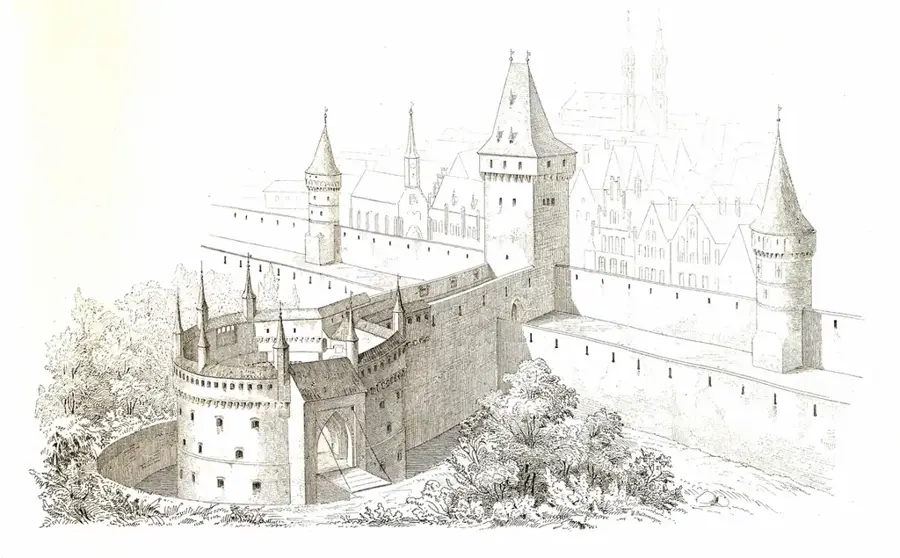
The Kraków Barbican is a masterpiece of Gothic military architecture and remains one of the few surviving structures of its kind in Europe. It was constructed in 1498 during the reign of King John I Albert to reinforce the city's defenses near St. Florian's Gate against potential Ottoman attacks. The circular brick fortress features an internal diameter of 24.4 meters and massive walls that reach a thickness of up to 3 meters. Historically, it was connected to St. Florian's Gate via a covered passage known as the 'neck' and was originally encircled by a 30-meter-wide water-filled moat. Equipped with seven turrets and 130 embrasures for archers and cannoneers, the Barbican provided a formidable multi-layered defense system. While most of Kraków's city walls were demolished in the early 19th century, the Barbican was preserved for its exceptional historical value. Today, it operates as a branch of the Historical Museum of the City of Kraków, hosting historical reenactments and exhibitions.
The most pleasant time to visit is Jun–Aug.
| Jan | Feb | Mar | Apr | May | Jun | Jul | Aug | Sep | Oct | Nov | Dec | |
|---|---|---|---|---|---|---|---|---|---|---|---|---|
| Avg °C | -3 | -2 | 3 | 9 | 14 | 18 | 20 | 20 | 15 | 9 | 4 | -1 |
| Rain mm | 46 | 43 | 48 | 53 | 99 | 96 | 106 | 76 | 74 | 58 | 46 | 41 |
Notable places around
Where do you start? We build the route here, with stops and country notes along the way.
© OpenStreetMap contributors · OpenRouteService
Tower in Krakow, Poland, belonged to the former city fortifications.
Living Museum of the Obwarzanek, shows the making and history of the Krakow bagel.
Church building in Krakow, Poland, dedicated to the Transfiguration of the Lord.
Art museum in Krakow, Poland, houses collections of the Czartoryski princes.
Gallery in a crypt in Krakow, hosts contemporary art exhibitions.
Chapel in Poland, part of the Czartoryski complex, serves religious purposes.