Plizio Visual Lab

Anhak Palace Ruins
Plizio editorial teamData Sources
ruin
—°4
Anhak Palace Ruins (North Korea)

Weather…

The Anhak Palace Ruins in Pyongyang are the remnants of a massive royal residence from the Goguryeo Kingdom, dating back to the 5th century. The palace was constructed in 427 AD when King Jangsu moved the kingdom's capital from Ji'an to Pyongyang to strengthen southern expansion efforts. The site features an almost square layout with each side measuring approximately 622 meters, covering a total area of about 38 hectares at the foot of Mount Taesong. Archaeological excavations have identified the footprints of 52 separate buildings, arranged into five major courtyard groups, showcasing the monumental scale of ancient Korean architecture. The palace was surrounded by high defensive walls and a moat, serving as the central hub of political and cultural life. Following the fall of Goguryeo in 668 AD, the complex was abandoned and fell into decay over the succeeding centuries. Today, the ruins are a significant archaeological site on the UNESCO tentative list, providing vital insights into early palace design and ancient urban planning.

Best time to visit & climate

The most pleasant time to visit is May, Jun, Sep.

JanFebMarAprMayJunJulAugSepOctNovDec
Avg °C-8-4281621232318113-6
Rain mm1018265880101318263113495119

📋 Practical info

🚪
Visiting
Tourists can visit these expansive ruins, but only when accompanied by government-appointed guides as part of an official tour package. Exploring the vast grounds features insight into the scale of the former royal residence of the Goguryeo Dynasty.
🕒
Typical hours
There are no standard public opening hours; access is exclusively scheduled and coordinated by the state-run travel agencies handling your group. Your itinerary will dictate exactly when and for how long you can remain at the site.
📷
Photography
While photographing the general landscape of the ruins is usually permitted, always wait for a clear confirmation from your tour guides. Capturing images of any nearby military installations or unapproved subjects is strictly forbidden.
⏱️
Time needed
Expect to spend roughly one hour walking around the foundational remains and listening to the historical context provided by the local experts. The schedule is typically quite rigid, leaving little room for independent wandering.
Combine with
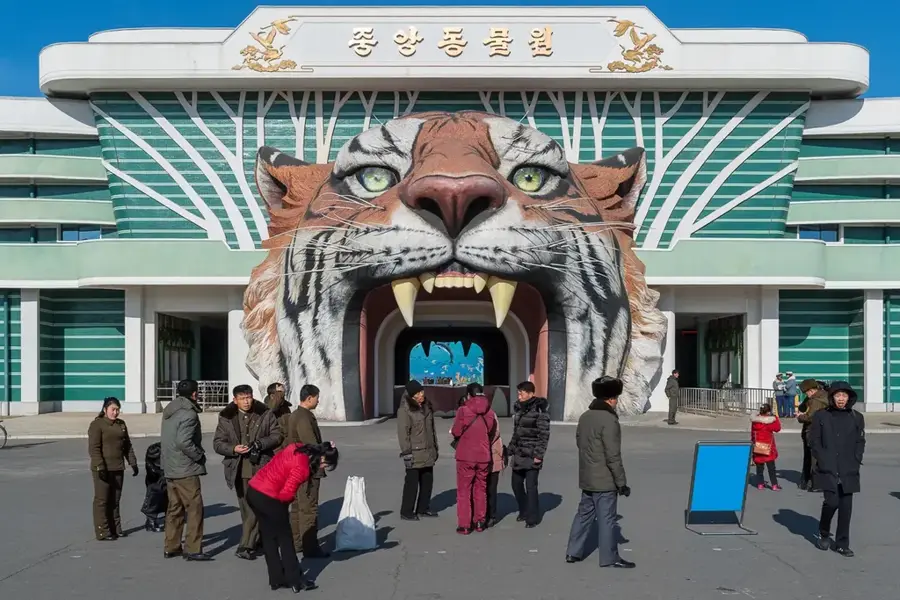
A visit here is almost always bundled with tours of other prominent Pyongyang landmarks, such as the Taesongsan Revolutionary Martyrs Cemetery or the Central Zoo. Your daily program is meticulously organized by the authorities.
🧭
Getting there
Situated in the Taesong District of Pyongyang, the site is accessed exclusively by your official tour group's private bus. Independent travel within the capital city using local transit is not permitted for foreign visitors.
💡
Insider tip
Wear comfortable walking shoes, as navigating the uneven terrain of the ancient foundations requires careful footing. Pay close attention to the guides' narratives, as there are very few informational plaques available in foreign languages.

Geography

Coordinates
39.06580, 125.82860

Facts

  • The palace was established in 427 AD by King Jangsu.
  • It served as the royal seat of the Goguryeo Kingdom.
  • The entire complex covers an area of roughly 38 hectares.
  • The perimeter walls formed a square of 622 meters per side.
  • Excavations revealed the foundations of 52 major buildings.
  • The site is located at the base of Mount Taesong.

Explore nearby

Notable places around

Route planner — Car & Motorhome

Where do you start? We build the route here, with stops and country notes along the way.

Vehicle
Only stops with (optional):

© OpenStreetMap contributors · OpenRouteService

Sights in the town Anhak Palace Ruins (4)

Ulji Pavilion🏺 historical

The remains of a historic pavilion located near the former palace walls.

Somun Peak📍 landmark

A mountain peak overlooking the archaeological site of the Anhak Palace.

Koguryo Tombs on Mt. Kwangdae📍 landmark

Ancient burial mounds from the Koguryo dynasty located on the slopes of Mt. Kwangdae.

Anhak Royal Palace Site📍 landmark

The massive foundations of the 5th-century royal palace that served as the capital of Koguryo.

Sights nearby

Frequently asked questions

What was the Anhak Palace?
It was the main palace of the Goguryeo Dynasty after the capital was moved to Pyongyang in the 5th century.
What remains of the palace today?
Mainly foundations and remnants of earth walls are visible, hinting at the vast size of the complex.
Where are the ruins located?
The ruins are located at the foot of Mt. Taesong in eastern Pyongyang.
Is the site interesting for tourists?
Mainly for history buffs, as it is one of the most important archaeological sites of the Goguryeo era.
Can the artifacts be seen anywhere?
Many excavated items, such as roof tiles and ceramics, are exhibited at the Central History Museum in Pyongyang.
Anhak Palace Ruins: where is it located?
Anhak Palace Ruins is located in North Korea.
Anhak Palace Ruins: what is there to see?
Highlights include Ulji Pavilion, Somun Peak, Koguryo Tombs on Mt. Kwangdae.
Anhak Palace Ruins: when is the best time to visit?
The most pleasant time to visit is May, Jun, Sep.
Anhak Palace Ruins: why is it worth visiting?

The Anhak Palace Ruins in Pyongyang are the remnants of a massive royal residence from the Goguryeo Kingdom, dating back to the 5th century.
View on map → The Top 50 Attractions → OpenStreetMap →
Asia
Explore with Plizio Discover more places in Asia
More places in North Korea →

Nearby cities

History & landmarks

Nature
More places