Plizio Visual Lab

Pyongyang Textile Mill
Plizio editorial teamData Sources
Industrial site
—°3
Pyongyang Textile Mill (North Korea)

Weather…

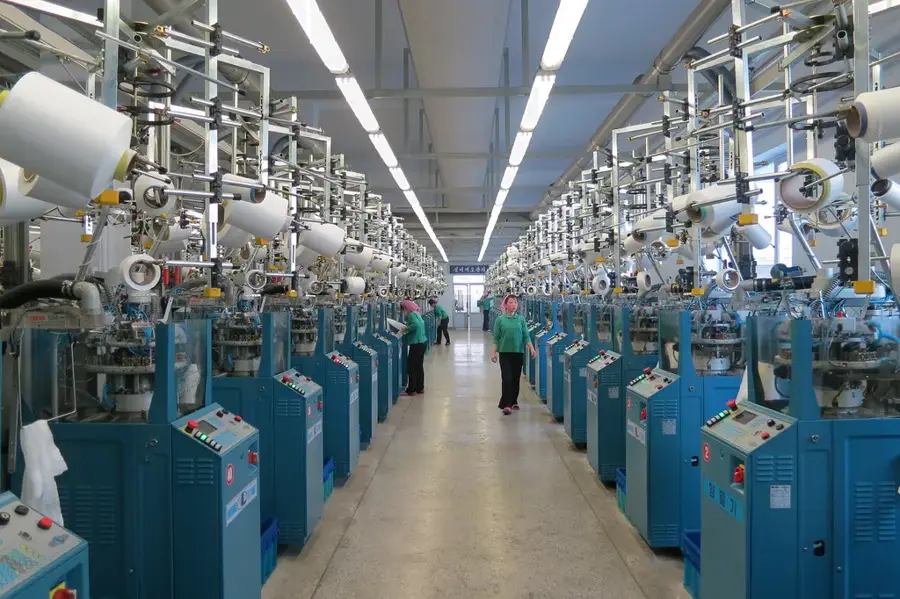
The Pyongyang Textile Mill is the largest and oldest operation of its kind in North Korea and a central component of the national light industry. Founded shortly after liberation in 1948, the factory has evolved into a massive complex producing cotton yarn, silk fabrics, and various synthetic textiles. Located in the East Pyongyang district, the facility includes several spinning mills, weaving sheds, and dyeing works. In recent years, the mill has been extensively modernized, with computer-aided looms and automated production lines introduced to enhance fabric quality. A significant portion of its output is used for manufacturing school uniforms and everyday clothing for the North Korean population. The factory is also known for its social infrastructure, which includes worker dormitories, nurseries, and recreational facilities. As a flagship enterprise, it often serves as a backdrop for state events and visits by foreign delegations. The continuous increase in labor productivity through worker competitions is a prominent feature of its management.

Best time to visit & climate

The most pleasant time to visit is May, Jun, Sep.

JanFebMarAprMayJunJulAugSepOctNovDec
Avg °C-8-4281621232318113-6
Rain mm1018265880101318263113495119

📋 Practical info

🏭
What is this place?
Regarded as a historic pillar of the domestic light industry, this massive facility focuses on producing a vast array of fabrics and clothing materials for the nation. The complex holds significant ideological importance, often highlighted as a model of self-reliance and dedicated labor within the capital.
🚪
Visiting
Access for foreign visitors is extremely limited and generally only permitted as part of tightly controlled, pre-arranged tours organized by state travel agencies. During these rare official visits, tourists are guided strictly along designated paths to observe model workers and selected production lines.
👀
Where to view it
The sprawling campus, characterized by long concrete factory halls and administrative buildings, can mostly be seen externally from the main adjacent boulevards. Dedicated travelers might catch a glimpse of the facility's extensive perimeter walls while traversing the broader industrial zones of the city.
🧺
Local products
While no factory outlet exists for direct public sales at the site, the textiles manufactured here eventually supply state-run department stores throughout the country. Occasionally, official tour guides might present small fabric swatches or commemorative items as symbolic gestures of the workers' achievements.
📆
Active season
The mill operates steadily on a multi-shift basis throughout the year to consistently meet national production quotas. External activity, such as workers arriving for their shifts or large cargo transports, is most visible during the early morning and late afternoon shift changes.
Nearby
Itineraries including this industrial landmark are typically combined with visits to large-scale monuments, ideological museums, and model educational institutions nearby. Exploring the broader Taedong River district and its meticulously planned urban layout provides a comprehensive look at the state's vision.

Geography

Coordinates
39.01000, 125.79000

Facts

  • Founded in 1948 as one of the first factories after liberation.
  • Largest textile complex in North Korea with tens of thousands of spindles.
  • Produces millions of meters of fabric annually for uniforms.
  • Equipped with modern, domestically produced CNC weaving machines.
  • Integrated social facilities such as clinics and schools on-site.
  • Frequent site for labor competitions and state awards.

Explore nearby

Notable places around

Route planner — Car & Motorhome

Where do you start? We build the route here, with stops and country notes along the way.

Vehicle
Only stops with (optional):

© OpenStreetMap contributors · OpenRouteService

Sights in the town Pyongyang Textile Mill (3)

Munsu Peak🌿 nature

A forested peak in Pyongyang offering hiking trails and views over the city.

Munsu Peak Revolutionary Historic Site📍 landmark

A commemorative site on Munsu Hill associated with revolutionary events.

Changchung Cathedral⛪ religious

The only Roman Catholic cathedral in North Korea, consecrated in 1988.

Sights nearby

Frequently asked questions

What is the Pyongyang Textile Mill?
It is one of the largest textile enterprises in the country, producing clothing and fabrics for the national market.
Can you visit the factory?
Yes, it is a standard stop for city tours in Pyongyang to show everyday work life.
What products are made there?
Mainly school uniforms, everyday clothing, and various textiles made from Vinalon.
Is there a factory shop?
Visitors can often see samples of the fabrics or clothing produced in an attached shop.
Why is the factory important for women?
The majority of the workforce is female, and the factory provides social facilities like kindergartens.
Pyongyang Textile Mill: where is it located?
Pyongyang Textile Mill is located in North Korea.
Pyongyang Textile Mill: what is there to see?
Highlights include Munsu Peak, Munsu Peak Revolutionary Historic Site, Changchung Cathedral.
Pyongyang Textile Mill: when is the best time to visit?
The most pleasant time to visit is May, Jun, Sep.
Pyongyang Textile Mill: why is it worth visiting?

The Pyongyang Textile Mill is the largest and oldest operation of its kind in North Korea and a central component of the national light industry.
View on map → The Top 50 Attractions → OpenStreetMap →
Asia
Explore with Plizio Discover more places in Asia
More places in North Korea →

Nearby cities

History & landmarks

Nature
More places