Plizio Visual Lab

Al-Haruj
Plizio editorial teamData Sources
Mountain
—°
Al-Haruj (Libya)

Weather…

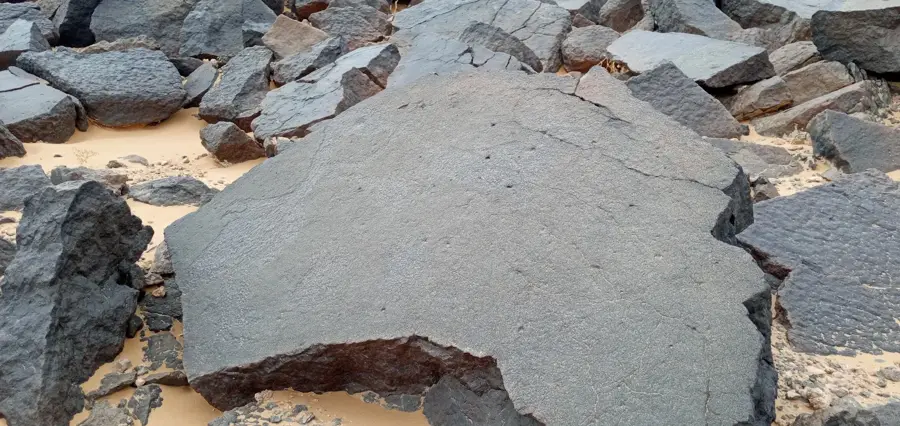
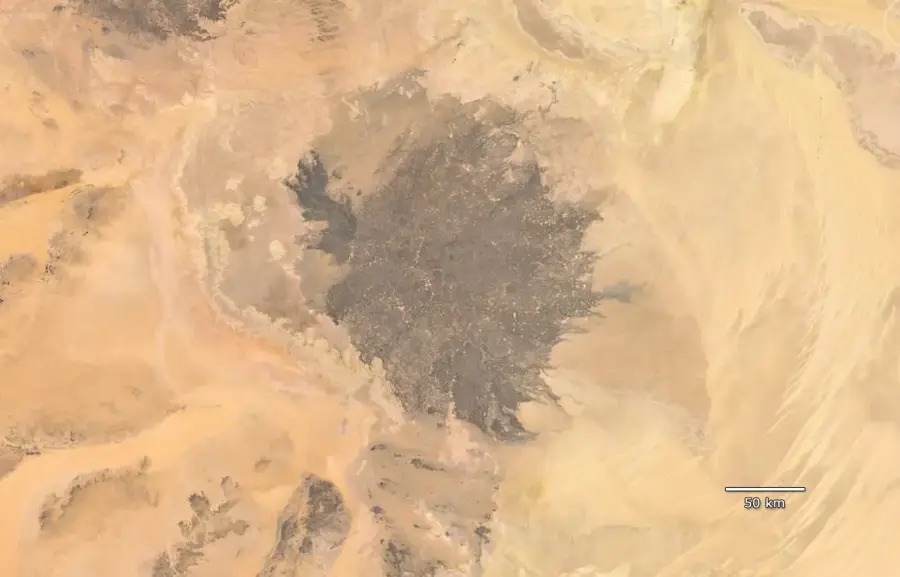
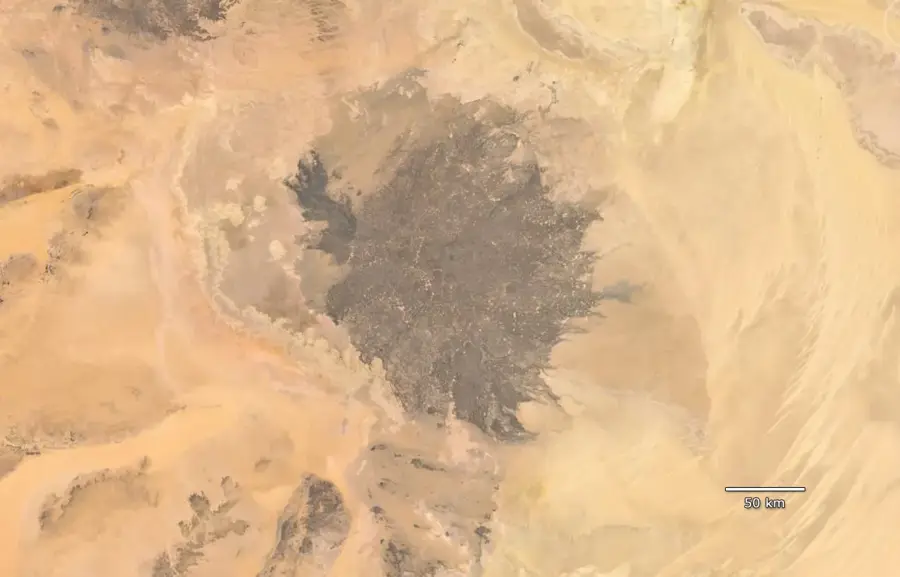
Al-Haruj is a massive volcanic field located in central Libya, striking for its vast expanse of black basalt rocks amidst the light-colored desert landscape. Covering an area of approximately 45,000 square kilometers, it ranks as one of the largest volcanic provinces in North Africa. The formation of this region is attributed to volcanic activity during the Tertiary and Quaternary periods, with the most recent eruptions occurring only a few thousand years ago. The landscape is dotted with hundreds of well-preserved volcanic cones, craters, and solidified lava flows that absorb sunlight, giving the region its characteristic name 'Haruj al-Aswad' (the Black Haruj). Geomorphologically, the plateau has a fascinating variety of volcanic forms, including shield volcanoes and scoria cones. Due to extreme aridity and the intense heat buildup on the dark rock, the area is almost entirely devoid of life and uninhabited. Nevertheless, it provides geologists with a unique opportunity to study intraplate tectonic processes and the magmatic evolution of the African continent. Archaeological finds at the margins of the field suggest the region was intermittently traversed by hunter-gatherers in earlier times.

Best time to visit & climate

The most pleasant time to visit is Mar, Apr, Oct.

JanFebMarAprMayJunJulAugSepOctNovDec
Avg °C101317222629303028231712
Rain mm853241019558

📋 Practical info

🧭
Getting there
Reaching this immense geological anomaly involves departing from staging towns deep within Libya and tracking across challenging desert corridors. Only highly specialized, multi-vehicle convoys managed by seasoned local guides should attempt the crossing.
📅
Best season
The unforgiving climate permits safe exploration solely during the core winter months, completely avoiding the lethal summer sun. Even in the dead of winter, the black plateau significantly amplifies ambient daytime heat, requiring constant physical adjustment.
⛰️
Terrain & paths
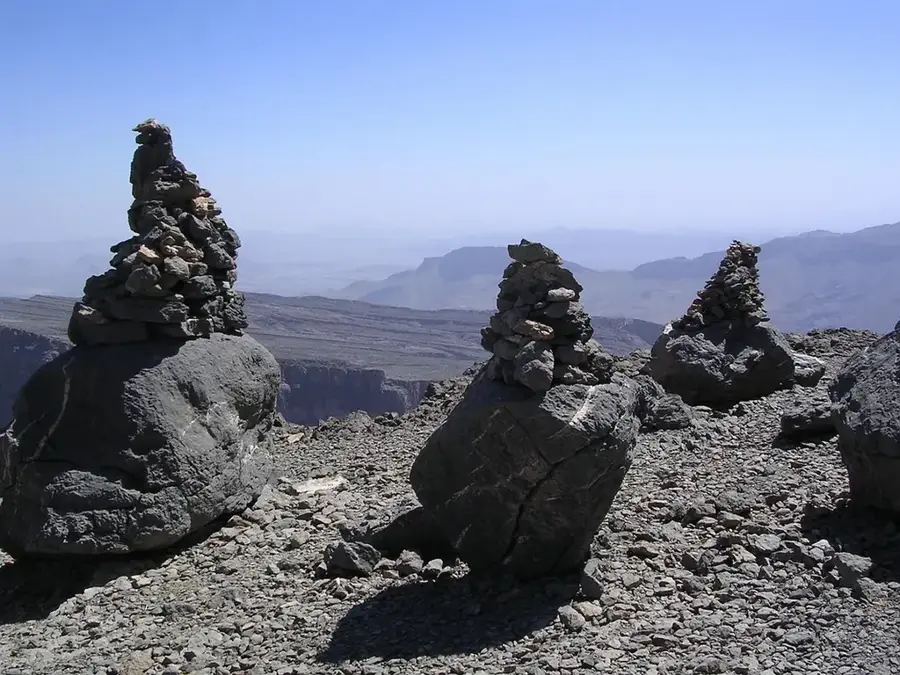
The relief consists of a vast, elevated expanse of jagged basalt fields, solidified ancient magma flows, and deeply weathered volcanic cones. The incredibly coarse and irregular surface challenges the durability of both heavy off-road tires and human endurance.
🎒
What to bring
Robust provisions are essential, prioritizing immense volumes of drinking water and highly durable, cut-resistant footwear for the abrasive rocks. Satellite tracking technology and comprehensive mechanical repair kits are fundamental requirements for survival here.
🅿️
Parking
Establishing a basecamp on the plateau involves meticulous selection of rare, relatively flat basalt clearings by the expedition leader. The dark terrain is notoriously unforgiving, demanding extremely careful maneuvering to avoid unseen rocky spikes.
⚠️
Safety
This extreme environment demands absolute respect; a simple vehicle breakdown can rapidly escalate into a life-threatening crisis due to extreme isolation. Traveling exclusively with certified professionals who possess deep knowledge of the volcanic maze is imperative.
⏱️
Time needed
Successfully traversing and admiring the profound desolation of this geological marvel mandates a dedicated multi-day itinerary. The staggering scale and brutal slow-going nature of the plateau entirely rule out the possibility of any brief, casual visit.

Geography

Coordinates
27.00000, 17.50000

Facts

  • The field comprises approximately 150 individual volcanic and scoria cones.
  • It is the largest basaltic plateau in North Africa, covering 45,000 km².
  • The highest elevation is Jebel al-Qatrun, reaching 1,200 meters.
  • Some lava flows extend for hundreds of kilometers across the desert.
  • Radiometric dating indicates some lava flows are only about 3,000 years old.
  • The basalt's dark color causes ground temperatures to rise above 60°C.

Route planner — Car & Motorhome

Where do you start? We build the route here, with stops and country notes along the way.

Vehicle
Only stops with (optional):

© OpenStreetMap contributors · OpenRouteService

Sights nearby

Frequently asked questions

What is Al-Haruj?
The largest volcanic field in North Africa, consisting of black basalt rock.
When was the last volcanic eruption?
Activity dates back thousands of years; the field is now considered extinct.
What does the landscape look like?
An almost black crater landscape that resembles the surface of the moon.
Can the area be visited?
Yes, but only as part of a professional Saharan expedition with 4WD vehicles.
Where is it located?
In central Libya, south of the Sirte Basin in the Fezzan region.
Al-Haruj: where is it located?
Al-Haruj is located in Libya.
Al-Haruj: when is the best time to visit?
The most pleasant time to visit is Mar, Apr, Oct.
Al-Haruj: why is it worth visiting?
Al-Haruj is a massive volcanic field located in central Libya, striking for its vast expanse of black basalt rocks amidst the light-colored desert landscape.
View on map → The Top 50 Attractions → OpenStreetMap →
Africa
Explore with Plizio Discover more places in Africa
More places in Libya →

Nearby cities

Nature

More places