Plizio Visual Lab
Baoulé Plateau
Weather…
Water temperature…
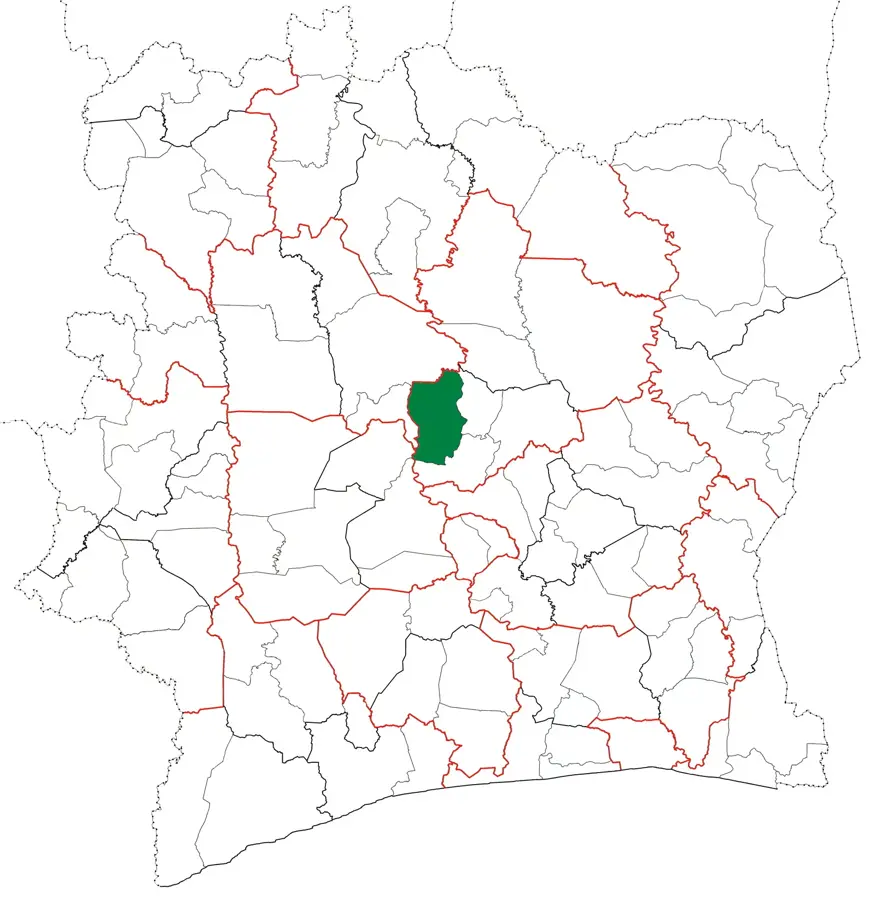
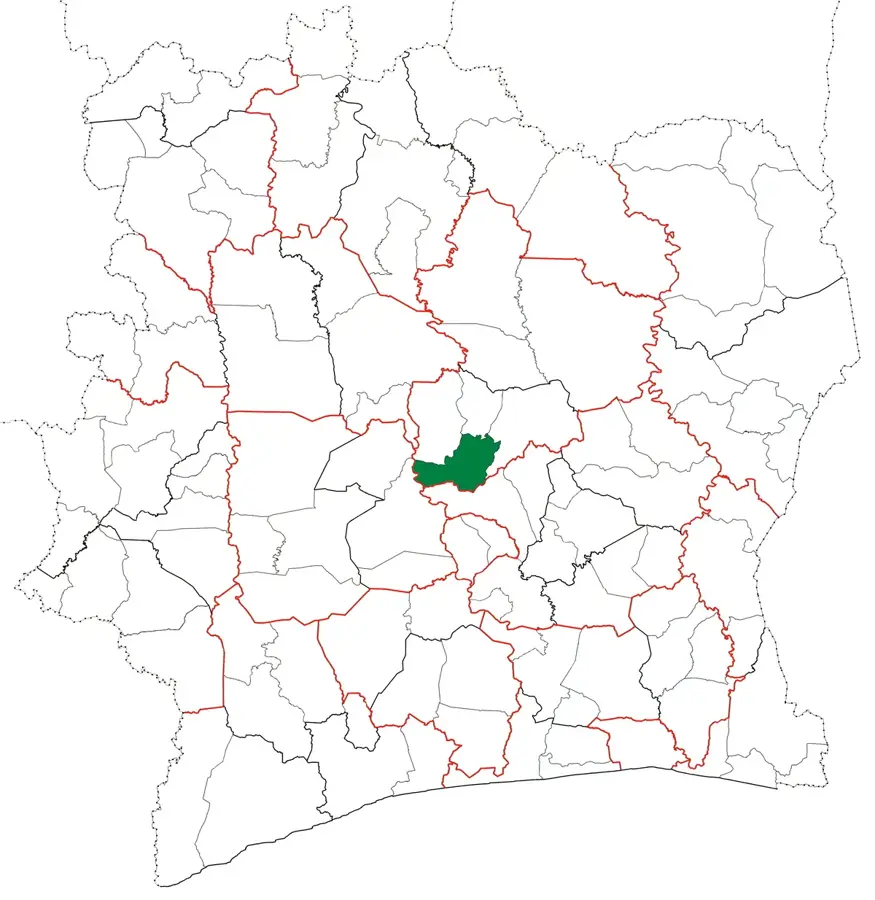
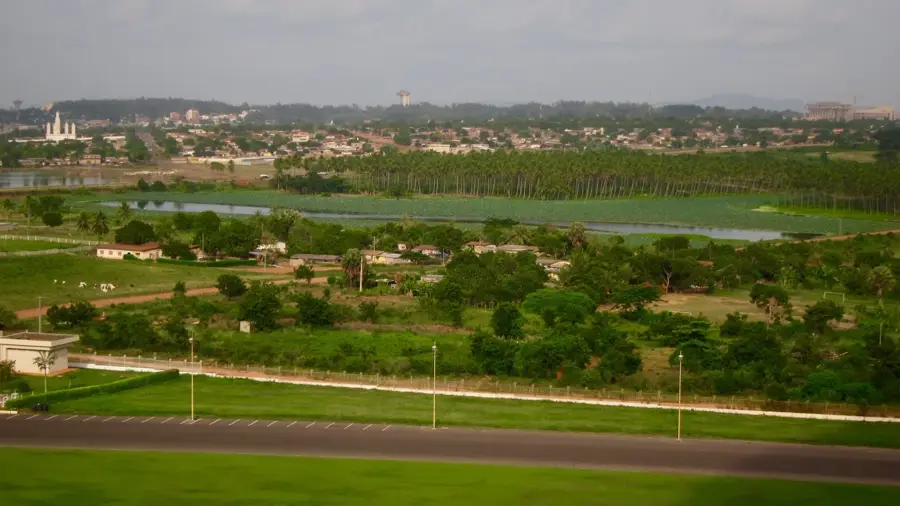
The Baoulé Plateau spans the central highlands of Ivory Coast, acting as a geographic transition zone between the southern tropical rainforests and the northern Sudanian savannas. The region sits at an average elevation of 200 to 300 meters above sea level and is characterized by gently undulating terrain with occasional granite inselbergs. Historically, the plateau is the ancestral heartland of the Baoulé people, an Akan subgroup that migrated to the region in the 18th century under the leadership of Queen Pokou. The natural vegetation is a mosaic of wooded savanna and gallery forests along riverbanks, providing fertile ground for diverse agricultural practices. Today, the plateau is one of the nation's primary agricultural regions, known for its production of yams, maize, and cocoa. The local climate is defined by two distinct rainy seasons and a dry period heavily influenced by the dusty Harmattan winds blowing from the Sahara Desert.
- Location: Côte d’Ivoire
- Nearby: Béoumi (21 km)
Best time to visit & climate
The most pleasant time to visit is Jan, Nov, Dec.
| Jan | Feb | Mar | Apr | May | Jun | Jul | Aug | Sep | Oct | Nov | Dec | |
|---|---|---|---|---|---|---|---|---|---|---|---|---|
| Avg °C | 26 | 28 | 28 | 28 | 27 | 26 | 25 | 25 | 25 | 26 | 26 | 26 |
| Rain mm | 13 | 51 | 97 | 130 | 149 | 193 | 149 | 149 | 190 | 143 | 55 | 23 |
📋 Practical info
Geography
Facts
- Average elevation ranges between 200 and 300 meters.
- Traditional heartland of the Baoulé people since the 1700s.
- Geologically characterized by Precambrian granite formations.
- The most significant region for yam production in the country.
- Acts as a watershed between the Bandama and Comoé rivers.
- The climate is seasonally shaped by the dusty Harmattan wind.
Explore nearby
Notable places around


Route planner — Car & Motorhome
Where do you start? We build the route here, with stops and country notes along the way.
© OpenStreetMap contributors · OpenRouteService
Sights nearby
Frequently asked questions
Where is the Baoulé Plateau located?
How is the climate on the plateau?
What is mainly cultivated on the Baoulé Plateau?
Are there large cities on the plateau?
Is the terrain flat or hilly?
Baoulé Plateau: where is it located?
Baoulé Plateau: when is the best time to visit?
Baoulé Plateau: why is it worth visiting?

Nearby cities
History & landmarks
More places