Plizio Visual Lab
Rauðasandur
Weather…
Water temperature…
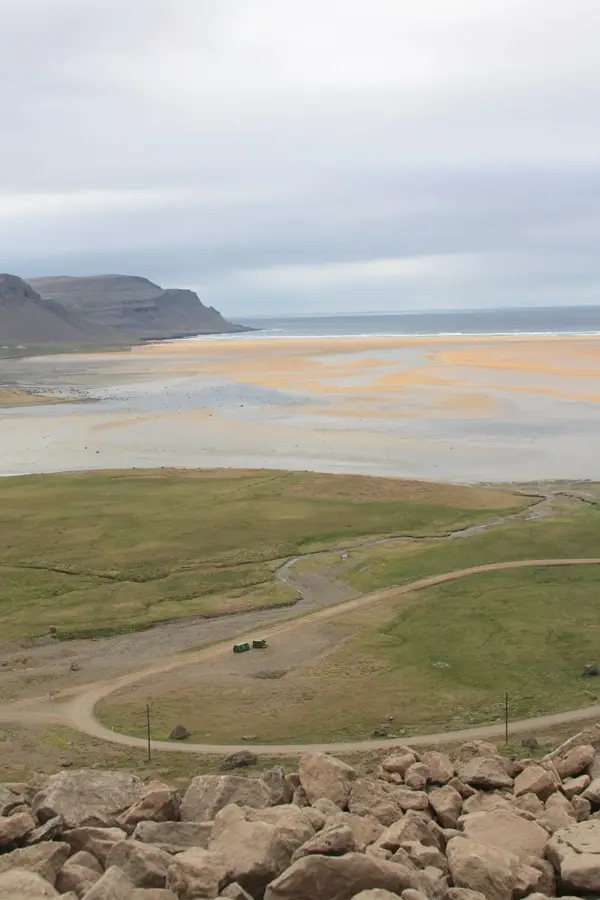
Rauðasandur, meaning 'Red Sand', is an extraordinary beach in the Westfjords of Iceland, stretching for about 10 kilometers beneath the towering cliffs near Látrabjarg. Unlike most Icelandic beaches, which are composed of black volcanic sand, Rauðasandur features a palette of yellow, orange, and deep red hues. This unique coloration is the result of pulverized seashell fragments that have accumulated over thousands of years. The beach's appearance changes significantly depending on the light and the tide, making it a favorite spot for landscape photographers. Accessible via a steep, winding gravel road, the area gives a sense of immense space and tranquility. It is also a popular spot for wildlife, as seals are frequently spotted basking on the sandbanks during low tide.
- Location: Iceland
- Nearby: Patreksfjörður (14 km)
Best time to visit & climate
The most pleasant time to visit is Jun–Aug.
| Jan | Feb | Mar | Apr | May | Jun | Jul | Aug | Sep | Oct | Nov | Dec | |
|---|---|---|---|---|---|---|---|---|---|---|---|---|
| Avg °C | 0 | 0 | 0 | 2 | 4 | 8 | 10 | 10 | 7 | 4 | 2 | 1 |
| Rain mm | 125 | 111 | 107 | 87 | 71 | 54 | 68 | 90 | 127 | 112 | 112 | 133 |
📋 Practical info
Geography
Facts
- The beach stretches for approximately 10 kilometers
- Color comes from crushed seashell deposits
- Frequently visited by colonies of seals
- Home to the historic site of Saurbær
- The only red sand beach in Iceland
- Accessible via a steep mountain road with sharp curves
Explore nearby
Notable places around


Route planner — Car & Motorhome
Where do you start? We build the route here, with stops and country notes along the way.
© OpenStreetMap contributors · OpenRouteService
Sights in the town Rauðasandur (1)
Sights nearby
Frequently asked questions
Why is the sand red or orange here?
Is the road there safe?
Are there cafes or restaurants?
Can you see seals there?
When are the colors most intense?
Rauðasandur: where is it located?
Rauðasandur: when is the best time to visit?
Rauðasandur: why is it worth visiting?

Nearby cities