Plizio Visual Lab
National Assembly Building
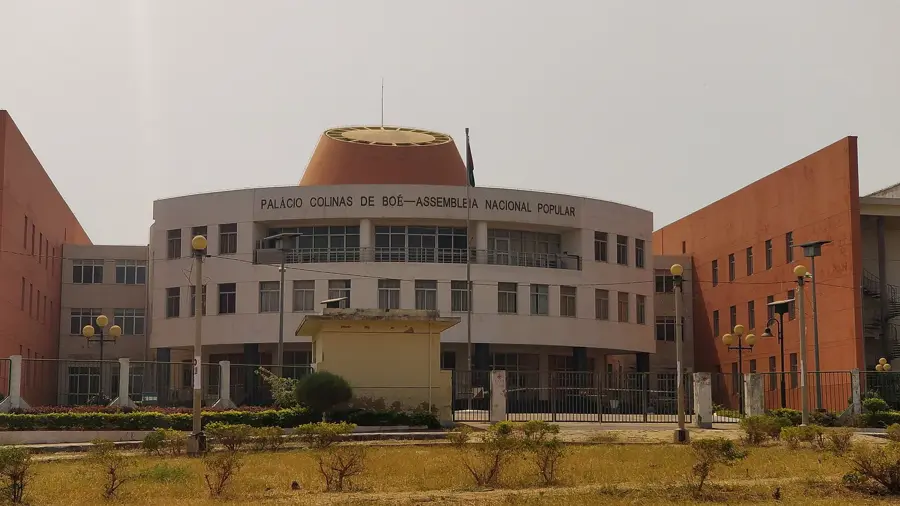
The New National Assembly building (Assembleia Nacional Popular) stands as the modern architectural symbol of democracy and legislative power in Guinea-Bissau. Perched on a hill in the Colinas de Boé district, this monumental complex dominates the skyline of the capital, Bissau. Constructed with significant financial and technical assistance from the People's Republic of China, it was officially inaugurated in 2005. The architecture is characterized by its grand scale, featuring extensive colonnades and a prominent dome designed to convey national dignity and institutional stability. Inside, the complex houses the main plenary hall where the nation’s 102 deputies debate legislation, along with various committee rooms and administrative offices. The building's elevated location not only provides a sweeping view of the city but also symbolically represents the importance of the people's representatives. Despite the nation's turbulent political history, the National Assembly remains the central arena for democratic discourse and parliamentary activity. Surrounded by landscaped gardens and subject to high security, it is one of the most vital state institutions in the Republic of Guinea-Bissau.
- Location: Guinea-Bissau
- Top sights: Cristo Redentor · Coqueiros Craft Market · Museu Etnográfico
- Nearby: Safim (11 km)
Best time to visit & climate
The most pleasant time to visit is Jan, Feb, Dec.
| Jan | Feb | Mar | Apr | May | Jun | Jul | Aug | Sep | Oct | Nov | Dec | |
|---|---|---|---|---|---|---|---|---|---|---|---|---|
| Avg °C | 23 | 25 | 27 | 29 | 29 | 28 | 27 | 26 | 26 | 27 | 26 | 24 |
| Rain mm | 1 | 0 | 0 | 0 | 21 | 132 | 375 | 487 | 355 | 173 | 11 | 0 |
📋 Practical info
Geography
Facts
- The building was constructed as a diplomatic gift from the Chinese government.
- It was completed in 2005 and serves as the seat of the unicameral parliament.
- The assembly consists of 102 deputies representing all regions of the country.
- Its location in Colinas de Boé offers one of the best views over the capital.
- The architecture is designed to represent the strength of the young democracy.
- It is the primary site for constitutional debates and presidential inaugurations.
Explore nearby
Notable places around


Route planner — Car & Motorhome
Where do you start? We build the route here, with stops and country notes along the way.
© OpenStreetMap contributors · OpenRouteService
Sights in the town National Assembly Building (10)
Museo Ethnográfico🏛 museum
Ethnographic museum in Bissau. Shows the country's cultural diversity.
Mercado Central
Ruins of the former central market in Bissau. A historic building.
Bissau Cathedral
Cathedral in Bissau, Guinea-Bissau. Seat of the diocese.
Société Comerciale de l' Ouest Africain
Ruins of a former trading house in Bissau. Colonial architecture.
Augusto d'Oliveira
Ruins of a building in Bissau. Named after a person.
Baluarte da Balança🏰 castle
Fort ruins in Bissau. Part of the historic fortifications.
Sights nearby
Frequently asked questions
Can one attend parliamentary sessions?
Is photography of the building allowed?
When was the building constructed?
Are there guided tours for tourists?
Is there public transport to get there?
National Assembly Building: where is it located?
National Assembly Building: what is there to see?
National Assembly Building: when is the best time to visit?
National Assembly Building: why is it worth visiting?

Nearby cities
History & landmarks
Nature
More places