Plizio Visual Lab

Colossi of Memnon
Plizio editorial teamData Sources
Historical site
—°7
Colossi of Memnon (Egypt)

Weather…

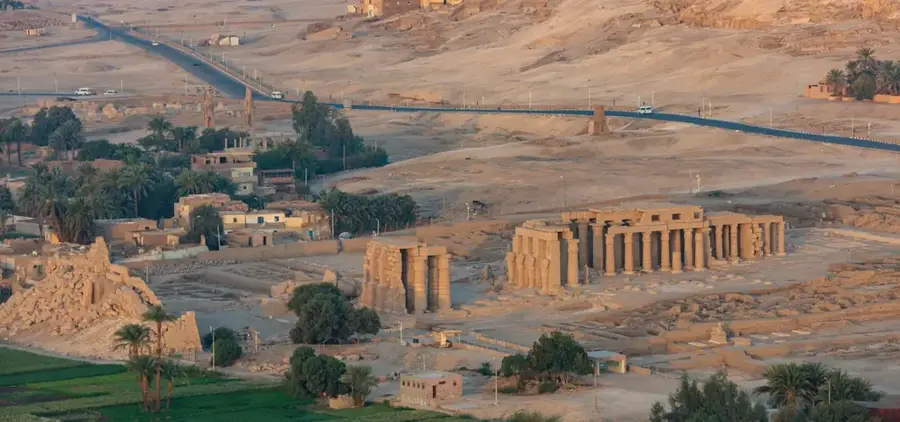
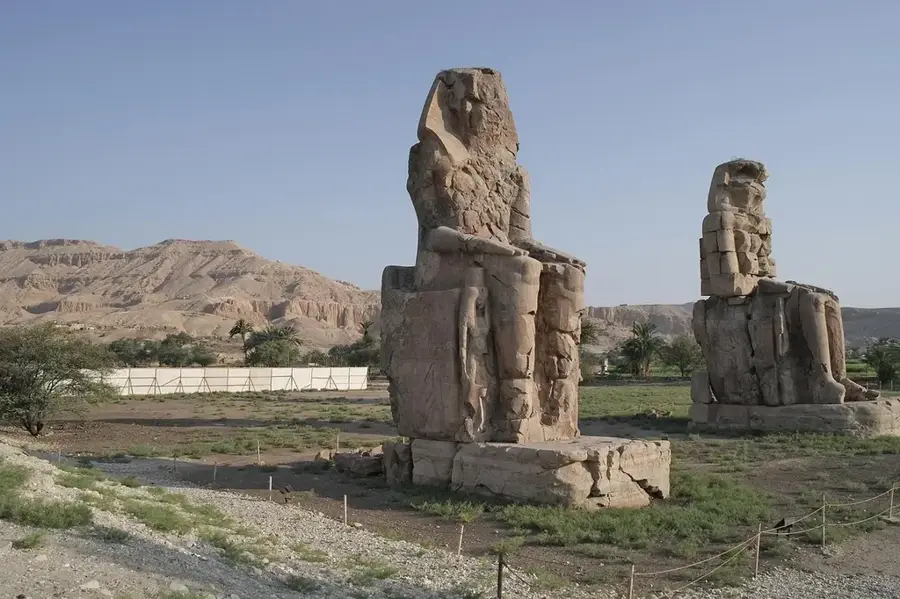
The Colossi of Memnon are two massive quartzite statues on the west bank of the Nile in Luxor, representing Pharaoh Amenhotep III. Erected around 1350 BC, these 18-meter-tall seated figures originally guarded the entrance to Amenhotep's mortuary temple, which was once the largest and most opulent temple complex in ancient Egypt. However, due to its location on the flood plain and several powerful earthquakes, the temple was largely destroyed, leaving only the statues standing. The colossi gained legendary status in the Greco-Roman era due to a unique acoustic phenomenon; following an earthquake in 27 BC, the northern statue began to emit a high-pitched 'singing' sound at dawn. Greek travelers associated this sound with the mythological hero Memnon greeting his mother Eos. This 'vocal' statue became a popular ancient tourist attraction until repairs ordered by Roman Emperor Septimius Severus in 199 AD permanently silenced it. Today, the statues endure as powerful symbols of the scale and ambition of the 18th Dynasty.

Best time to visit & climate

The most pleasant time to visit is Mar, Apr, Nov.

JanFebMarAprMayJunJulAugSepOctNovDec
Avg °C131620252932333330262015
Rain mm100000000000

📋 Practical info

🚪
Visiting
These two solitary but gigantic statues are viewed entirely from the outside, standing proudly in an open field near the main roadway. There are no enclosed temple buildings remaining to enter, making it a straightforward, open-air viewing experience right from the designated pathways.
🕒
Typical hours
Because they are positioned in an unenclosed public area along the main tourist route, they can generally be viewed at any time of day from dawn until dusk. Most organized tours make it a brief morning or late afternoon halt when daylight conditions are favorable.
📷
Photography
The statues provide a classic and iconic photo opportunity, particularly when framed against the backdrop of the rugged Theban mountains or the lush green agricultural fields. There are no photography fees or restrictions for standard cameras, making it very straightforward for tourists.
⏱️
Time needed
You will typically only need about ten to twenty minutes here to admire the immense scale of the figures and snap some memorable pictures. It is designed to be a quick, impactful stop rather than a destination for a prolonged or deep historical exploration.
Combine with
This spot serves as the first-rate brief interlude on the way to or from the Valley of the Kings, the Temple of Hatshepsut, or Medinet Habu. The entire West Bank monumental zone is densely packed, making it an easy addition to any broader historical itinerary.
🧭
Getting there
The site is located directly beside the main road traversing the West Bank, ensuring that buses and taxis can simply pull over at the adjacent parking area. It is exceptionally easy to access and requires almost no walking to get a fantastic view of the statues.
💡
Insider tip
Arriving very early in the morning allows you to avoid the throngs of tour buses that inevitably converge here, offering a much more peaceful encounter. Listen closely and remember the ancient legends that claimed the northern statue used to practically sing at the break of dawn.

Geography

Coordinates
25.72050, 32.61050

Facts

  • Erected around 1350 BC during the 18th Dynasty
  • Each statue weighs approximately 720 tons
  • The quartzite was transported from quarries 600 km away near Cairo
  • The 'singing' phenomenon started after an earthquake in 27 BC
  • The statues bear 107 inscriptions from ancient Greek and Roman tourists
  • They stand about 18 meters high including their platforms

Explore nearby

Notable places around
Route planner — Car & Motorhome

Where do you start? We build the route here, with stops and country notes along the way.

Vehicle
Only stops with (optional):

© OpenStreetMap contributors · OpenRouteService

Sights in the town Colossi of Memnon (7)

Birket Habu🏺 historical

This vast archaeological site reveals the monumental earthworks of a massive artificial harbor and lake excavated during the reign of Amenhotep III.

Theban Necropolis🏺 historical

This UNESCO World Heritage archaeological site spans the west bank of the Nile, containing an incredible density of mortuary temples and rock-cut royal tombs.

Le Scarabe Papyrus Museum📍 landmark

This local museum and attraction exhibits the traditional methods of crafting ancient Egyptian papyrus alongside hand-painted mythological artwork.

Qasr el-Agoûz🏺 historical

This archaeological site protects a small, well-preserved Ptolemaic stone temple originally dedicated to the ibis-headed god Thoth.

Colossi of Memnon📍 landmark

This spectacular attraction consists of two massive stone statues of Pharaoh Amenhotep III, standing eighteen meters high at the entrance to his ruined mortuary temple.

Madinet Habu🏛 museum

Acting as an open-air museum, this site showcases the deeply incised battle reliefs and preserved painted columns of Ramesses III's mortuary temple.

Medinet Habu📍 landmark

This huge attraction features the impeccably preserved mortuary temple of Ramesses III, surrounded by massive mud-brick enclosure walls and a distinctive Syrian-style fortified gatehouse.

Sights nearby

Frequently asked questions

Is there an entry fee for the Colossi of Memnon?
No, the statues stand right by the roadside and are free to view.
Is it allowed to climb on the statues?
No, climbing is strictly prohibited to protect the monuments.
Who do the Colossi represent?
They represent Pharaoh Amenhotep III.
Do the statues still "sing" today?
No, the phenomenon stopped after a Roman-era repair.
Is there parking available?
Yes, there is a pull-off area for buses and taxis right in front.
Colossi of Memnon: where is it located?
Colossi of Memnon is located in Egypt.
Colossi of Memnon: what is there to see?
Highlights include Birket Habu, Theban Necropolis, Le Scarabe Papyrus Museum.
Colossi of Memnon: when is the best time to visit?
The most pleasant time to visit is Mar, Apr, Nov.
Colossi of Memnon: why is it worth visiting?

The Colossi of Memnon are two massive quartzite statues on the west bank of the Nile in Luxor, representing Pharaoh Amenhotep III.
View on map → The Top 50 Attractions → OpenStreetMap →
Africa
Explore with Plizio Discover more places in Africa
More places in Egypt →

Nearby cities

More places