Plizio Visual Lab

Fur Bakke
Plizio editorial teamData Sources
peak
—°3
Fur Bakke (Denmark)

Weather…

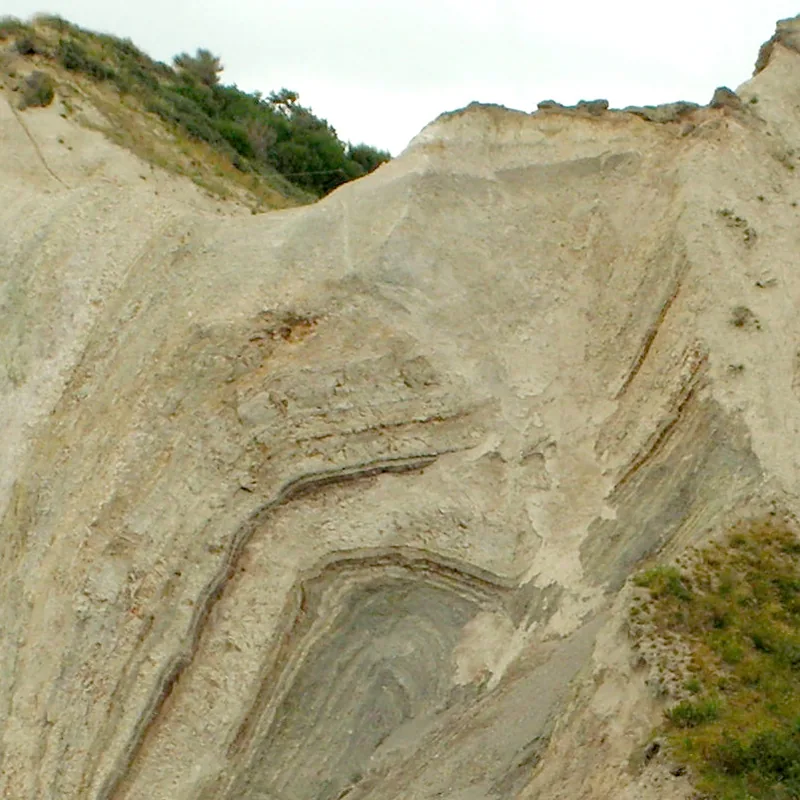
Fur Bakke refers to the hilly landscape on the island of Fur in the Limfjord, globally renowned for its exceptional geology. The hills consist largely of 'moler', a special type of diatomaceous earth formed approximately 55 million years ago during the Eocene epoch. Unique to the area are the hundreds of black ash layers that bear witness to massive volcanic eruptions in the North Atlantic, running like bands through the cliffs. Geologically, Fur provides a window into a time when present-day Denmark was covered by a deep sea and experienced a subtropical climate. Erosion from the last ice age pushed the moler layers upwards, creating the characteristic hill formations. Historically, the island was significant for the extraction of moler used in the brick industry, which shaped the local economy. Today, the area is famous for its spectacular fossil finds, including fish, insects, and turtles, displayed at the Fur Museum. Fur Bakke is on the UNESCO World Heritage tentative list due to its unique combination of volcanic and natural history.

Best time to visit & climate

The most pleasant time to visit is Jun–Aug.

JanFebMarAprMayJunJulAugSepOctNovDec
Avg °C223711141717151074
Rain mm8766565261768194821069591

📋 Practical info

🧭
Getting there
The island of Fur is usually reached by a short ferry ride, and the prominent elevation is best navigated from there by bicycle or car. Local hiking trails will ultimately lead eager visitors directly up to the geologically fascinating diatomite layers.
📅
Best season
Spring through autumn is clearly the best time to thoroughly study the geological formations in good daylight and mostly dry conditions. In winter, strong storms and heavy rain can make the paths to the cliffs and hills dangerously slippery and unpleasant.
⛰️
Terrain & paths
The terrain is distinctly characterized by unique diatomite layers, which can make the trails locally dusty or rather clayey in wet weather. The paths do include a few inclines, but they remain highly manageable for surefooted pedestrians of normal fitness.
🎒
What to bring
Due to the highly specialized subsoil, hiking boots with excellent grip are strongly advised to maintain a secure hold, especially near the edges. When sunny, a hat should definitely be taken along, as the slopes are often fully exposed to the elements.
🅿️
Parking
Parking options are generally found at designated locations fairly close to the most popular natural attractions directly on the island of Fur. During peak season, visitors should arrive early, as parking spots near these geological highlights are strictly limited.
⚠️
Safety
Since the geological layers are often located on relatively steep banks, keeping a completely safe distance from all edges is crucial to avoid collapses. Collecting fossils is strictly permitted only in specifically designated areas or active local quarries.
⏱️
Time needed
Most casual visitors typically plan around two to three hours to comfortably explore Fur Bakke and the memorable surrounding geological formations. Those with a much deeper interest in hunting for fossils often spend an entire morning or afternoon right here.

Geography

Coordinates
56.82550, 9.01220

Facts

  • The moler layers on Fur are approximately 55 million years old.
  • Over 180 different volcanic ash layers are visible in the cliffs.
  • The highest point on the island is Bette Jenses Hyw at 76 meters.
  • The Fur Museum houses one of the world's finest collections of Eocene fossils.
  • The island of Fur is located in the western part of the Limfjord in North Jutland.
  • Fur Bakke is a candidate for the UNESCO World Heritage list.

Explore nearby

Notable places around
Route planner — Car & Motorhome

Where do you start? We build the route here, with stops and country notes along the way.

Vehicle
Only stops with (optional):

© OpenStreetMap contributors · OpenRouteService

Sights in the town Fur Bakke (3)

Bette Jenses Hyw🏺 historical

A prominent Bronze Age burial mound on the Danish island of Fur.

Davrehøi🏺 historical

An archaeological site featuring prehistoric burial mounds on the island of Fur.

Morishøi🏺 historical

An ancient burial mound that is part of the prehistoric landscape of Fur island.

Sights nearby

Frequently asked questions

What is special about the hills on Fur?
They consist of moler (diatomaceous earth) with dark volcanic ash layers and contain many fossils.
What is the highest point on Fur?
Lille Knud is the highest point on the island at 76 meters.
Can you find fossils there?
Yes, especially on steep cliffs like Knudeklint, you can find imprints of fish and leaves.
How do you get to the island?
With the small Fur ferry from Branden, which runs 24/7 and crosses in just a few minutes.
Are there museums there?
The Fur Museum displays an impressive collection of fossils found on the island.
Fur Bakke: where is it located?
Fur Bakke is located in Denmark.
Fur Bakke: what is there to see?
Highlights include Bette Jenses Hyw, Davrehøi, Morishøi.
Fur Bakke: when is the best time to visit?
The most pleasant time to visit is Jun, Aug.
Fur Bakke: why is it worth visiting?
Fur Bakke refers to the hilly landscape on the island of Fur in the Limfjord, globally renowned for its exceptional geology.
View on map → The Top 50 Attractions → Most beautiful beaches → OpenStreetMap →
Europe
Explore with Plizio Discover more places in Europe
More places in Denmark →

Nearby cities

History & landmarks

More places