Plizio Visual Lab
Congo Rubber Plantation
Weather…
Water temperature…
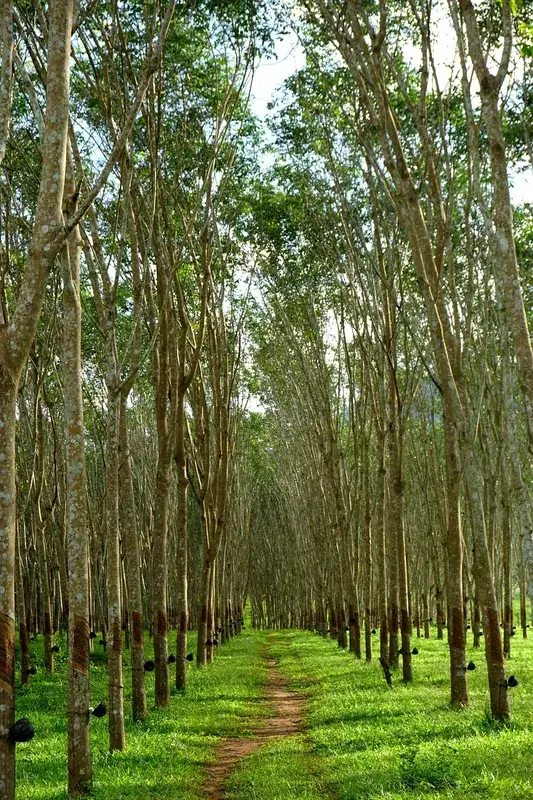
Rubber plantations in the Democratic Republic of the Congo possess a long and intricate history deeply intertwined with global industrial cycles. The cultivation of Hevea brasiliensis, the Para rubber tree, is primarily centered in the Équateur and Tshopo provinces, where the hot, humid equatorial climate is convenient for high latex yields. Natural rubber is obtained through a process called tapping, where thin strips of bark are removed to allow the milky white latex to flow into collection cups. During the 20th century, especially during the World Wars, the Congo was a critical strategic supplier for the global rubber industry. Today, many historic plantations are undergoing rehabilitation to replace aging trees and modernize processing facilities. Natural rubber remains an indispensable raw material for the automotive tire industry and medical supplies. Revitalizing this sector holds significant potential for generating sustainable employment in remote rainforest regions and increasing the overall export value of the Congolese agricultural economy.
Best time to visit & climate
The most pleasant time to visit is Jan, Jul, Aug.
| Jan | Feb | Mar | Apr | May | Jun | Jul | Aug | Sep | Oct | Nov | Dec | |
|---|---|---|---|---|---|---|---|---|---|---|---|---|
| Avg °C | 26 | 26 | 26 | 26 | 26 | 26 | 26 | 26 | 25 | 25 | 25 | 25 |
| Rain mm | 95 | 134 | 171 | 157 | 166 | 130 | 115 | 129 | 188 | 192 | 197 | 145 |
📋 Practical info
Geography
Facts
- Hevea brasiliensis is the primary species used for natural rubber.
- Rubber trees require a steady temperature range of 25 to 30°C.
- Tapping typically commences once the tree reaches 5 to 7 years of age.
- Latex is an emulsion consisting of water, resins, and rubber particles.
- DRC was a vital strategic rubber supplier during the Second World War.
- A well-maintained rubber tree can produce latex for up to 30 years.
Explore nearby
Notable places around



Route planner — Car & Motorhome
Where do you start? We build the route here, with stops and country notes along the way.
© OpenStreetMap contributors · OpenRouteService
Sights nearby
Frequently asked questions
How is rubber obtained?
When is the best time to visit?
Are the plantations shaded?
Where are these areas located?
Is it okay to touch the trees?
Congo Rubber Plantation: where is it located?
Congo Rubber Plantation: when is the best time to visit?
Congo Rubber Plantation: why is it worth visiting?

Nearby cities
History & landmarks

Nature
More places