Plizio Visual Lab

Terracotta Army
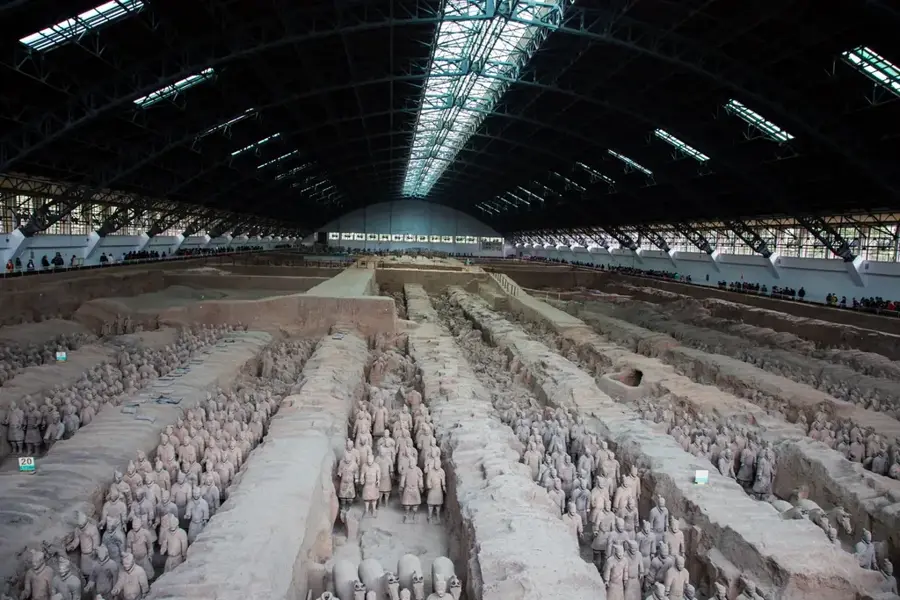
Plizio editorial teamData Sources
monument
—°9
Terracotta Army (China)

Weather…

The Terracotta Army is one of the most significant archaeological finds of the 20th century, forming part of the vast necropolis of Qin Shi Huang, the first Emperor of China. Created in the late 3rd century BC, the army was buried to protect the emperor in the afterlife and demonstrate his imperial might beyond the mortal realm. The site was discovered by chance in 1974 by farmers digging a well near Xi'an. It is estimated to contain over 8,000 life-sized warriors, 130 chariots, and 670 horses, strategically arranged in military formation across three main pits. Each soldier features distinct facial expressions, hairstyles, and armor details, suggesting a high degree of artistic specialization and industrial coordination. Originally, the figures were brilliantly painted and equipped with functional bronze weaponry, though most pigments deteriorated rapidly upon exposure to air. While large sections have been excavated, the emperor's central tomb remains unopened to preserve its contents and respect the historical site. Designated a UNESCO World Heritage site in 1987, it remains an unparalleled window into ancient Chinese warfare and craftsmanship.

Best time to visit & climate

The most pleasant time to visit is Apr, May, Sep.

JanFebMarAprMayJunJulAugSepOctNovDec
Avg °C04101621262826211581
Rain mm11152443768413111712461297

📋 Practical info

🚪
Visiting
The Terracotta Army is a collection of thousands of life-sized soldier statues in Xi'an, China. The exhibits are housed in covered halls and accessible to visitors.
🕒
Typical hours
The museum is typically open daily from 8:30 am to 5:00 pm. During peak season it may open at 7:30 am; last entry is usually one hour before closing.
📷
Photography
Photography is generally allowed in the exhibition halls, but without flash. Do not use selfie sticks or tripods to avoid disturbing other visitors.
⏱️
Time needed
A thorough visit of all three pits takes about 2-3 hours. If you also want to see the museum and the film, allow half a day.
Combine with
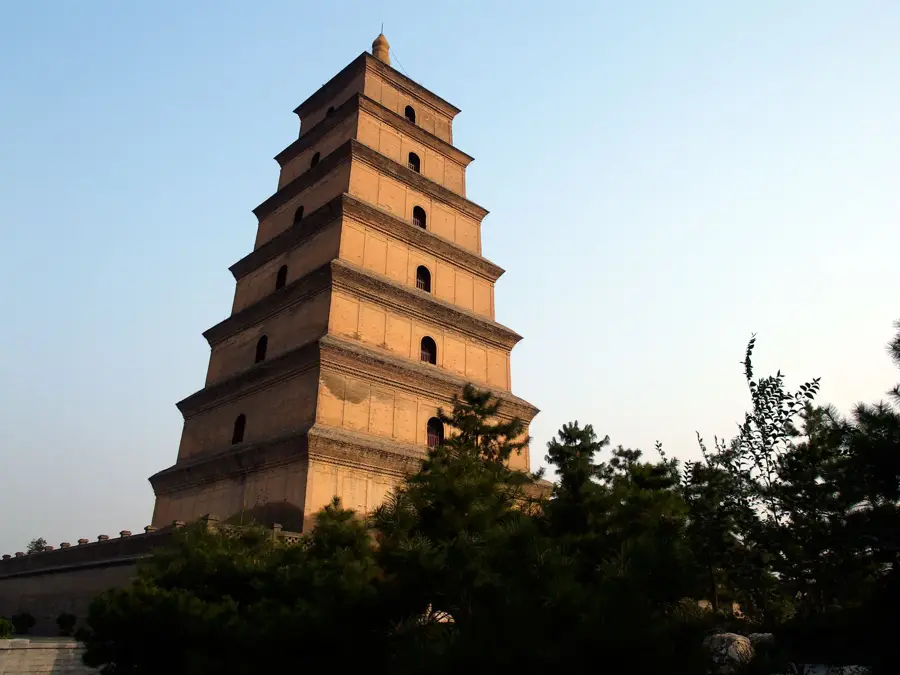
Combine the Terracotta Army with a visit to the Mausoleum of Qin Shihuangdi. The Xi'an Museum and the Giant Wild Goose Pagoda are also worth seeing.
🧭
Getting there
The museum is about 40 km east of Xi'an. Easily reachable by bus line 5 or taxi from Xi'an East Railway Station.
💡
Insider tip
Book your tickets online in advance to avoid long queues. Arrive at opening time to bypass the crowds.

Geography

Coordinates
34.38510, 109.27300

Facts

  • The army was discovered on March 29, 1974, by local farmers.
  • It consists of roughly 8,000 soldiers, 130 chariots, and 670 horses.
  • The warriors' heights vary according to their rank, up to 195 cm (6.4 ft).
  • More than 700,000 laborers worked on the necropolis for nearly 40 years.
  • The bronze weapons were treated with chromium to prevent corrosion.
  • The site was inscribed on the UNESCO World Heritage List in 1987.

Explore nearby

Notable places around

Route planner — Car & Motorhome

Where do you start? We build the route here, with stops and country notes along the way.

Vehicle
Only stops with (optional):

© OpenStreetMap contributors · OpenRouteService

Sights in the town Terracotta Army (9)

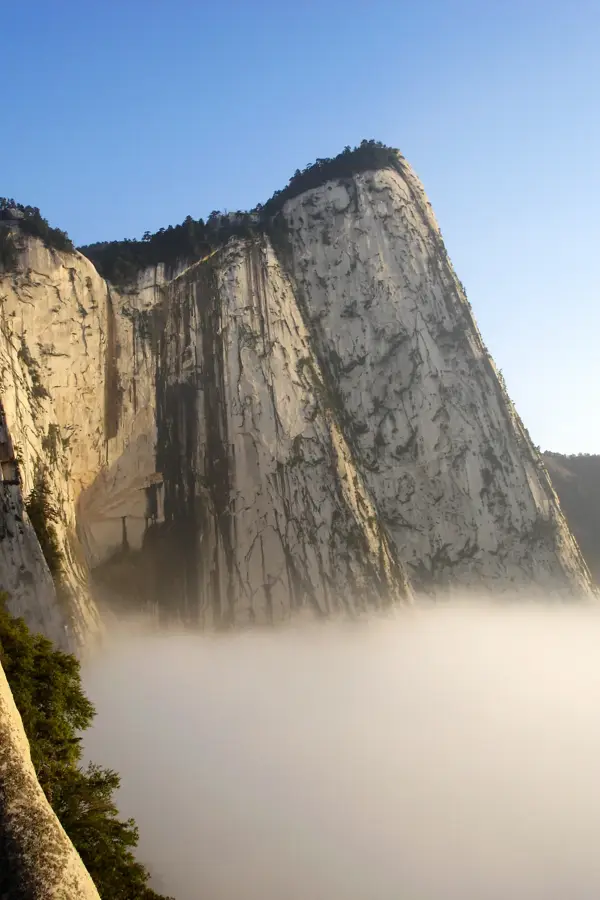
Mount Li🌿 nature

Mount Li overlooks the First Emperor's mausoleum and is known for its scenic sunsets.

Lotus pool📍 landmark

This decorative water basin is part of the historic garden layout surrounding the imperial mausoleum.

South Gate🏺 historical

The excavations reveal the monumental foundations of the south gate of Qin Shihuangdi's outer mausoleum wall.

Pit 9901🏺 historical

This pit contained life-sized clay sculptures of acrobats and strongmen who entertained the imperial court.

Bronze Chariot and Horse Museum🏛 museum

The museum houses two intricately restored, life-sized bronze chariots and horse teams with gilded details.

Pit K0006🏺 historical

This pit yielded terracotta figures of civil officials, representing the emperor's administration in the afterlife.

Emperor Qinshihuang's Mausoleum Site Park📍 landmark

The massive burial mound conceals the still-unopened tomb chamber of China's first emperor.

Terracotta Warrior Pit 3📍 landmark

This is the smallest of the three pits and is believed to have served as the military headquarters for the terracotta army.

Xi Ba Lu (Terracotta Warrior Museum)🏛 museum

This museum forms the core complex for exhibiting and preserving the world-famous terracotta warriors.

🕒 Mo-Su 08:00-17:00

Sights nearby

Frequently asked questions

Can you touch the warriors?
No, touching is strictly prohibited to protect the fragile figures.
Are there different excavation pits?
Yes, there are three main pits, with Pit 1 being the largest and most famous.
How far is the museum from Xi'an?
It is located about 40 km east of the city center and reachable by tourist bus.
Is a guide worth it?
A guide is highly recommended to understand the historical details and legends.
Are all the figures the same?
No, every single figure has individual facial features, hairstyles, and ranks.
Terracotta Army: where is it located?
Terracotta Army is located in China.
Terracotta Army: what is there to see?
Highlights include Mount Li, Lotus pool, South Gate.
Terracotta Army: when is the best time to visit?
The most pleasant time to visit is Apr, May, Sep.
Terracotta Army: why is it worth visiting?

The Terracotta Army is one of the most significant archaeological finds of the 20th century, forming part of the vast necropolis of Qin Shi Huang, the first Emperor of China.
View on map → The Top 50 Attractions → OpenStreetMap →
Asia
Explore with Plizio Discover more places in Asia
More places in China →

More places