Plizio Visual Lab

Giant of Tarapacá
Plizio editorial teamData Sources
Historical site
—°4
Giant of Tarapacá (Chile)

Weather…

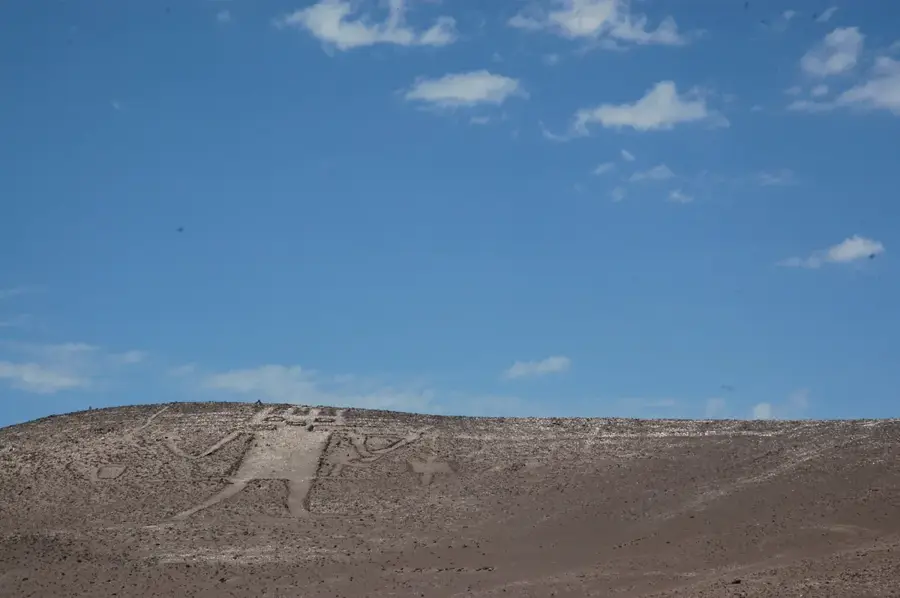
The Giant of Tarapacá, located on Cerro Unitas in the Atacama Desert, is the world's largest known anthropomorphic geoglyph. The figure stands approximately 86 meters tall and was likely created between 1000 and 1400 AD by the region's inhabitants. It depicts a deity or a shaman, recognizable by its distinctive headdress and geometric decorations on the legs. Researchers believe the figure held not only religious significance but also served as an astronomical calendar to determine lunar phases and optimal times for agriculture. The geoglyph was produced by removing the dark surface layer of the desert soil, revealing the lighter ground beneath. Due to its size, the figure is best seen from the air or from a great distance. Despite its exposed desert location, it remains an impressive monument to the advanced culture and astronomy of early Andean peoples.

Best time to visit & climate

The most pleasant time to visit is Jan–Mar.

JanFebMarAprMayJunJulAugSepOctNovDec
Avg °C171717161414131415161616
Rain mm553101111123

📋 Practical info

🚪
Visiting
The Giant of Tarapacá is a huge geoglyph in the Atacama Desert, freely accessible. It can be viewed from a lookout point or from the air; walking on the figure itself is not allowed to protect it.
🕒
Typical hours
The geoglyph is always visible, but best visited early morning or late afternoon when soft light highlights the outlines. Avoid midday heat as desert temperatures can be extreme.
📷
Photography
Photography is unrestricted; a wide-angle lens is handy to capture the entire figure. Drones can make great shots, but check local flight restrictions beforehand.
⏱️
Time needed
Allow about 30 minutes to 1 hour to enjoy the view from the ground and take photos. Those traveling by car can combine the trip with other desert attractions.
Combine with
Combine the visit with nearby Huara village or the Cerro Unita geoglyph. The Humberstone and Santa Laura saltpetre works are also worth a detour.
🧭
Getting there
The geoglyph is about 80 km southeast of Iquique in the Tarapacá region. It is reached via Route A-665; a 4x4 is recommended as the road is partly unpaved. GPS coordinates are helpful.
💡
Insider tip
Bring plenty of water, sunscreen, and a hat as shade is scarce in the desert. Binoculars can help spot details on the figure.

Geography

Coordinates
-19.95000, -69.63000

Facts

  • The world's largest anthropomorphic geoglyph at 86 meters tall.
  • Located on the slopes of Cerro Unitas in the Atacama Desert.
  • Dated to the period between 1000 and 1400 AD.
  • Likely represents an Andean deity or a local shaman.
  • Probably functioned as an astronomical calendar for farming.
  • Created by scraping away the dark surface crust of the soil.

Explore nearby

Notable places around

Route planner — Car & Motorhome

Where do you start? We build the route here, with stops and country notes along the way.

Vehicle
Only stops with (optional):

© OpenStreetMap contributors · OpenRouteService

Sights in the town Giant of Tarapacá (4)

Geoglifo Gato Andino🏺 historical

This specific archaeological geoglyph depicts the figure of an Andean cat carved into the desert landscape.

Cerro Unita🌿 nature

Rising solitarily from the flat Atacama desert, this peak is renowned for hosting giant ancient geoglyphs on its slopes.

Bien Nacional Protegido Caserones🏺 historical

Protected since 2009, this archaeological site preserves vital remnants of pre-Hispanic agricultural and residential structures.

Atacama Giant📍 landmark

Etched into the slope of Cerro Unita, this massive anthropomorphic geoglyph is the largest prehistoric figure of its kind in the world.

Sights nearby

Frequently asked questions

What does the Giant of Tarapacá represent?
It is a 119-meter-long anthropomorphic geoglyph, likely representing an Andean deity.
How old is the giant?
Its age is estimated to be about 1000 to 1400 years (approx. 900 to 1450 AD).
Where exactly can it be found?
On the Cerro Unita hill near Huara in the Tarapacá region.
Is it allowed to climb the hill?
No, climbing is strictly prohibited to protect the delicate figure from destruction.
Is there an entry fee for viewing?
Viewing from the ground is free as the figure is visible directly from the road.
Giant of Tarapacá: where is it located?
Giant of Tarapacá is located in Chile.
Giant of Tarapacá: what is there to see?
Highlights include Geoglifo Gato Andino, Cerro Unita, Bien Nacional Protegido Caserones.
Giant of Tarapacá: when is the best time to visit?
The most pleasant time to visit is Jan, Mar.
Giant of Tarapacá: why is it worth visiting?
The Giant of Tarapacá, located on Cerro Unitas in the Atacama Desert, is the world's largest known anthropomorphic geoglyph.
View on map → The Top 50 Attractions → OpenStreetMap →
South America
Explore with Plizio Discover more places in South America
More places in Chile →

Nearby cities

History & landmarks

More places